


Ultrasonic Non-Woven Bag Sewing Machine – Custom-Built for Real Production Needs
VietSonic does more than supply a standard off-the-shelf machine. Each system is developed according to the bag type, fabric weight, weld pattern, required speed, and the production layout of each business.
- No needles or sewing thread required
- Continuous, neat, and consistent weld seams
- Custom rollers for different weld patterns
- Can be integrated into production lines

We Do Not Offer One Generic Machine for Every Bag Type
Each non-woven bag product has different requirements for fabric weight, number of material layers, weld width, edge strength, and seam appearance. Therefore, selecting a machine based only on power or price can result in unstable weld quality once the machine is put into production.
VietSonic receives product samples or technical information from customers to determine the most suitable configuration. Our engineering team can customize the ultrasonic system, drive mechanism, rollers, worktable, and control mode for each production requirement.
- Assess the actual fabric type and material weight.
- Identify the required welding areas: bag body, bottom, opening, or edges.
- Design the roller profile according to the required weld seam or pattern.
- Adjust speed, pressure, and power to suit the material.
- Test samples before finalizing the production-ready configuration.
From Actual Bag Samples to a Completed Machine
The machine design process is carried out step by step to control welding performance, operating stability, and ease of use.
Requirement Review
Collect bag samples, fabric details, dimensions, and target output.
Material Testing
Evaluate bonding performance, strength, and weld seam shape.
Configuration Design
Select the power level, rollers, drive mechanism, and worktable.
Manufacturing and Calibration
Assemble the machine, calibrate the ultrasonic system, and conduct continuous trial runs.
Commissioning and Handover
Provide operating instructions, machine adjustment guidance, and basic troubleshooting.
What Production Problems Does an Ultrasonic Sewing Machine Solve?
Ultrasonic technology is suitable for thermoplastic materials that can bond under vibration and pressure at the contact area.
Eliminates Needles and Thread
Reduces thread breakage, thread tangling, broken needles, and machine downtime for replacing consumables.
Consistent Weld Seams
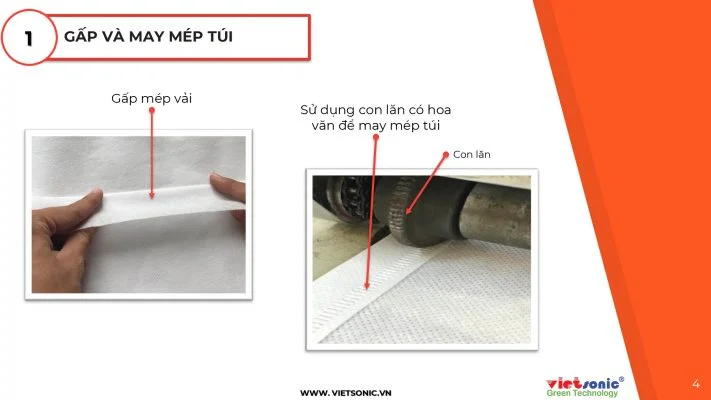
The roller continuously guides the material to create seams with a consistent shape and width.
Customizable Seam Patterns
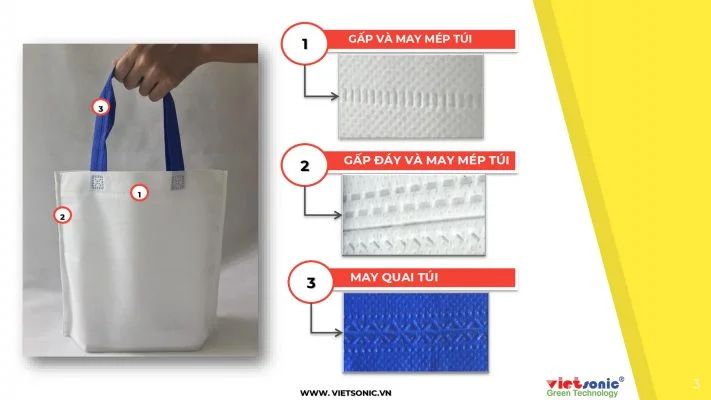
Rollers can be designed with serrated, dotted, wave-shaped, or custom patterns.
Easy to Scale
The machine can operate independently or be engineered for integration with feeding and other production processes.
Bonding Materials with Ultrasonic Vibration and Pressure
As the fabric passes through the working area, the horn transmits ultrasonic vibrations into the material layers. The opposing roller applies pressure while continuously guiding the material forward.
Energy concentrated at the contact surface generates localized heat, bonding the materials according to the roller pattern. This process does not require needles to penetrate the fabric or thread to hold the layers together.
- The feeding speed can be adjusted for different fabric types.
- Roller pressure is calibrated to prevent the weld from being too deep or too shallow.
- Ultrasonic amplitude and power are selected according to the number of material layers.
- The roller determines the width and appearance of the weld seam.
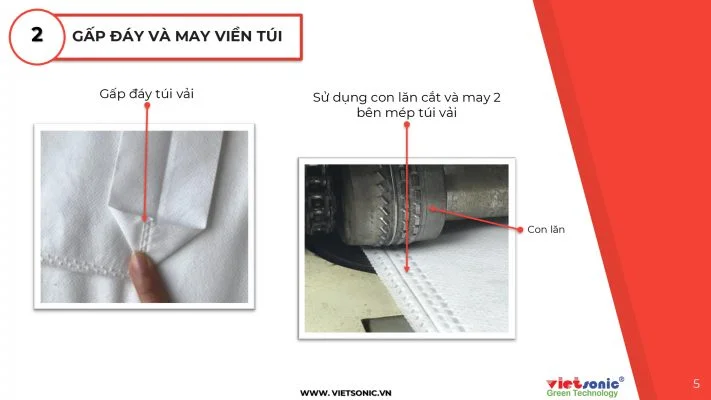
Produce Various Types of Non-Woven Bags and Products
The machine configuration can be adjusted for different products instead of being limited to a single bag type.
Ultrasonic Non-Woven Bag Sewing Machine Specifications
The specifications below are reference configuration ranges. The final specifications should be determined after VietSonic evaluates the material sample, weld pattern, and actual operating requirements.
| Operating Frequency | 20 kHz |
|---|---|
| Ultrasonic Power | Approximately 1,200–2,000 W, depending on configuration |
| Operating Speed | Reference range: 15–30 m/min, adjustable |
| Weld Width | Approximately 10–15 mm or customized according to the roller design |
| Compatible Materials | Non-woven PP, PE, PET, thin nylon, and other compatible materials |
| Power Supply | 220 V – 50 Hz |
| Weld Pattern | Serrated, dotted, wave-shaped, or custom patterns |
| Machine Dimensions | Designed to suit the customer’s operating space and production process |
Actual specifications may vary depending on the machine version, material type, thickness, and required production speed.
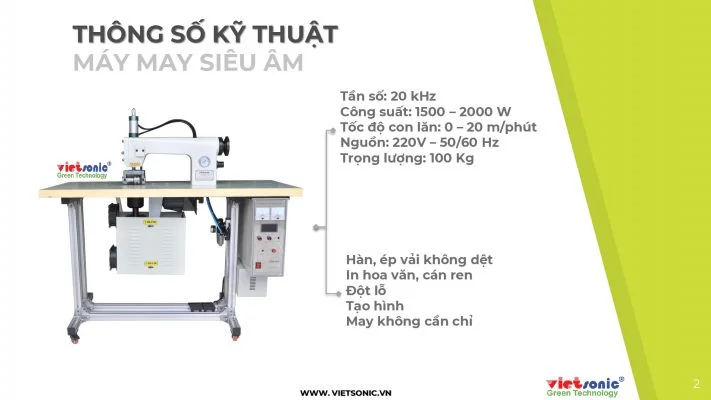
Equipment Developed Around Your Production Process
Installation space, operator workflow, and future production line expansion are all considered during the design process.
Rollers and Patterns
Design rollers according to weld width, tooth profile, weld-point spacing, or required pattern.
Worktable
Adjust the worktable size, height, and guiding area according to the product being processed.
Speed Control
Configure the speed controller for manual operation or the material feeding speed of the production line.
Production Integration
Engineer connections with cutting, folding, feeding, or automated mechanisms when required.
Why Should Businesses Work Directly with the Machine Manufacturer?
Testing with Actual Samples
Evaluate weld quality on the customer’s actual material before selecting the configuration.
Direct Calibration Control
Mechanical components, the ultrasonic system, and operating parameters can be adjusted as requirements evolve.
Operating Guidance
Help operators understand how to adjust speed, pressure, and roller position when changing products.
After-Sales Support
Provides convenient access to inspection, maintenance, repair, and equipment upgrades as requirements change.
Send Your Bag or Material Samples for VietSonic to Recommend the Right Configuration
Information about the fabric type, fabric weight, number of layers, weld width, and target output will help our engineering team evaluate the most accurate solution.