Custom ultrasonic plastic welding machine

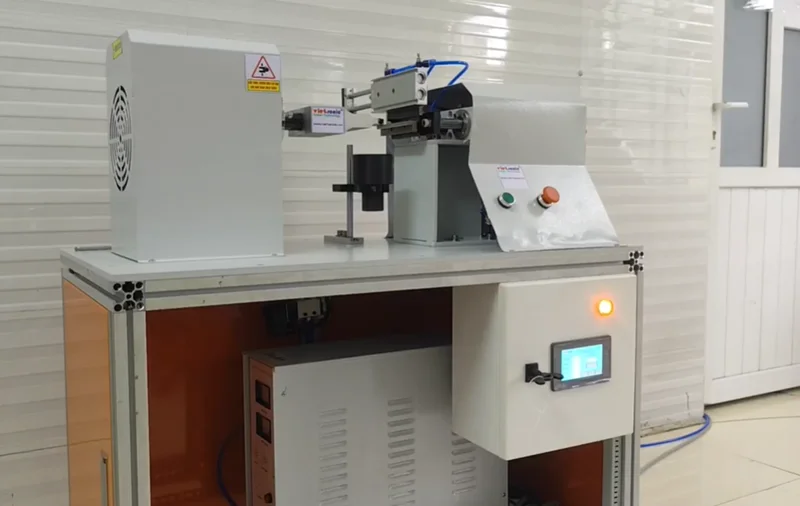
Industrial lubricant tube sealing machine designed and manufactured by VietSonic

Starting with actual tube samples, our engineering team designs the ultrasonic sealing assembly, fixtures, pneumatic system, electrical cabinet, and control program to build a sealing station that fits the customer’s packaging process.

2,600W output powerPLC control4.3-inch HMI220V power supply
Call +84 938 49 33 66 Send us a tube sample
Industrial lubricant tube sealing machine by VietSonic

The sealing machine must meet the factory’s actual packaging requirements

A factory needs more than an ultrasonic generator. The machine must position each tube correctly, apply stable pressure, allow process settings to be configured, and repeat the sealing cycle consistently. The engineering solution must therefore begin with the tube, its packaging material, and the actual operating method.

01

The seal must match the tube

The tube-tail width, plastic layer structure, and required seal pattern directly affect the tooling design. Actual samples allow our engineers to determine the contact surface and suitable test parameters.

02

The cycle must be easy to control

The PLC controls the operating sequence, while the HMI allows operators to monitor machine status and configure authorized parameters. This supports standardized operation across production shifts.

03

The machine must fit the existing production area

The frame, operator position, electrical cabinet, and maintenance access must be arranged for the available factory space. If the machine needs to be integrated into a production line, our engineers will assess the control signals and mechanical interfaces.

VietSonic develops the machine from tube samples through trial operation

The actual video documents the process from the 3D model to the completed machine. It allows manufacturers to evaluate our ability to integrate mechanical systems, ultrasonic technology, and control components into a single machine.

Sample assessment

We record the tube dimensions, material, sealing area, and required seal pattern.

Mechanical design

We create the machine model and arrange the sealing assembly, tube-holding mechanism, frame, and operator position.

Control integration

We install the electrical cabinet, PLC, HMI, sensors, and control components according to the operating sequence.

Sample trial

We adjust the tooling and process parameters, then inspect the seal appearance on both sides of the tube.

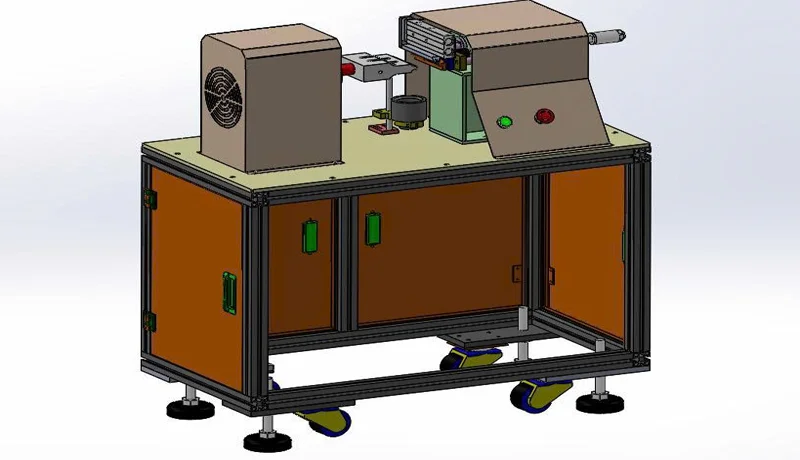
3D design of the VietSonic lubricant tube sealing machine
The 3D model allows the overall layout to be reviewed before fabrication and assembly.
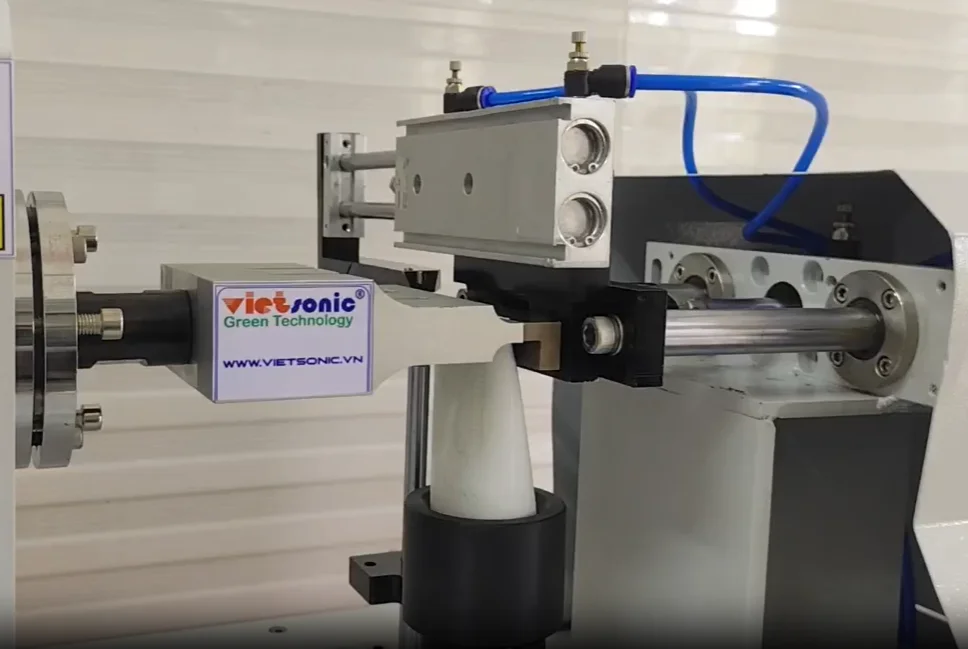
Ultrasonic sealing assembly for plastic tubes

The sealing assembly, sliding mechanism, and tube-loading position on the completed machine.

The VS2026 integrates mechanical, ultrasonic, and control systems into one station

The configuration shown in the video was developed for sealing the tail ends of lubricant tubes. The tooling holds the tube in the working position, the pneumatic mechanism applies pressure, and the ultrasonic system transfers energy to the contact area for the configured duration.

Model shown in the videoVS2026
Output power2,600W
Power supply220V – 50/60Hz
Control systemPLC
Display4.3-inch HMI
Clamping mechanismPneumatic
These specifications apply to the machine shown in the video. The output power, sealing tooling, and machine structure for a new project will be confirmed after we inspect the tube samples and production requirements.

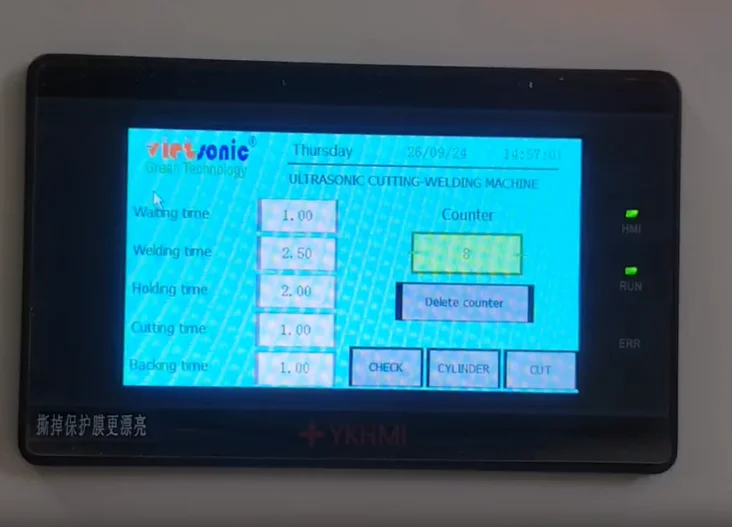
The HMI allows operators to monitor and configure the machine

The control interface is positioned on the front of the machine cabinet. Operators can start the system, monitor its status, and access the parameters configured for the sealing cycle.

HMI of the lubricant tube sealing machine

Ultrasonic technology creates a bond directly within the sealing area

When the tooling presses the two material layers together, high-frequency mechanical vibration is transferred to the contact area. Concentrated energy softens the material locally, while pressure is maintained briefly to stabilize the seal. The process requires no additional adhesive, but the final result must still be validated on the customer’s actual tube structure.

01

Position the tube correctly

The positioning mechanism keeps the tube tail within the tooling’s contact area.

02

Transfer ultrasonic energy

The ultrasonic assembly generates vibration and concentrates energy along the designed seal line.

03

Maintain clamping pressure

Pressure is maintained during the cycle so the bonded area can stabilize before the tube is removed.

The trial run demonstrates both the operating steps and sealing result

The machine follows a short operating sequence that allows technical personnel to observe each step and assess how the equipment can be introduced into the existing packaging process.

01

Load the tube into the tooling

The operator places the tube tail in the designated position.

02

Start the cycle

The control signal activates the holding mechanism and sealing assembly in sequence.

03

Seal and hold pressure

Ultrasonic energy is transferred while the configured clamping pressure is applied.

04

Inspect the finished tube

Check seal continuity, the embossed pattern, and uniformity on both sides of the tube.

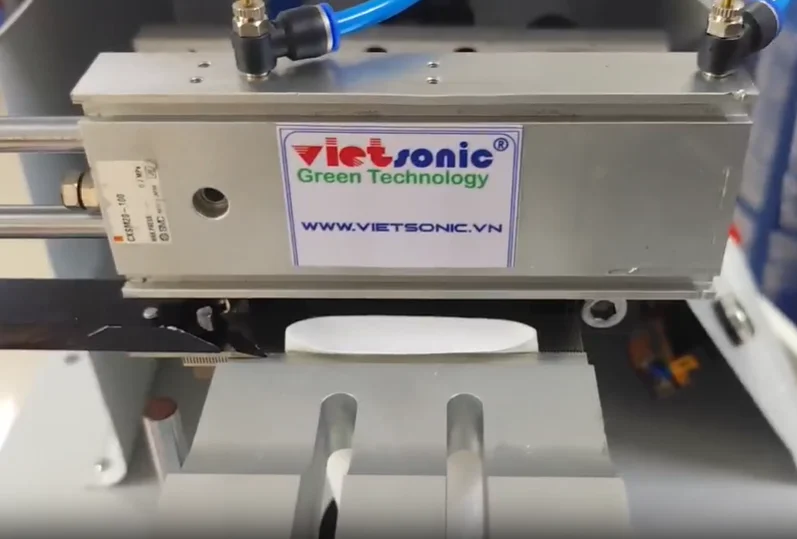
Ultrasonic sealing process for a plastic tube tail

The sealing assembly applies pressure to the tube tail during the trial run.
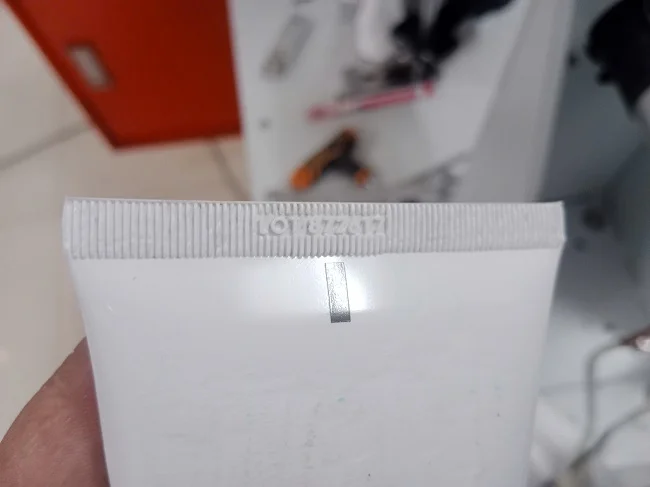
Seal on the lubricant tube after ultrasonic sealing

The sealed tube surface shows a clear and continuous pattern.
Continuous seal on the test sample
Clearly defined surface pattern
Straightforward tube-loading operation
Process parameters managed through the HMI
If the manufacturer requires leak testing, peel-force testing, or pressure-resistance testing, the acceptance criteria must be agreed upon before commissioning. A visual inspection of the seal does not replace technical testing.

What should manufacturers provide to receive a suitable proposal?

To shorten the assessment process, please prepare the following information:

  • Tube samples before and after filling.
  • Dimensions of the tube-tail sealing area.
  • Material structure or information from the packaging supplier.
  • Target output and desired cycle time.
  • Available space, power supply, compressed air, and production-line integration requirements.

VietSonic will use this information to propose the machine configuration, manufacturing scope, and sample-testing plan.

Can the machine seal every type of plastic tube?

Sealability cannot be determined from the material name alone. It depends on the layer structure, additives, thickness, and sealing-area geometry. Testing actual samples is the most reliable assessment method.

Can one machine handle different tube sizes?

Tooling changes or fixture adjustments may be possible when the size range remains within the machine’s design limits. Our engineers need to know all planned tube formats in advance to develop the changeover method.

Can the machine be integrated into an existing production line?

An integration solution can be developed after assessing the tube-feeding method, control signals, cycle time, and available installation space.

Send us your tube samples for a sealing-solution assessment

Contact VietSonic when your company needs a new machine, replacement sealing tooling, or integration of a tube-sealing station into an existing production line.

Hotline: +84 938 49 33 66 – Mr. Hai
Email: info.vietsonic@gmail.com
Website: vietsonic.vn

Call for technical consultation Send your requirements by email