



Ultrasonic backpack fabric welding machines engineered by VietSonic based on actual samples
Each fabric, coating, and bonding position on a backpack has different characteristics. The right solution must be tested directly on actual samples, with the proper welding horn, fixture, and operating parameters designed before the machine enters production.
Welding horn and fixture design
Custom manufacturing for production requirements
Manufacturers need controlled, repeatable bonds for every backpack design
In backpack and bag manufacturing, differences in material, thickness, coating, and component geometry can change the welding result. Manufacturers should therefore assess the solution on the actual product instead of selecting a machine based only on its rated power.
Welds must be repeatable
Product positioning, applied pressure, and welding time must be controlled to minimize variation between operating cycles.
The process must remain clean and efficient
At suitable welding locations, ultrasonic technology can create a bond without adding adhesive or stitching.
The machine must fit the production line
The equipment configuration, fixturing method, and operating procedure must match the required output and the actual workspace.
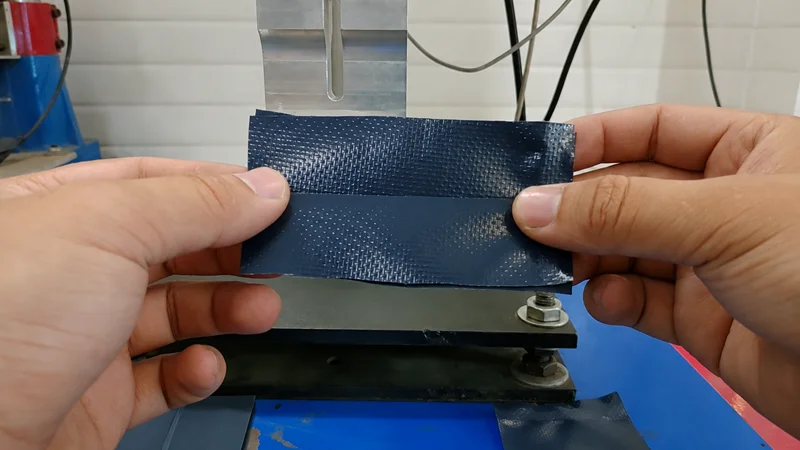
Video showing the welding process on a backpack fabric component
The video allows manufacturers to observe how the component is positioned, where the welding horn applies energy, and the result after the welding cycle is completed.
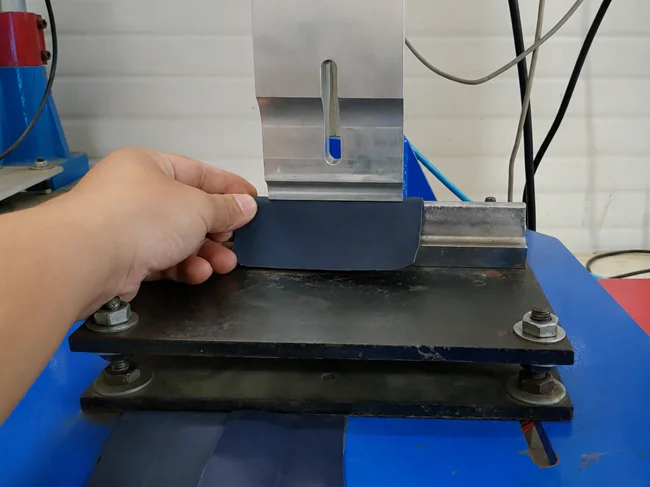
How does an ultrasonic welding machine bond materials?
The welding horn transmits high-frequency mechanical vibrations to the contact area between the material layers. Under the combined effects of vibration and pressure, the thermoplastic component in the weld area heats locally, bonds together, and sets while holding pressure is maintained.
- The fixture holds the component in the correct position throughout the welding cycle.
- The welding horn concentrates energy in the area to be bonded.
- Welding time and hold time are adjusted according to the sample.
- Established parameters can be reused for repeat production.
VietSonic‘s solution development capabilities
VietSonic develops equipment based on product samples, weld requirements, and each manufacturer’s operating conditions.
Material sample assessment
Technicians examine the fabric type, coating, thickness, geometry, and the location that needs to be bonded.
Test welding and parameter development
Samples are tested to evaluate bondability and to adjust welding time, pressure, and amplitude according to actual results.
Welding horn and fixture design
The welding horn is machined for the target area, while the fixture supports product positioning and improves repeatability during operation.
Machine manufacturing and delivery
The machine is completed according to the agreed configuration, followed by trial operation, setup guidance, and operator training.
Positions where ultrasonic welding may be considered
The application scope should be determined after checking the material and the load-bearing requirements of each component.
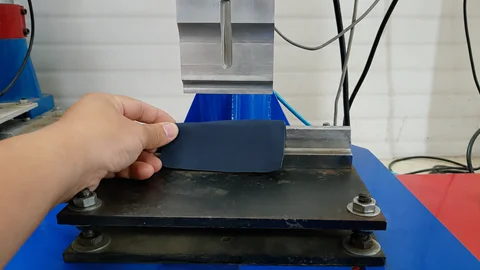
Spot welding and material-layer fixation
Suitable for certain positions where thermoplastic fabric layers need to be fixed before or during product assembly.
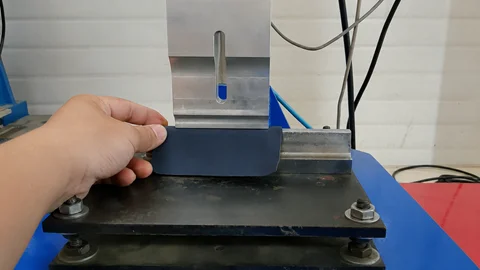
Attaching labels or decorative components
May be considered for labels, decorative patches, or accessories made from materials compatible with the base fabric.
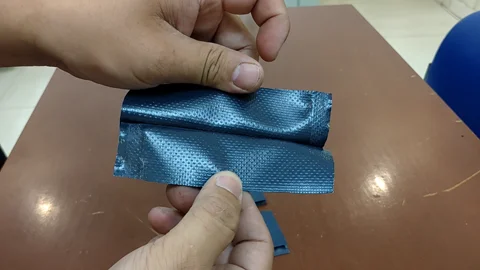
Bonding straps, edging, or lining
These positions must be sample-tested and subjected to tensile testing according to the manufacturer’s standards before mass production.
Information required before designing the machine
The following information helps shorten the testing process and supports selection of the correct equipment configuration.
| Information to provide | Purpose of the assessment |
|---|---|
| Fabric samples and components to be welded | To determine material compatibility and the area where energy must be transmitted. |
| Weld position dimensions and geometry | To provide the basis for designing the welding horn profile and positioning fixture. |
| Appearance and load-bearing requirements | To establish post-weld sample inspection criteria and a suitable bonding method. |
| Expected production output | To select a manual, semi-automatic, or integrated machine configuration. |
| Current production process | To assess machine placement, operator actions, and integration with the production line. |
Machine implementation process for manufacturers
The implementation process follows the samples and acceptance criteria agreed upon with the manufacturer.
Requirement review
The manufacturer provides samples, images, operating videos, and bonding requirements.
Sample testing
Technicians conduct welding trials, adjust the parameters, and assess the results with the manufacturer.
Design and manufacturing
VietSonic completes the welding horn, fixture, and machine configuration according to the selected solution.
Trial operation and handover
The equipment is tested with actual samples, followed by operating instructions and post-delivery technical support.
Send us your backpack fabric samples for a weldability assessment
Manufacturers can provide product samples, images of the required weld positions, load-bearing requirements, and expected production output. VietSonic will recommend a suitable welding horn, fixture, and machine configuration.