
Manufactured and calibrated using actual material samples

Custom Ultrasonic Sewing Machine for Woven PP Bag Production

A solution for manufacturers seeking faster bag-edge processing, less dependence on needles and thread, and more consistent bonding on suitable material areas.

VietSonic receives actual bag samples, tests welding parameters, designs custom rollers, and manufactures machines according to the required seam, operating speed, and factory layout.

Sample testing first
Test the actual material
Custom manufacturing
Customize the roller and machine table
Local support in Vietnam
Convenient maintenance and calibration

VietSonic ultrasonic sewing machine welding PP material

Ultrasonic sewing and welding machine operating on PP material.
Challenges to address

Manufacturers need equipment that matches the actual bags they produce

Woven PP bags can vary in weave density, thickness, coating, number of layers, and folded-edge style. The machine therefore needs to be tested and calibrated using the actual material rather than selected from a single generic specification.

01

Inconsistent seams

Thread seams may become misaligned, wrinkled, or inconsistent when operating speed and skill levels vary among workers.

02

Consumables and machine downtime

Changing thread, fixing broken thread, replacing needles, and readjusting the machine interrupt production, especially during high-volume orders.

03

Integration with the existing process

Manufacturers may need to modify the table width, welding-head position, roller speed, or guiding mechanism to suit the current floor layout and operating method.

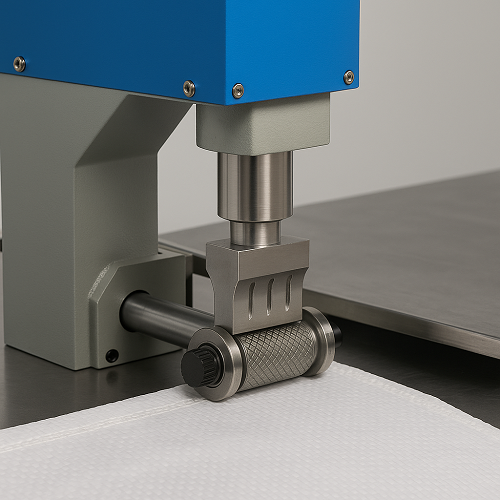
Ultrasonic sewing machine welding head and roller assembly

The welding head and roller act directly on the material area to be bonded.

Manufacturing capability

Machine design based on the required seam, material, and production speed

The ultrasonic sewing machine uses high-frequency mechanical vibration combined with roller pressure to generate heat at the contact area of thermoplastic materials. Suitable material layers melt locally and bond together without a needle penetrating the surface.

  • Perform welding tests on the manufacturer’s actual woven PP bag or PP film sample.
  • Adjust power, pressure, and speed according to material thickness.
  • Design the roller according to the required weld width or pattern.
  • Fabricate the machine table, guiding mechanism, and operating position to suit the product.
  • Integration with existing equipment or a running production line can be evaluated.
Important: weldability depends on material composition, coating, number of layers, folded-edge style, and strength requirements. The actual sample must be tested before the machine configuration is finalized.
Actual operation video

Watch the ultrasonic sewing machine process PP material

The video demonstrates how the ultrasonic head and roller operate when bonding PP film.

The video demonstrates welding on PP film. For woven PP bags, the machine configuration and bond performance must be evaluated using the actual material sample, coating, and bag-edge structure.

Implementation process

From the actual bag sample to production-ready equipment

This process allows manufacturers to evaluate feasibility before investing and reduces the risk of purchasing a machine that is unsuitable for the material in use.

1

Requirement assessment

Identify the material type, number of layers, edge style, weld width, and required production speed.

2

Material sample testing

Test different power, pressure, and speed settings to evaluate appearance and bond strength.

3

Design and manufacturing

Select the ultrasonic system and manufacture the roller, machine table, guiding mechanism, and supporting components.

4

Testing and commissioning

Test the machine with the product sample, provide operating instructions, and calibrate it before production use.

Reference configuration

Specifications selected according to the material sample and production requirements

The final configuration is determined after sample testing, bond-strength evaluation, and confirmation of the required operating speed.

Ultrasonic frequency20 kHz or another configuration suitable for the application.
Reference powerApproximately 1,500–2,000 W, selected according to material thickness, number of layers, and structure.
Roller speedAdjustable; reference configuration from 0–20 m/min.
Materials to be testedWoven PP bags, coated PP, PP film, and other suitable thermoplastic materials.
RollerManufactured according to the required weld width, groove profile, or pattern.
Control systemAdjusts speed, pressure, and ultrasonic energy according to the machine configuration.
Machine table designCustomized according to bag dimensions, material feeding direction, and operating position.
Power supplyConfigured according to the customer’s power supply and factory operating conditions.
Note: the specifications above are for reference. A machine should not be selected based only on rated power. The material sample must be tested to determine melting behavior, bond strength, and a suitable operating speed.
Inspecting the PP material welding process using an ultrasonic sewing machine

Speed, pressure, and energy must be calibrated together for the material.

Value for manufacturers

Stabilize bag-edge processing and reduce secondary operations

  • Eliminate needles and thread in areas suitable for ultrasonic welding.
  • Reduce thread replacement, threading, and broken-thread handling during operation.
  • Adjust the roller speed to match the material-feeding operation.
  • Create a continuous bond following the roller profile.
  • Create both a bonded seam and a pattern when using a suitable roller.
  • Standardize operations when producing large quantities of products with the same specifications.

Actual performance must be evaluated according to the product, strength requirements, and operating speed. VietSonic provides recommendations based on sample-test results rather than specifying a configuration based only on machine power.

Application range

Applicable to a range of products made from PP materials

The machine is suitable for processes that require continuous bonding on thermoplastic materials. Each application must be evaluated separately based on material structure, number of layers, and load requirements.

Coated woven PP bags
PP film packaging
Packaging film
PP nonwoven fabric
Folded material edges
Patterned bonded seams
Multi-layer components
Technical PP products

What information should manufacturers provide?

  • A sample bag or roll of the material currently in use.
  • Details of the coating and number of layers at the welding area.
  • The width, shape, and position of the bonded seam.
  • Strength requirements or the finished-product inspection method.
  • The required production output per minute or per shift.
  • Photos of the factory layout and the process where the machine will be installed.

Discuss your requirements with our technical team

Execution capability

Why manufacturers should work directly with the machine manufacturer

A

Testing before manufacturing

The material sample is tested to evaluate bondability, appearance, and speed limits before the configuration is determined.

B

Flexible machine customization

The machine table, roller, guiding mechanism, and operating position can be designed around the manufacturer’s product.

C

Local technical support

Direct communication is available for operating guidance, parameter calibration, maintenance, or product changes.

VietSonic does not finalize a machine configuration based only on the material name.
The technical team must test the actual bag sample to determine a configuration that meets the required seam, speed, and strength.
Frequently asked questions

What to know before investing in the machine

Can all types of woven PP bags be ultrasonically welded?

This cannot be determined from the material name alone. Weldability depends on the polymer composition, weave density, coating, number of layers, and folded-edge construction. Manufacturers should provide a sample for testing.

Can the machine completely replace thread sewing?

Replacement depends on the seam location, strength requirements, and bag structure. The machine may replace or support suitable operations after the actual sample has been tested.

Can a custom roller be ordered for a specific weld seam?

The roller can be manufactured according to the required width, profile, or pattern after a suitable structure has been determined for the material and operating speed.

Can manufacturers test their samples before ordering the machine?

The actual material and intended folded-edge style should be tested. The results provide the basis for selecting the ultrasonic system, power, roller, and machine speed.

Can the machine be integrated into an existing production line?

The technical team can assess an integration solution based on line speed, material travel direction, installation space, and the existing control signals.

Send a Woven PP Bag Sample for Testing Before Selecting a Machine

Provide a material sample, the required weld-seam shape, and the target speed. The technical team at VietSonic will evaluate the solution, test the sample, and recommend a configuration suited to the actual production process.

Vietnam Ultrasonic Equipment Co., Ltd.
Website: vietsonic.vn · Email: info.vietsonic@gmail.com