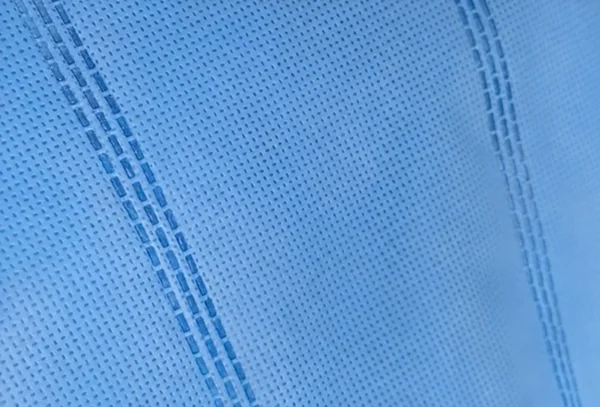
Ultrasonic Nonwoven Fabric Sewing Machine – Designed and Manufactured for Your Production Needs
VietSonic receives material samples, evaluates weldability, designs the machine configuration and pattern roller, manufactures the equipment in-house, and conducts trial runs before delivery.
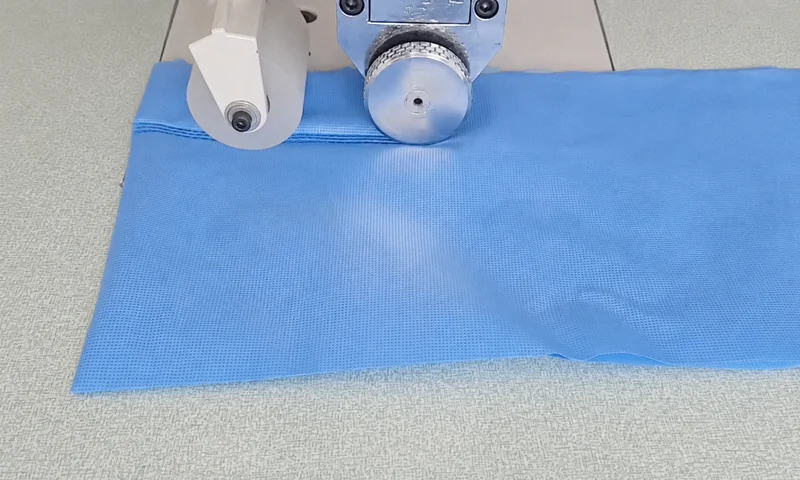
Actual operation of an ultrasonic sewing machine for nonwoven fabric.
Production requirements
Your business needs a machine designed around the actual product
The performance of an ultrasonic sewing machine depends on the material, number of fabric layers, thickness, weld pattern, roller design, and operating speed. Machine selection should therefore begin with the actual product sample rather than a standard off-the-shelf configuration.
01
Reduce reliance on needles and thread
The bond is formed by ultrasonic energy combined with pressure, eliminating thread setup and reducing issues such as broken thread, tangled thread, and misaligned seams.
02
More consistent weld seams
When the material and parameters are properly matched, the machine produces continuous, clean, and consistent weld seams across products.
03
Customize the weld pattern
The pattern roller can be designed with stripes, teeth, dots, decorative lines, or a product-specific profile.
04
Responsive technical support
The machine is designed and assembled locally, making inspection, maintenance, adjustment, and operational support more convenient.
Information to provide before consultation: material samples, number of layers to be welded, finished-product images, weld dimensions, and the desired operating speed or output.
Operating video
Watch the ultrasonic sewing machine operate directly on nonwoven fabric
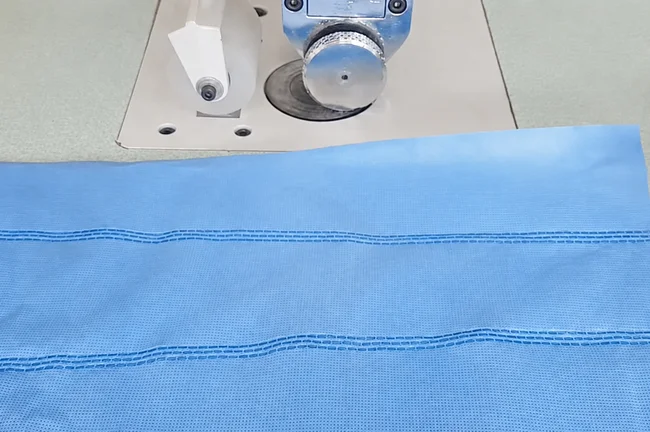
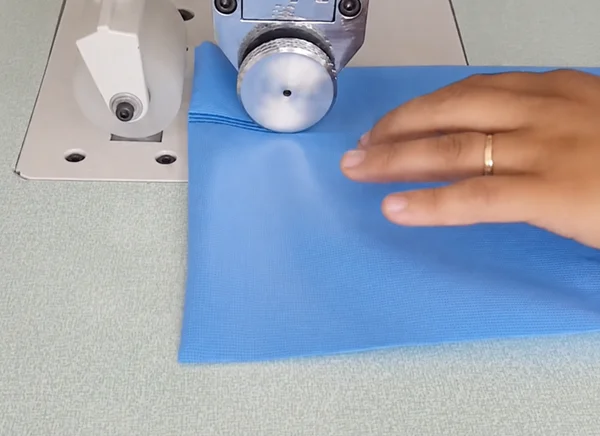
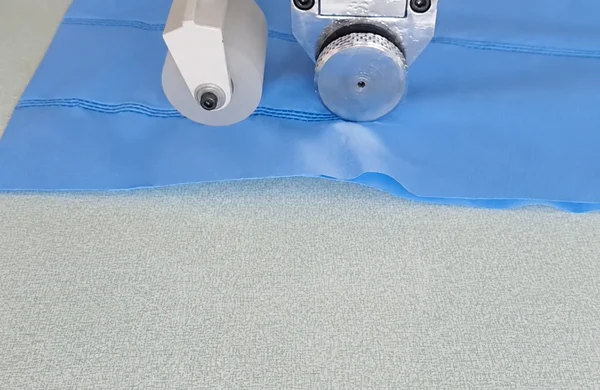
The video shows the welding horn assembly, roller movement, material feeding process, and the seam formed during operation.
Actual operating footage Direct view of the weld seam No needles or thread
Project delivery capabilities
Ultrasonic sewing machine manufacturing process at VietSonic
Each project is developed around the customer’s material and required output. The goal is to create a machine configuration that can be applied effectively to the actual production process.
1
Requirement assessment
Collect material samples, drawings, finished-product images, weld dimensions, and target output.
2
Material evaluation
Evaluate material composition, number of layers, thickness, and suitability for ultrasonic bonding.
3
Weld sample testing
Adjust energy, pressure, and speed to assess bond strength, appearance, and weld consistency.
4
Machine configuration design
Select the appropriate machine frame, drive system, welding horn, pneumatic components, and pattern roller.
5
Manufacturing and assembly
Machine the components, assemble the mechanical units and ultrasonic system, and complete the equipment in-house.
6
Trial run and commissioning
Test the machine with actual samples, provide operating instructions, fine-tune parameters, and support the customer after production begins.
Application-specific design
The machine is configured for the material and required weld pattern
Even within nonwoven fabrics, products can differ in weight, composition, thickness, number of layers, and load-bearing requirements. These differences directly affect the machine configuration.
Adjust the pressure to suit the material thickness.
Select the welding horn and ultrasonic system for the specific process.
Design the pattern roller according to the required weld profile.
Adjust the material feed speed to maintain a stable weld seam.
Configurations can be developed for edge welding, edge embossing, or decorative patterning.
Note: not every fabric is suitable for ultrasonic welding. Businesses should submit samples for testing before the machine configuration is finalized.
Operating images
Observe the machine, material, and weld seam during operation
The images below are frames captured from the operating video of the ultrasonic sewing machine for nonwoven fabric.
Feeding the material through the ultrasonic welding area.The pattern roller and welding horn work together to form the bond.The weld seam is formed without needles or thread.
Investment value
What does your business gain by working with VietSonic?
The equipment is developed around the actual production process, with sample testing and parameter adjustment before integration into the production line.
A machine matched to your material sample
The configuration is selected after evaluating the material and the customer’s weld requirements.
Custom pattern roller capability
The roller profile can be designed for the required weld pattern, edge finish, or decorative motif.
Testing before delivery
The machine is tested with samples to evaluate bond strength, appearance, and operating performance.
Direct technical support
The technical team provides operating guidance, adjustment, maintenance, and troubleshooting support.
Application groups
Which products are suitable for ultrasonic sewing?
The machine is suitable for many thermoplastic-based materials and products requiring edge welding, edge sealing, or decorative seams.
Nonwoven bags Promotional bags Gift bags Shopping bags Face masks Protective gowns Disposable medical products Filter materials Flexible packaging Synthetic fabrics Covering films Edge-embossed products
Criteria
Ultrasonic sewing machine
Needle-and-thread sewing machine
Bonding method
Ultrasonic energy combined with pressure.
A needle penetrates the material and joins it with thread.
Consumables
No needles or thread are used for the weld seam.
Requires needles and thread, with replacement when damaged or worn.
Material surface
Does not create needle holes along the bonded seam.
Creates needle holes in the material surface.
Seam pattern
Changed by using different pattern roller profiles.
Depends on stitch type, thread, and machine mechanism.
Material range
Best suited to materials containing thermoplastic components.
Can be used with a wider range of fabrics.
Pre-investment requirement
Sample testing is recommended to determine parameters and bond strength.
Select the needle, thread, and stitch type for each fabric.
Common business questions
What to know before ordering a machine
Can an ultrasonic sewing machine weld all types of fabric?
No. This technology is better suited to nonwoven fabrics, synthetic fabrics, and materials containing thermoplastic components. The material should be tested for an accurate evaluation.
Can the pattern roller be customized with a specific design?
The pattern roller can be designed for a specific weld profile, edge finish, or decorative pattern, depending on the product dimensions and technical requirements.
Does the customer need to submit samples before the machine configuration is quoted?
Yes, sample submission is recommended. Direct testing helps determine weldability, pressure, speed, roller type, and the most suitable machine configuration.
What information is needed for a faster consultation?
Please provide material samples, the number of layers to be welded, weld dimensions, finished-product images, and the expected output per shift.
Send your material samples for consultation and weld testing
The technical team at VietSonic will evaluate the samples, discuss production requirements, and recommend a machine configuration suited to the customer’s actual process.