Designed and manufactured in Vietnam

Ultrasonic sewing machine for non-woven fabric and dust covers – a custom-built production solution

With no needles or sewing thread, the machine uses ultrasonic energy to create direct bonds in materials containing thermoplastics. More importantly, the equipment can be configured around each company’s actual material, weld seam, pattern and product requirements.

No needles – no thread
Welding and cutting based on configuration
Custom roller design
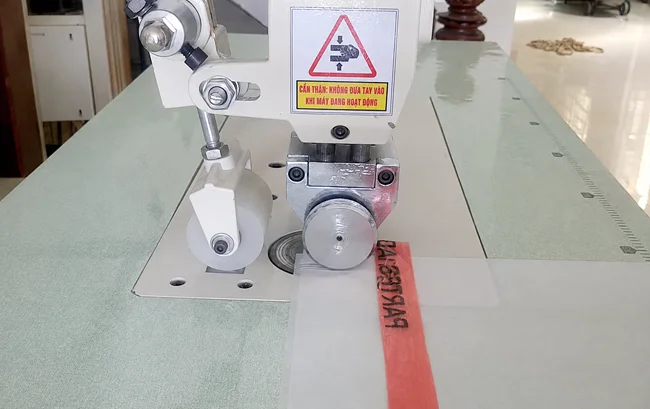
VietSonic ultrasonic sewing machine operating on non-woven fabric
Real-world machine operation
Starting with production requirements

Businesses need more than a machine that simply “runs”

In the production of non-woven products and dust covers, equipment is truly effective only when it creates stable weld seams, matches the material and maintains consistent quality during continuous operation.

Each fabric has a different basis weight, thickness, composition and number of layers. Therefore, an ultrasonic sewing machine should be selected and calibrated using the actual product sample, rather than relying on a single general power specification. This is also the approach VietSonic follows when consulting, designing and manufacturing machines for businesses.

Production challenges to solve

When conventional sewing is no longer suitable

01

Needles, thread and loose fibres affect product quality

Excess thread, loose thread ends, needle holes and fibres can reduce edge quality and create additional inspection, thread-trimming and cleaning steps.

02

Inconsistent seam quality

Quality can depend heavily on operator skill, fabric feeding speed and the condition of the needle and thread, especially for high-volume orders.

03

Difficulty adapting to new products

When changing materials, edge styles or patterns, businesses need a solution that allows sample testing and configuration adjustments for the new requirements.

Real machine video

See the ultrasonic sewing machine process non-woven fabric

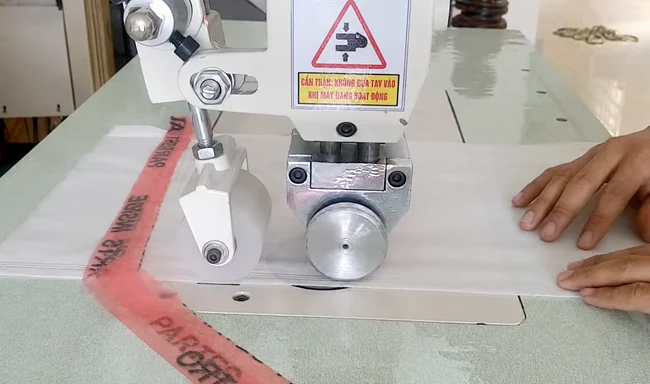
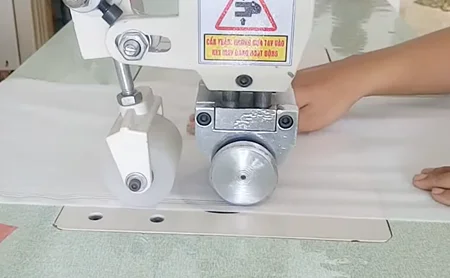
The video directly shows material passing through the roller and ultrasonic horn assembly to create a continuous bonded seam.

The footage shows the actual machine operating in real production conditions.

Ultrasonic sewing machine roller assembly processing non-woven fabric
The machine operating on the actual material.
Technology principle

How does the machine create a weld seam?

The generator converts electrical energy into high-frequency mechanical vibrations. As the material passes through the contact area between the ultrasonic horn and roller, vibration combines with pressure to generate localised heat at the interface.

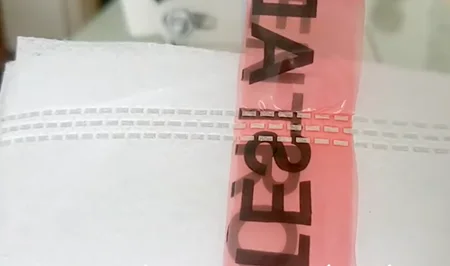
  • The material is bonded directly along the pressed seam.
  • No needle holes and no excess thread are produced.
  • The roller determines the shape, width and pattern of the weld seam.
  • Depending on the configuration, the machine can weld, finish edges or cut and weld simultaneously.
Technical note: Results depend on material composition, basis weight, number of layers, speed, pressure and roller geometry. The actual sample should be tested before the machine configuration is finalised.
VietSonic’s capabilities

Machines designed around the product, not one configuration for every requirement

VietSonic begins with the company’s material sample and production requirements, then determines the appropriate mechanical configuration, ultrasonic system and roller.

01

Testing with actual samples

We evaluate weldability using the exact fabric type, number of layers and product design used by the business.

02

Roller design

Tooth profiles, patterns, seam widths and cutting profiles can be customised to suit the product.

03

Machine manufacturing and completion

We design the machine structure, select the ultrasonic configuration and optimise operating procedures for the production floor.

04

Direct technical support

We provide operating and calibration guidance, as well as support when businesses change products or perform maintenance.

Value for businesses

The benefits go beyond production speed

Ultrasonic sewing technology helps standardise bonded seams and reduce secondary processes associated with needles, thread and edge finishing.

  • Continuous weld seams with a consistent profile defined by the roller.
  • No thread feeding and no production interruptions caused by broken thread.
  • Reduced thread trimming and seam-cleaning operations.
  • Patterns can be changed by using a suitable roller set.
  • Can be integrated into specialised equipment or production lines.
Production applications

One machine platform for multiple product types

Depending on the material, roller and machine structure, this technology can be applied to many fabric products containing thermoplastic components.

A

Dust covers and protective covers

Edge welding for product covers, equipment covers, components and goods that require dust protection during storage.

B

Non-woven fabric products

Edge sewing, layer bonding and decorative seams for fabric bags, flexible packaging and components made from non-woven PP fabric.

C

Technical fabrics and multilayer materials

Joining, cutting and pressed seams can be created on suitable materials after weldability has been verified using actual samples.

Information to provide

What should businesses prepare to select the right machine configuration?

The clearer the information, the more accurately sample testing and the proposed solution can reflect actual production conditions.

Required informationWhat the business should providePurpose of evaluation
Material sampleFabric type, composition, basis weight, thickness and number of layers to be welded.Evaluate energy absorption and bond quality.
Product sampleDimensions, weld location, edge profile and appearance requirements.Determine the operating setup and roller geometry.
Weld seam requirementsWidth, pattern and welding, cutting or simultaneous cutting-and-welding functions.Design a tooling set suitable for the product.
Expected outputQuantity per shift, target speed and required continuous operating time.Select the appropriate power and operating configuration.
Integration requirementsStandalone machine, dedicated workstation or production-line integration.Develop the mechanical design and equipment layout.
Implementation process

From product sample to an operational machine on the production floor

Requirement review

We discuss the material, product, output targets and current production challenges.

Sample testing and evaluation

We evaluate weldability, pressed-seam geometry and the suitability of the technology.

Design and manufacturing

We finalise the machine configuration, roller and components required for production operations.

Delivery and training

We conduct trial runs, provide calibration guidance and support the customer during operation.

Frequently asked questions

What businesses should clarify before investing

Can the machine sew every type of fabric?

Not every material produces the same result. The technology is best suited to materials containing thermoplastics. Sample testing is required to accurately evaluate weldability.

Can the machine weld and cut at the same time?

Yes, provided that the equipment and roller are designed for simultaneous cutting and welding. The exact configuration depends on the edge style and product to be processed.

Can the weld pattern be changed?

Yes. The pattern is created by the roller profile. VietSonic can design rollers based on the required sample and technical specifications.

How can I know whether the machine is suitable for my product?

Businesses should provide material samples, finished-product samples and output requirements. Direct testing helps determine weld quality before the machine is selected.

Send your product sample so VietSonic can recommend the right machine configuration

Instead of selecting equipment based on specifications alone, businesses can send material samples and production requirements to our technical team for evaluation, weld testing and solution consultation.

VietSonic – ultrasonic equipment design, manufacturing and technical support in Vietnam.