



Ultrasonic welding machine for LED electrical boxes and precision plastic parts
An ultrasonic plastic welding solution that helps bond LED electrical box housings, technical plastic components, and plastic products requiring strong, neat, clean welds without glue or fixing screws.
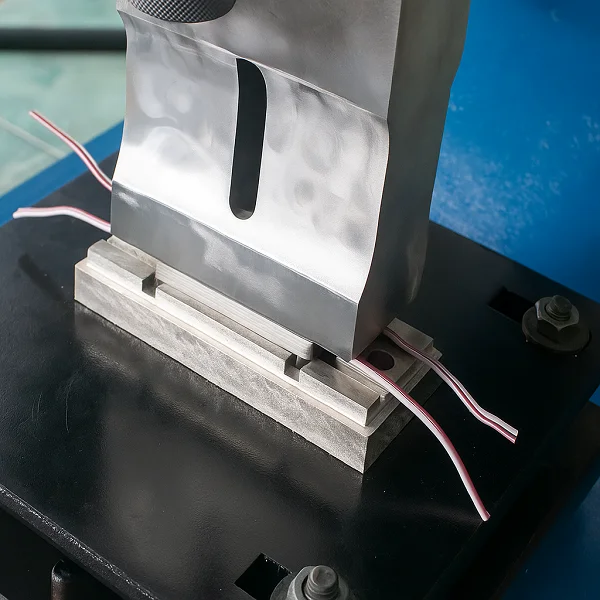
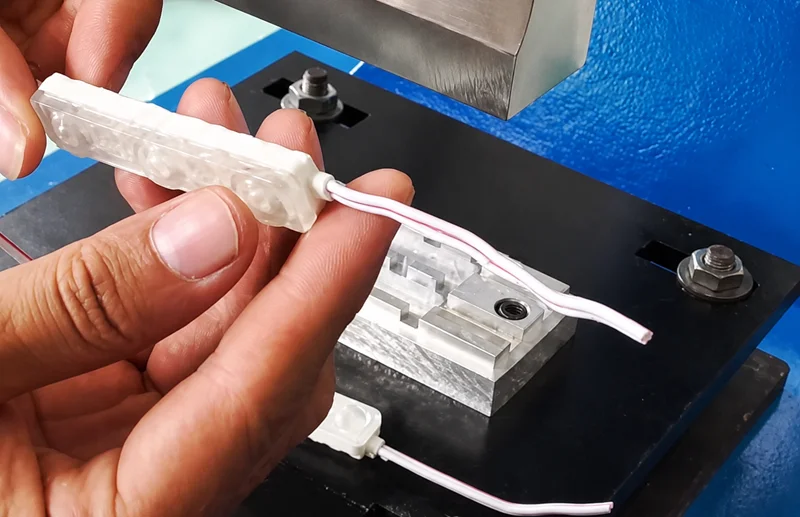
When LED electrical boxes need strong welds that are still neat and clean
For products such as LED electrical boxes, plastic housings for wire protection, plastic covers, or technical plastic components, manufacturers often need a stable joining method that is fast to operate and reduces the use of additional materials.
When using glue, screws, or manual assembly, the product may require more assembly time, be difficult to keep consistent between operators, and affect the surface appearance. Ultrasonic welding helps solve this problem by creating a direct bond between two plastic surfaces.
How does an ultrasonic plastic welding machine work?
The machine uses high-frequency ultrasonic vibration transmitted through the welding horn to the contact area of the plastic parts. Under the effect of vibration and pressure, the material at the welding area melts locally, then cools down and forms a strong bond.
Product positioning
The plastic part is placed into a fixture to keep it in the correct position and reduce product misalignment during welding.
Energy transmission
The welding horn contacts the product and transmits ultrasonic vibration to the area that needs to be bonded.
Weld formation
The plastic contact area melts locally and combines with pressure to create a neat and strong weld.
Welding LED electrical boxes with an ultrasonic welding machine by VietSonic
This video demonstrates how the ultrasonic welding machine presses and bonds LED electrical box components. This section should be placed right after the principle explanation so viewers can clearly see the real-world application.
Which product groups are suitable for ultrasonic welding machines?
The LED electrical box welding application is a typical example for plastic products that require fast, neat, and repeatable welding in production. Depending on the material, product structure, and welding area, VietSonic can advise on the suitable machine configuration, welding horn, and welding fixture.
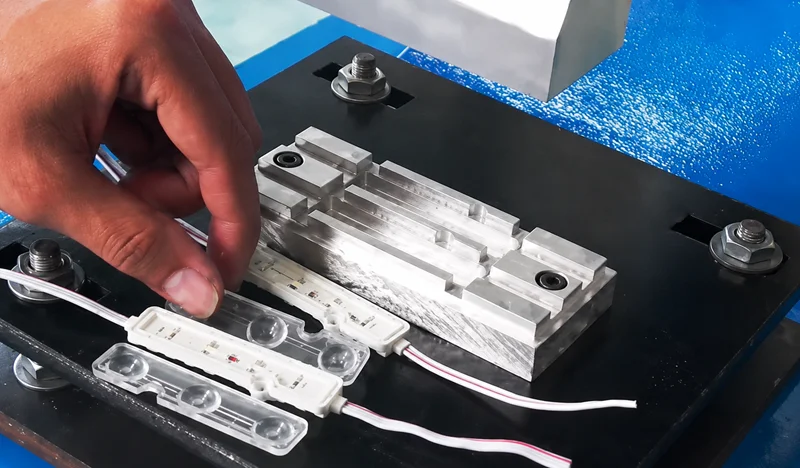
Process for evaluating and selecting an ultrasonic plastic welding solution
To achieve strong, clean, and stable welds, the actual product must be evaluated before selecting the machine. For new products, sample testing is recommended to determine the right parameters and fixture solution.
Send product samples
Customers send samples, images, or videos of the current operation so VietSonic can make an initial assessment.
Material evaluation
Identify the plastic type, welding position, sealing requirements, strength requirements, and appearance requirements of the product.
Welding horn design
The welding horn and positioning fixture are designed according to the product shape to transmit energy to the correct welding area.
Sample testing and optimization
Run sample tests, inspect the weld, and fine-tune the parameters before putting the solution into production.
Why do manufacturers choose ultrasonic welding for plastic parts?
Key factors that determine weld quality
A good ultrasonic weld does not depend only on machine power. The product needs to be evaluated as a whole, including material, weld area design, welding horn, positioning fixture, and operating parameters.
| Factor | Role in the welding process |
|---|---|
| Plastic material | The same plastic type or materials with good compatibility will help the weld become more stable. |
| Weld area design | Energy directors, welding edges, and contact area must be suitable to concentrate energy at the correct position. |
| Welding horn | The horn must match the geometry, correct frequency, and transmit energy evenly to the product surface. |
| Positioning fixture | The fixture keeps the product stable, reduces misalignment, and supports repeatable quality in mass production. |
| Machine parameters | Welding time, pressure, amplitude, and holding time need to be optimized for each product sample. |
Not just selling machines — VietSonic consults based on real products
For each LED electrical box or plastic component sample, VietSonic can support weldability assessment, recommend the machine configuration, design the welding horn and positioning fixture, and suggest suitable operating parameters.
Application-focused consulting
Evaluate the product based on material, shape, welding position, and real production requirements.
Welding horn/fixture design
Optimize the welding horn and positioning fixture so the product is pressed in the correct position, creating uniform and stable welds.
Sample testing before implementation
Support weld sample testing so manufacturers have a clear basis for evaluation before investing in the machine.
Plastic part welding
Component housing welding
Welding horn design
Custom positioning fixture
Need to test-weld LED electrical boxes or plastic parts?
Send product images, plastic material information, weld requirements, and expected production volume. VietSonic will help evaluate the suitable ultrasonic welding machine solution for your product.