



Vibration is one of the most important signals to identify the operational health of a wind turbine. Under normal conditions, turbines always have certain vibrations due to wind, rotational speed, generator load, and structural characteristics. However, when vibrations increase abnormally, appear in strange cycles, or are accompanied by noise, reduced output, and repeated shutdowns, it can be a warning sign of blade damage.
1. Why can blade damage cause vibration?
Wind turbine blades are long, lightweight structures made of composite materials and subjected to continuous loads. When a blade experiences cracking, delamination, leading-edge erosion, icing, or damage from lightning strikes, its mass and stiffness can change. A single blade changing differently from the other two is enough to unbalance the rotor.
This imbalance causes the turbine to vibrate more as it rotates. Initially, the vibration may be minor and only occur within certain wind speed ranges. But as the crack spreads, the composite layer weakens, or the ice builds up, the vibration amplitude will increase. If not inspected promptly, abnormal loads can transfer back to the hub, main shaft, bearings, gearbox, generator, and even the tower structure.
2. Common causes
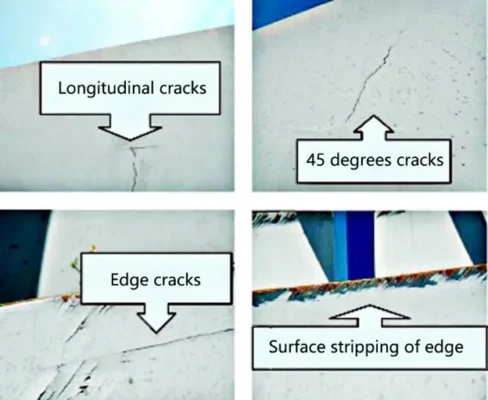
A common cause is cracking or delamination within the composite material. For turbine blades, external damage is sometimes only an initial sign. Beneath the surface, there may already be areas of delamination, voids, debonding, or degraded structural integrity. When the blade rotates, this weak area causes abnormal deformation and generates vibration.
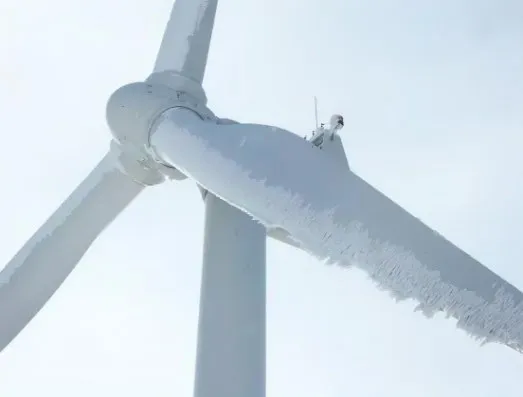
The second cause is icing on the blade. When ice accumulates unevenly across the three blades, the rotor’s mass becomes unbalanced. Icing also alters the aerodynamic profile, increases drag, creates wind turbulence, and amplifies vibration. It can cause mass imbalance, abnormal vibrations, and increase the risk of fatigue or blade fracture in cold conditions.
The third cause is leading-edge erosion or blade surface peeling. The leading edge is the area that directly impacts rain, sand, dust, sea salt, and insects. When the surface becomes worn or deformed, the blade’s aerodynamics change. The turbine may still run, but vibration, noise, and performance degradation will start to appear.
3. What to check when a turbine vibrates abnormally?
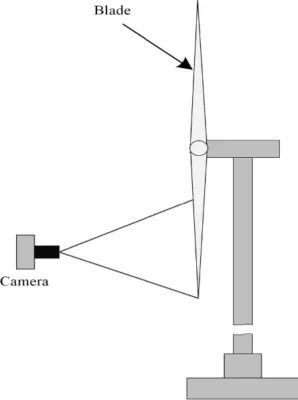
First, operational data must be cross-referenced: at what wind speed does the vibration increase, does it occur continuously or intermittently, and is it accompanied by warnings from the SCADA system. Then, a visual inspection of the blades using cameras, UAVs, or direct access is necessary to look for signs of cracking, coating delamination, edge erosion, punctures, scorch marks, or icing.
If hidden defects are suspected, thermal imaging, ultrasound, or other non-destructive testing methods should be combined to evaluate internal delamination, debonding, or material degradation.
4. Conclusion
Abnormal vibration should not be considered a minor operational fault. For wind turbines, vibration can be an early signal of blade cracking, composite delamination, icing, leading-edge erosion, or lightning damage. Accurately assessing the cause will help prevent machine shutdowns.
For cases where vibration increases rapidly, repeats frequently, involves strange noises, reduces power output, or shows signs of cracking, peeling, or scorching on the blades, professional technical teams should be contacted for an early survey and assessment. Timely handling not only helps reduce repair costs but also protects the safety of the entire wind turbine system during long-term operation.