



Uneven Fluidization in Fluid Bed Granulator – Causes, Consequences, and Solutions
VietSonic provides inspection, repair, and optimization services for Fluid Bed Granulator systems used in pharmaceutical, food, and nutraceutical manufacturing plants.
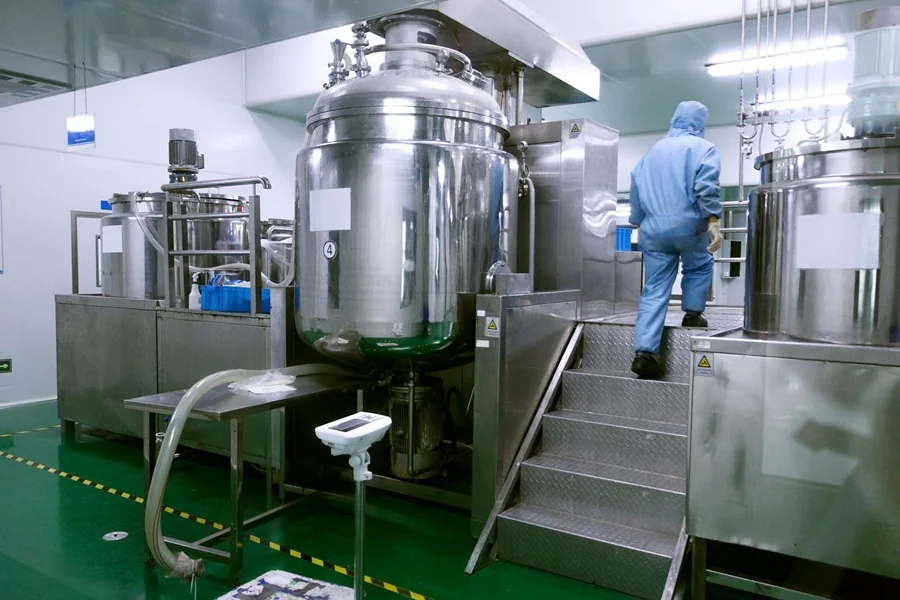
During the operation of a Fluid Bed Granulator, one of the most serious yet common issues is uneven fluidization.
This is a condition where the powder layer inside the fluid bed chamber is not lifted evenly, causing some areas to fluidize strongly while others remain stagnant or form lumps. If not handled early, this issue directly affects granule quality, product uniformity, and the overall efficiency of the production line.
What Is Uneven Fluidization?
In a Fluid Bed Granulator, hot air from the blower passes through the powder bed to create a “fluidized” state, where the powder moves like a liquid.
When the system is stable
- The powder moves evenly
- The produced granules are uniform
- Moisture is evenly distributed
- The drying process is efficient
When fluidization is uneven
- Part of the powder remains stagnant
- Part of the powder is blown too strongly
- Lumps appear
- Granules have inconsistent sizes
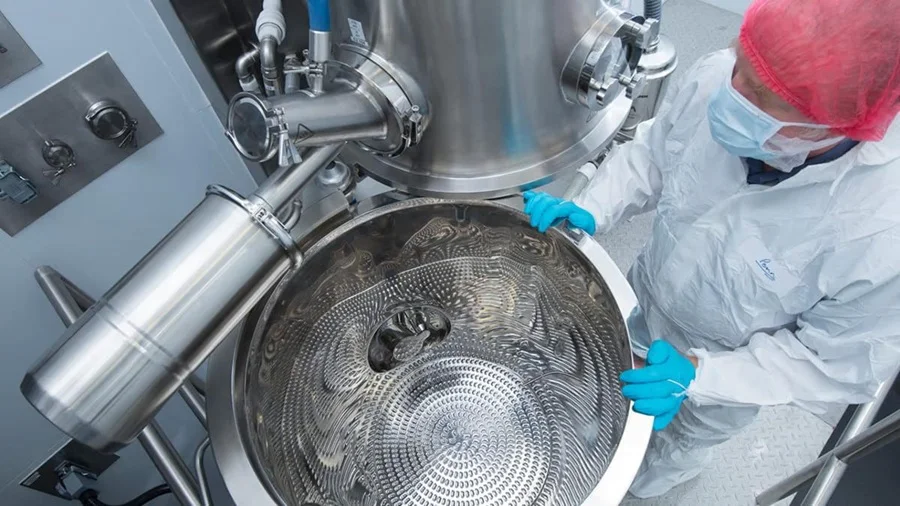
Signs of Uneven Fluidization
- Granules are not uniform
- Many large powder lumps appear in the batch
- Some areas inside the chamber do not move
- The granulation time becomes unusually long
- Product moisture is unstable
- The machine vibrates abnormally
- Air pressure fluctuates
- Temperature differences occur between zones
Causes of Uneven Fluidization
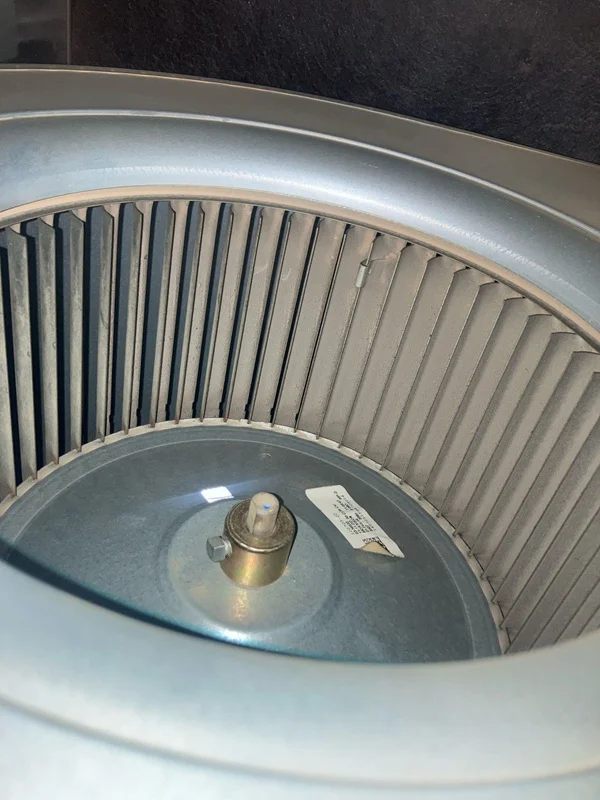
1. Weak or Unbalanced Blower System
This is the most common cause. After long-term operation, blower blades may accumulate dust, the motor may lose performance, bearings may wear out, or the fan blades may become unbalanced.
As a result, airflow is insufficient, pressure becomes unstable, and air distribution inside the fluid bed chamber becomes uneven.
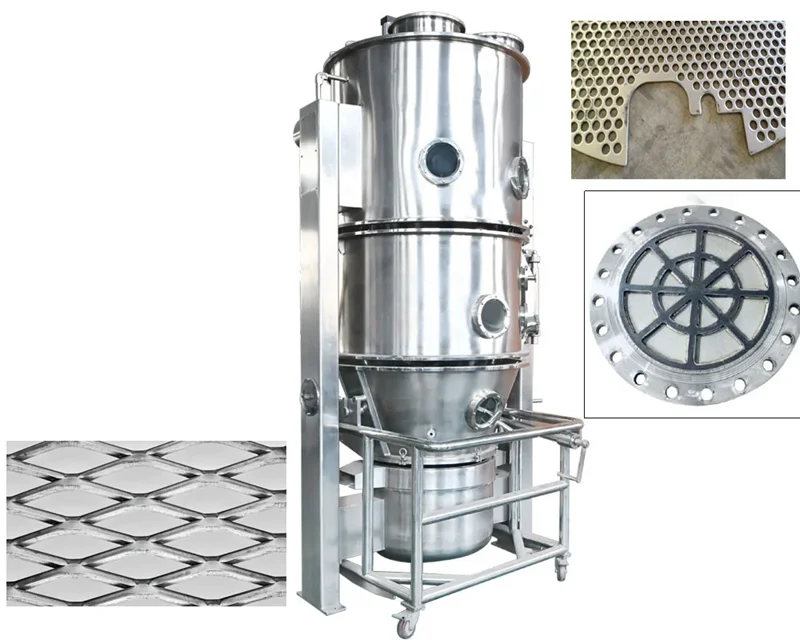
2. Clogged or Damaged Air Distribution Plate
The air distribution plate is responsible for evenly distributing hot airflow. If the distribution holes are clogged, the plate is deformed, or dust has accumulated over time, the airflow will shift unevenly between zones.
As a result, some areas fluidize too strongly, while others remain almost stagnant, creating “dead zones” inside the chamber.
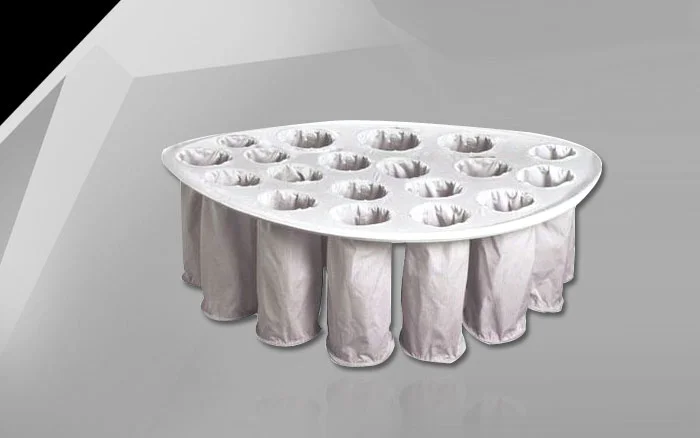
3. Clogged Bag Filters or Filter System
When the dust filter performs poorly, chamber pressure changes, return airflow becomes unstable, and the fluidizing airflow becomes turbulent.
This causes uneven particle movement and greatly reduces fluidization efficiency.
4. Raw Materials with Uneven Moisture Content
If the raw material absorbs moisture, is not mixed evenly, or has inconsistent particle fineness, some areas may easily agglomerate while others are blown too strongly, making the fluid bed unstable.
5. Incorrect Operating Parameters
In some cases, unsuitable blower speed, excessive temperature, incorrect binder spray flow rate, or inaccurate PID control may cause granules to stick, powder to agglomerate, and fluidization to break down.
Consequences of Uneven Fluidization
Many factories underestimate this issue until multiple production batches fail QC, material loss increases, machine running time becomes longer, energy consumption rises, the filter system becomes clogged, or the blower/motor burns out.
- The entire production line may need to stop
- Delivery schedules may be delayed
- The company’s reputation may be affected
- Major repair costs may increase later
How Does VietSonic Handle Uneven Fluidization?
Air system inspection
Measure blower airflow, check pressure, inspect motor vibration, and assess blower fan balance.
Air distribution plate inspection
Clean distribution holes, check plate deformation, and evaluate airflow distribution.
Filter & dust extraction inspection
Measure filter differential pressure, check return airflow performance, and clean or replace filters when needed.
Operating parameter optimization
Optimize PID control, check temperature, spray flow rate, and adjust the blower inverter.
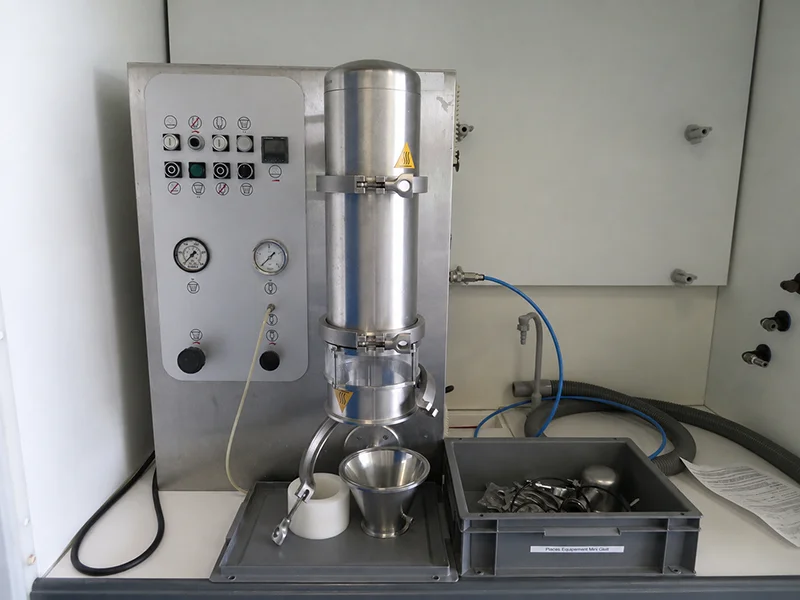
Real-World Test Run After Repair
- Test run with actual material
- Monitor the fluidization condition
- Evaluate granule uniformity
- Measure and verify operating parameters
Why Should This Issue Be Handled Early?
Uneven fluidization is usually a minor issue at first, but it tends to become more serious the longer the machine continues to operate.
Early handling helps
- Reduce material loss
- Reduce downtime
- Stabilize product quality
- Extend equipment service life
Delaying repairs may cause
- Blower damage
- Motor burnout
- Heater damage
- Complete filter system blockage
VietSonic – Specialist in Fluid Bed Granulator Repair
VietSonic specializes in Fluid Bed Granulator repair, fluid bed system maintenance, industrial blower overhaul, control system upgrades, and granulation performance optimization.
We provide on-site inspection, fast repair service, emergency technical support, and long-term support for manufacturing plants.
Contact VietSonic for Technical Support
If your business is experiencing uneven fluidization, agglomerated granules, unstable air pressure, or poor Fluid Bed Granulator performance, contact VietSonic for fast technical support from our engineering team.