VietSonic engineered and calibrated in Vietnam

Ultrasonic spot-welding machine for labels and tags, built around your product samples

When a manufacturer needs to secure labels in the correct position, process multiple material layers, or shorten the operation compared with adhesive bonding and stitching, VietSonic can evaluate actual samples, conduct welding trials, and build a machine configuration suited to the production process.
Call +84 938 49 33 66 Request sample testing

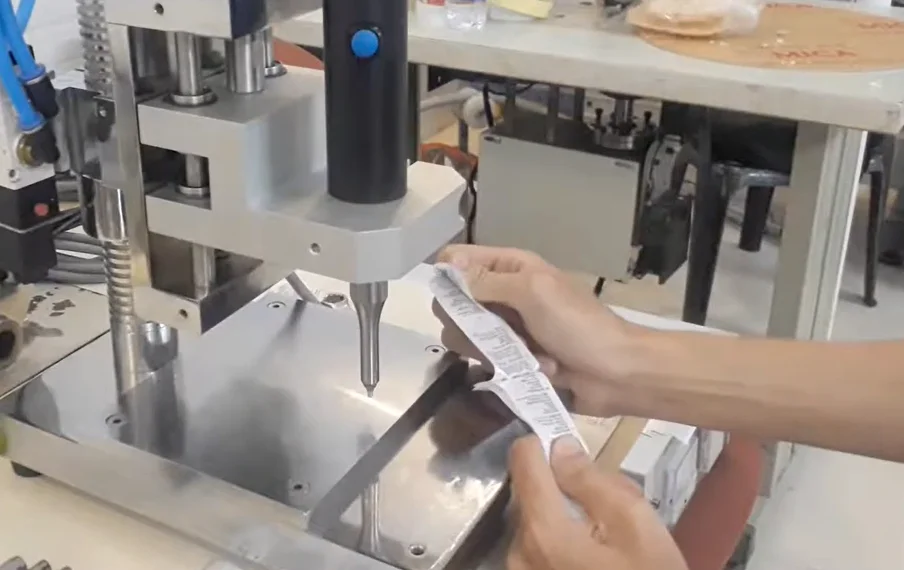
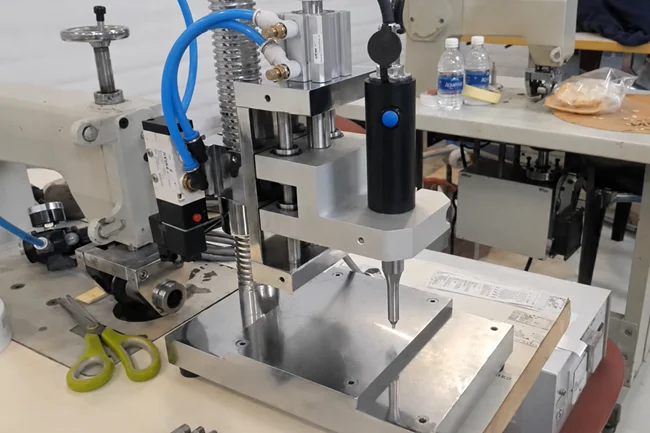
VietSonic ultrasonic label spot-welding machine operating on an actual sample
The ultrasonic label spot-welding machine is operated directly on an actual material sample.

What do manufacturers need from a label attachment process?

Even a small weld point can affect line pace, appearance, and rework rates. The machine should therefore be developed around the material, weld location, and actual handling method rather than selected solely by its rated power.

01

The weld must be positioned accurately

Small labels, flexible parts, and surfaces that shift easily require a suitable welding horn and fixture. Effective positioning helps operators place products more quickly and reduces label misalignment between cycles.

02

Parameters must match the actual material

Weldability depends on thermoplastic content, number of layers, thickness, and weld area. Sample trials help determine suitable amplitude, pressure, and weld time before the machine is completed.

03

The machine must fit the production line

The worktable structure, activation method, and operating space should follow the existing process. This provides a basis for reducing unnecessary handling and giving operators convenient access to the weld location.

Label placement and ultrasonic spot-welding operation
Placing the material and completing an ultrasonic spot-welding cycle.

How does the machine create a bond using ultrasonic vibration?

The generator converts electrical energy into mechanical vibration and transfers it through the welding horn to the contact area. With materials containing compatible thermoplastics, the concentrated energy softens the interface locally. Pressure maintained for the programmed time then forms the bond.

A more streamlined process

  • No adhesive needs to be applied at the weld location when the samples are compatible.
  • No thread or needle holes are created at the bond point.
  • The weld cycle can be programmed for more consistent repetitive operation.
  • The welding horn can be designed around the required weld-mark geometry.

Sample testing determines feasibility

Ultrasonic welding is not effective on every fabric or label. VietSonic needs to evaluate the material, multilayer structure, and appearance requirements before determining the welding horn, fixture, and operating parameters.

Recommendation: send approved samples, defective samples, and your current inspection criteria so the welding trial reflects actual production conditions.

Watch the machine weld actual samples

The video shows ultrasonic spot welding on different fabrics, garment labels, and tags. The machine is also demonstrated on multiple material layers.

  • Observe how the sample is positioned.
  • See the moment the welding horn contacts the material.
  • Review the machine’s multilayer processing capability on the demonstrated sample.

VietSonic develops each machine around the production requirement

Machine-building capability is demonstrated by turning a specific welding requirement into a configuration that can operate on the factory floor. Each step below reduces the risk of selecting equipment that does not match the actual product sample.

1

Sample assessment

The engineering team records the material, number of layers, weld location, appearance requirements, and desired production pace.

2

Welding trials

The sample is tested with suitable combinations of pressure, weld time, and amplitude to evaluate the bond point and its effect on the surface.

3

Configuration development

The welding horn, fixture, operating structure, and activation method are selected according to the trial results and production-line conditions.

4

Technical handover

Operators receive guidance on machine operation, product changeover, and inspection points so the manufacturer can use and maintain the equipment effectively.

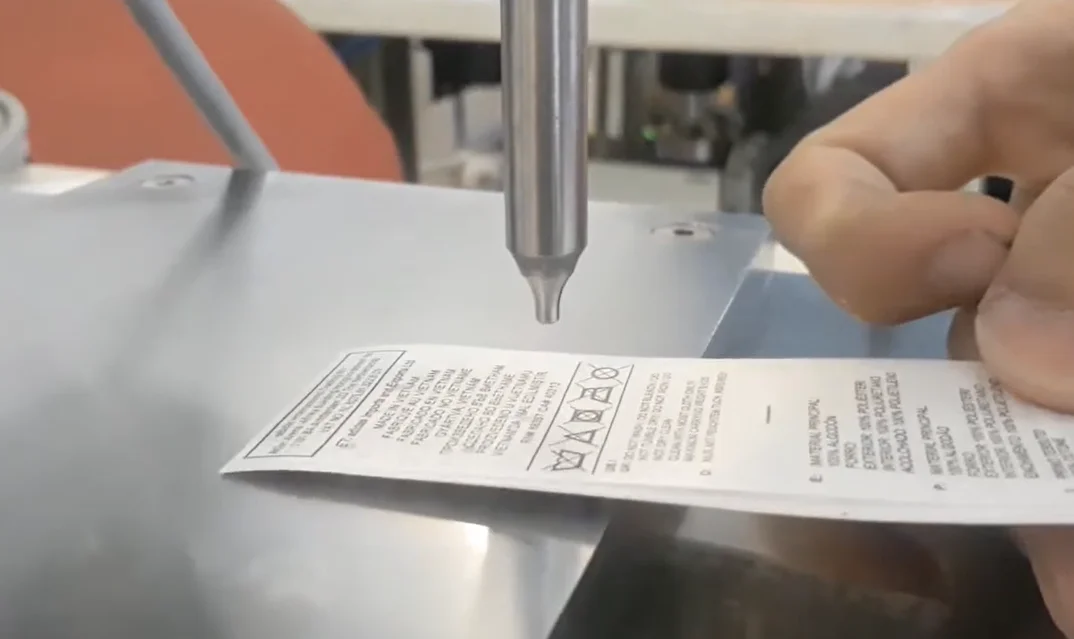
Inspecting an ultrasonic label weld across multiple material layers
Inspecting the weld area immediately after the cycle helps compare the result with the required appearance and sample bond criteria.

Applications that should be evaluated with sample trials

Spot-welding equipment may be considered for processes that require localized bonding, involve limited operating space, or need to avoid adding adhesive and thread at the weld location.

  • Attaching labels and tags to fabrics containing compatible thermoplastics.
  • Spot welding multiple layers of fabric, nonwoven material, or flexible components.
  • Locally securing components in garments, packaging, filter media, and automotive interiors.
  • Processes requiring a custom welding horn for a specific weld mark.
Technical note: these industries indicate potential areas of application only. Feasibility must be confirmed using the manufacturer’s actual material and inspection criteria.

Reference specifications

Operating frequency28–35 kHz, selected according to the configuration
Power400–1000 W, depending on the material and welding horn
Power supply220 V – 50/60 Hz
Reference dimensionsApproximately 400 × 195 × 300 mm
Reference weightApproximately 5 kg
Welding-horn configurationDesigned according to the weld location and required geometry

Final specifications are confirmed after the engineering team evaluates the sample and installation requirements.

Provide the right data to receive a relevant proposal

Manufacturers can prepare the samples and information below before contacting us. Clearer data enables faster configuration selection and feasibility assessment.

  • Actual base-material and label samples.
  • Number of layers, thickness, and dimensions of the weld area.
  • Photographs or drawings showing the weld location.
  • Acceptance criteria for bond performance and appearance.
  • Required output or desired cycle time.
  • Available machine space and the operator’s current handling method.

What will your company receive after the initial discussion?

  • A preliminary assessment of whether the material is suitable for ultrasonic welding.
  • A recommended welding-trial approach and welding-horn type.
  • Initial guidance on the machine configuration, fixture, and activation method.
  • A list of any additional data required before a technical proposal can be prepared.

Technical contact: Mr. Hai – +84 938 49 33 66

Frequently asked questions about ultrasonic label spot welding

Can the machine weld every type of label and fabric?

No. Results depend on material composition, layer structure, and weld geometry. Sample testing is required before the configuration can be confirmed.

Can the machine weld multiple material layers?

The video shows the equipment welding multiple layers on the demonstrated sample. The maximum number of layers for a specific product still needs to be tested according to thickness, material, and weld area.

Can the weld-mark geometry be changed?

A welding horn can be developed for a suitable geometry within the technical limits of the application. Manufacturers should provide the required dimensions, drawings, or weld-mark samples for evaluation.

Can the machine be installed in an existing production line?

Integration depends on the available space, product feeding method, control signals, and line pace. VietSonic needs this information to recommend an appropriate structure.

Send your samples to VietSonic for a welding assessment

Tell our engineering team about the material, number of layers, label position, and desired production pace. A sample-based technical discussion helps your company determine whether ultrasonic technology is suitable for the current process.