
01
The seam must be continuous and its airtightness controllable
The machine must produce a consistent seam along the film’s direction of travel. For products required to retain air, welded samples must be tested under actual operating conditions.
A solution for businesses that need continuous welding on plastic film, controlled seam airtightness, and stable integration of the welding process into their production lines.
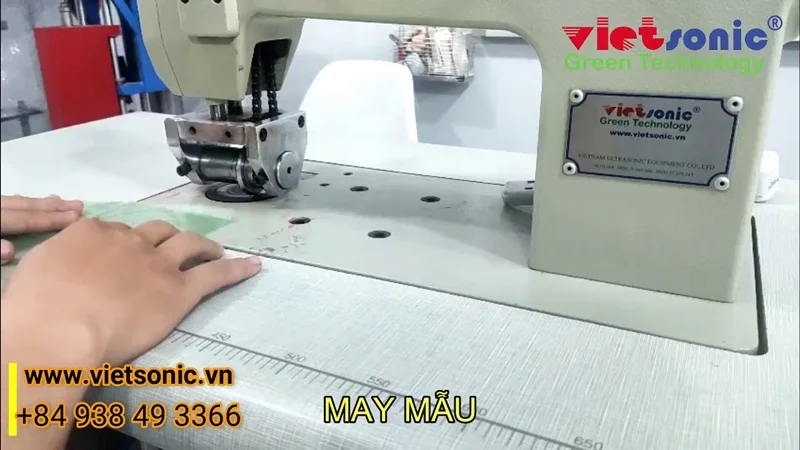
When plastic film runs continuously, weld quality depends on more than machine power. Material type, number of layers, seam width, pressing force, feed speed, and airtightness requirements must be considered together. That is why VietSonic starts with actual samples and the customer’s production objectives before finalizing the machine configuration.
The machine must produce a consistent seam along the film’s direction of travel. For products required to retain air, welded samples must be tested under actual operating conditions.
Higher speed is only effective when the material is guided steadily, the welding assembly maintains proper contact, and the seam remains uninterrupted throughout operation.
Machine dimensions, film feed direction, synchronization speed, operating position, and signal interface must be configured for the customer’s production layout and process.
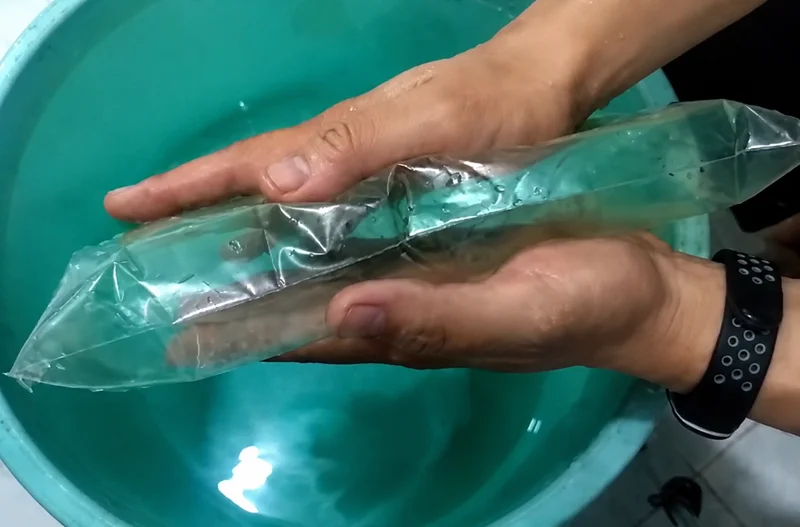
The machine combines ultrasonic vibration with pressing force at the contact area to form a weld seam while the material moves continuously. The VietSonic video records both the welding process and an underwater load test used to observe the sample’s ability to retain air.
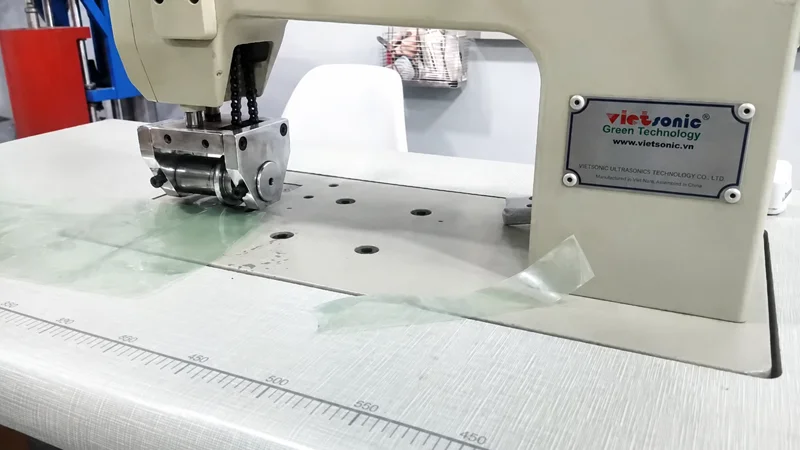
Our manufacturing capability is demonstrated by turning each customer’s requirements into a machine configuration that can be operated, tested, and fine-tuned.
The customer provides the film type, thickness, number of layers, weld width, target speed, and sample acceptance criteria.
VietSonic tests the sample to assess weldability, then adjusts energy, pressing force, and speed to suit the application.
The welding assembly, guiding mechanism, machine table, and controls are arranged according to the product, material direction, and integration point.
The machine is trial-run with the customer’s sample, supplied with operating instructions, and further adjusted when required by actual production conditions.
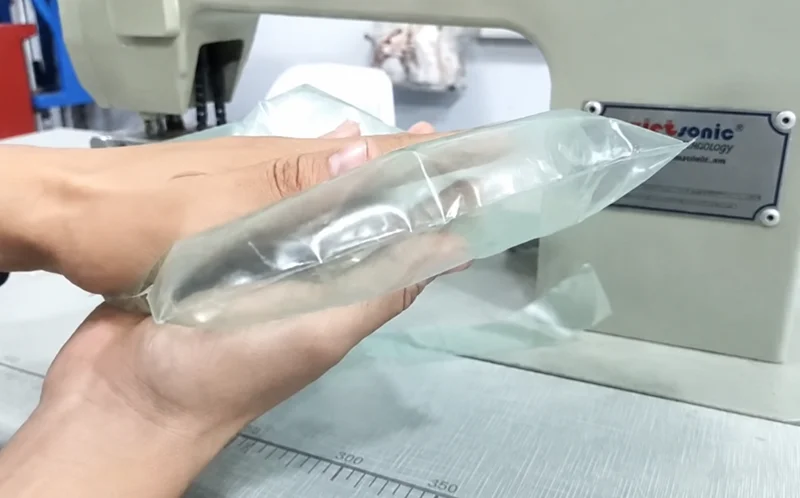
The video allows businesses to directly observe how the machine welds plastic film and how samples are tested after welding before discussing a machine configuration for their products.
Actual operation video: continuous welding on plastic film and an underwater load test.
Application feasibility must be determined for each specific material. Businesses should submit samples when facing one of the following requirements.
Suitable for evaluation when the product requires a long weld seam, consistent seam width, and a continuous film-feeding process.
Samples required to retain air or limit leakage should be tested using the load, duration, and test environment applied by the customer.
VietSonic can assess the feed direction, control signals, synchronization speed, and installation space before beginning the design.
For an accurate application assessment, businesses only need to provide a material sample, weld dimensions, target speed, and test criteria. VietSonic will discuss the test plan before finalizing the machine configuration.
Weldability depends on material composition, film structure, thickness, and number of layers. The most reliable way to confirm suitability is to test the actual sample used by the customer.
No. This is a potential speed for the machine shown in the video. Actual speed must be confirmed according to the material, weld width, pressing force, and the required airtightness or bond strength.
An integration solution can be assessed. The customer should provide the film direction, line speed, control signals, installation layout, and operating requirements so that a suitable interface can be designed.
Please provide a material sample, thickness, number of layers, weld dimensions, target speed, photos of the existing production line, and the customer’s current method for inspecting welded products.
Discuss the material, speed, airtightness, and machine integration directly with our technical team. The more specific the information, the more closely the test plan and proposed configuration can match your production line.


