Machine developed from product samples

Ultrasonic sewing machine for threadless bra production

VietSonic designs and manufactures machines based on fabric samples, bonding-line requirements, and actual production processes. Businesses can test ultrasonic bonding on their own materials before finalizing the machine configuration.

No needles or thread
Custom roller design
Sample testing before fabrication
Local technical support
Call for technical consultation Watch the machine in operation
VietSonic ultrasonic sewing machine for threadless bra production
VietSonic ultrasonic sewing machine for threadless bra production.

Requirements of lingerie manufacturers

The machine must produce an acceptable bond on the actual fabric sample

Bra fabrics can vary in fibre composition, stretch, number of layers, surface coating, and thickness. These differences directly affect how the material responds to ultrasonic energy. A machine running successfully does not by itself confirm that the bonding line will meet the required strength and shape.

01

Neat bonding lines

Compatible material layers are bonded at the contact area, reducing exposed thread and the added thickness associated with conventional stitching.

02

No needle holes

The ultrasonic process does not require a needle to penetrate the material, making it suitable for areas that require a clean surface with minimal needle marks.

03

Controllable parameters

Speed, pressure, ultrasonic energy, and the guiding mechanism are calibrated to the sample to maintain a consistent bonding line.

04

Product-specific rollers

The roller width, profile, and pattern can be designed for the bonding position and the product’s visual requirements.

Bonding principle

How does an ultrasonic sewing machine work?

The ultrasonic assembly generates high-frequency mechanical vibrations. The material passes through the contact area between the ultrasonic horn and the roller. Vibration combined with pressure generates localized heat within the material’s thermoplastic content, creating a bond without needles or thread.

Bonding quality depends on several factors:

  • Fibre composition and the proportion of thermoplastic material.
  • Thickness, stretch, and the number of layers to be bonded.
  • Roller profile, width, and surface pattern.
  • Applied pressure, material feed speed, and energy level.
  • The operator’s ability to maintain alignment or the effectiveness of the guiding system.

Technical note: Not every lace, mesh, or stretch fabric can be bonded with the same configuration. Material samples should be tested to evaluate bonding strength, deformation, colour changes in the bonded area, and durability after stretching.

VietSonic ultrasonic horn and roller assembly for bra production
Close-up of the working area between the ultrasonic horn and the machine roller.

Machine development capabilities

VietSonic manages the process from sample assessment to machine calibration

The machine configuration is developed from the product the business needs to manufacture. The technical team directly handles the work that affects machine operation and bonding quality.

01

Fabric sample analysis

Determine the material composition, number of layers, stretch, and required bonding position.

02

Roller design

Calculate the roller width, surface, and pattern based on the bonding-line sample required by the business.

03

Machine-system integration

Synchronize the ultrasonic system, drive mechanism, pressure system, machine table, and material-guiding mechanism.

04

Trial run and calibration

Directly inspect the bonding line, fabric feed speed, and operating procedure before handover.

Application video

Watch the ultrasonic sewing machine produce a threadless bra component

The video shows how the material is fed through the bonding area and how the machine creates the bonding line on an actual product.

Configuration based on requirements

Information to confirm before machine fabrication

The more clearly a business provides its product samples and operating conditions, the more closely the proposed machine can match the required process.

Material sampleFibre composition, thickness, stretch, number of layers, and surface coating, if applicable.
Bonding positionStraight or curved lines, edge bonding, edge cutting, or pattern embossing on the product.
Bonding-line requirementsWidth, shape, tensile strength, softness, and surface visibility.
Current processOperator tasks, processing time per product, and the stages before or after the machine.
Expected outputProduct quantity, operating hours per shift, and frequency of product changeovers.
Integration requirementsMachine-table dimensions, guides, fixtures, and compatibility with existing equipment.

Implementation process

From a bra sample to a production-ready machine

STEP 01

Sample submission

The business provides a bra sample, fabric sample, images of the required bonding position, and bonding-line requirements.

STEP 02

Bonding test

The material is tested to evaluate its response to ultrasonic energy, bonding strength, and deformation after processing.

STEP 03

Configuration proposal

Select the appropriate ultrasonic system, roller type, drive mechanism, machine table, and supporting mechanisms.

STEP 04

Fabrication and calibration

VietSonic fabricates and assembles the machine, then sets the speed, pressure, and ultrasonic parameters based on the sample-test results.

STEP 05

Testing and handover

The machine is trial-run with the actual material, followed by instructions on operation, parameter adjustment, and basic maintenance.

Production value

Production factors the machine helps businesses control

  • Reduce needle- and thread-related tasks: no thread replacement or broken-thread handling is required at positions converted to ultrasonic bonding.
  • Limit needle marks on the material: the surface is not punctured by a needle along the bonding line.
  • Standardize bonding-line geometry: the roller and operating parameters are set according to the product sample.
  • Adapt the bonding-line design: a different roller can be designed when a new product style is developed.
  • Improve access to technical support: locally manufactured equipment enables more responsive inspection and technical service.
Bra bonding line produced with a VietSonic ultrasonic sewing machine
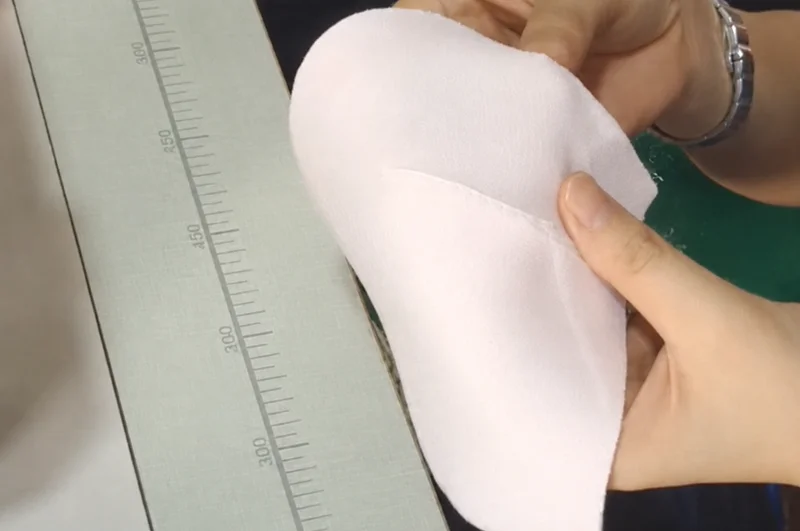
Inspecting the shape and consistency of the bonding line after a trial run.

Selecting the right application

Can ultrasonic sewing replace every bra-sewing process?

The machine is suitable for positions where the material can be ultrasonically bonded and the bonding line meets the intended-use requirements. A bra may still require a combination of different manufacturing methods.

Processes suitable for evaluation

  • Bonding compatible thermoplastic fabric layers.
  • Creating straight or curved bonding lines according to the design.
  • Edge bonding and edge cutting with the correct roller type.
  • Creating decorative patterns on selected product components.

Cases that require sample testing

  • Very thin or highly stretchable fabrics.
  • Multi-layer materials with different compositions.
  • Lace or mesh with uneven fibre density.
  • Bonding lines exposed to repeated tensile loads during use.

Frequently asked questions

Information businesses commonly need before investing

Can the machine be used with every type of bra fabric?

This cannot be determined from the fabric name alone. Bonding capability depends on thermoplastic content, fabric structure, number of layers, and strength requirements. The actual material should be tested before finalizing the configuration.

Can the roller be designed for the business’s required bonding line?

Yes. The roller width, pattern, and surface profile can be designed based on the bonding-line sample and product requirements.

What should a business provide for consultation?

The business should provide a fabric sample, finished-product sample, images of the required bonding position, expected output, and a description of the current process.

Can the machine be integrated into an existing process?

Integration depends on the available floor space, current operating procedure, and the speed of related processes. After assessing the requirements, VietSonic can propose a suitable machine table, guiding system, or fixture.

Speak directly with our technical team

Send a fabric sample for testing before selecting the machine configuration

Provide the fabric type, required bonding position, bonding-line shape, and expected output. The VietSonic team will analyze the requirements and propose a solution suited to the business’s production process.

Hotline: 0938 49 33 66
Email: info.vietsonic@gmail.com
Website: vietsonic.vn
Call 0938 49 33 66 Send a request by email

Information to prepare

✓ Fabric sample or bra sample

✓ Images of the required bonding position

✓ Bonding-line dimensions and design

✓ Expected output per shift

✓ Video of the current process, if available