Ultrasonic PP film joining solution

Ultrasonic sewing machine for PP plastic film, designed to meet production requirements

A solution for businesses that need to join edges, create bonded seams, or finish PP material edges at a stable speed without needles or thread, with tooling customized to the actual product.

Material testing before fabrication
Product-specific roller design
In-house fabrication and assembly
Production operation support
Production challenges

PP film seams must remain consistent during continuous production

Businesses need more than a machine that can simply form a seam. The machine must also match the material structure, product dimensions, appearance requirements, and operating pace of the existing production line.

01

Inconsistent seams

Incorrect pressure, operating speed, or ultrasonic energy can produce seams with uneven strength or cause material deformation.

02

Dependence on needles, thread, or adhesive

Consumables, replacement time, and cleaning work can interrupt production, especially for high-volume orders.

03

Standard machines may not match the product

Material width, seam profile, guiding mechanism, and required operating speed vary from one business to another.

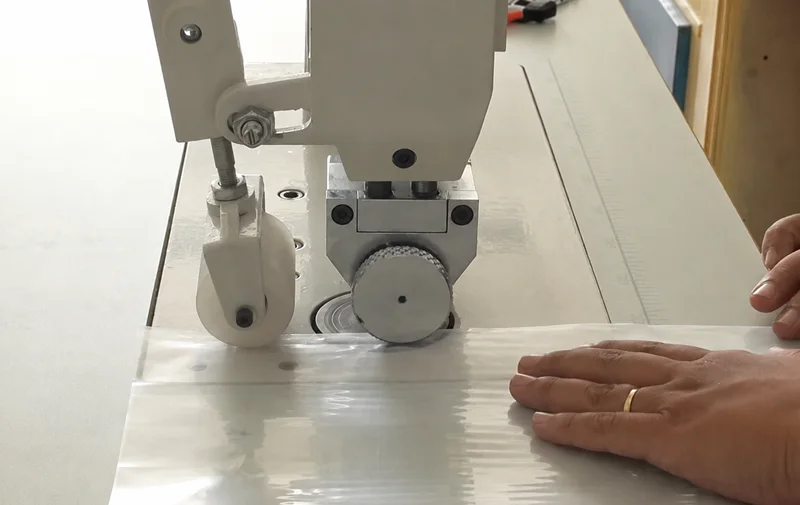
Ultrasonic sewing machine for PP plastic film designed and manufactured by VietSonic

Overall view of the ultrasonic sewing machine for PP plastic film during trial operation.

Design and manufacturing capabilities

VietSonic develops machines based on the customer’s actual product samples

Instead of selecting a machine solely from standard specifications, businesses can send material samples, seam dimensions, and productivity requirements for the engineering team to evaluate the appropriate solution.

Material evaluation

Evaluate the PP type, thickness, number of layers, surface characteristics, and energy transfer at the joining area.

Tooling design

Customize the ultrasonic horn, pressure roller, pattern, and guiding mechanism to match the product shape.

Machine fabrication

Design the frame, drive system, operating position, and adjustment assemblies to suit the production environment.

Practical trial operation

Test the seam on actual material samples, adjust operating parameters, and provide operating instructions before the machine enters production.

  • Design the material guiding mechanism according to the PP film width.
  • Adjust the speed to suit the operator’s working pace.
  • Customize the roller pattern or profile as required.
  • Calibrate pressure and energy for each material type.
  • The system can be engineered for integration into a machine assembly or production line.
  • Support sample testing before the fabrication solution is finalized.
Operating principle

Joining materials with ultrasonic vibration concentrated at the contact area

The ultrasonic horn transmits mechanical vibration to the material compressed between the horn and the roller. Energy concentrated at the contact surface locally softens the material, which then bonds under pressure.

Which production steps can businesses reduce?

The machine forms bonded seams without needles or thread. Depending on the tooling configuration, edge joining, pattern embossing, or edge finishing can be carried out continuously in a single operation.

Heat is generated locally at the contact area instead of heating the entire working assembly. This enables fast startup and reduces heating wait time.

Technical note: joining capability and seam quality depend on material composition, thickness, number of layers, operating speed, pressure, and tooling geometry. Material samples should be tested before the machine configuration is finalized.
Materials evaluated
PP film and material structures that can be thermally bonded.
Processing methods
Edge joining, seam forming, pattern embossing, or edge finishing depending on the tooling.
Speed
Adjusted according to material thickness and seam quality requirements.
Roller
Profile and dimensions designed according to the actual product sample.
Machine configuration
Standalone machine or custom integration into the existing production system.
Actual operation video

Watch the ultrasonic sewing machine for PP plastic film in operation

The video shows the material passing through the ultrasonic assembly, the formation of a continuous bonded seam, and inspection of the finished material.

Operating details

Machine design must control energy, pressure, and material tracking simultaneously

Seam quality does not depend on the ultrasonic generator alone. The mechanical structure, roller accuracy, and ability to maintain stable material tracking all directly affect the finished product.

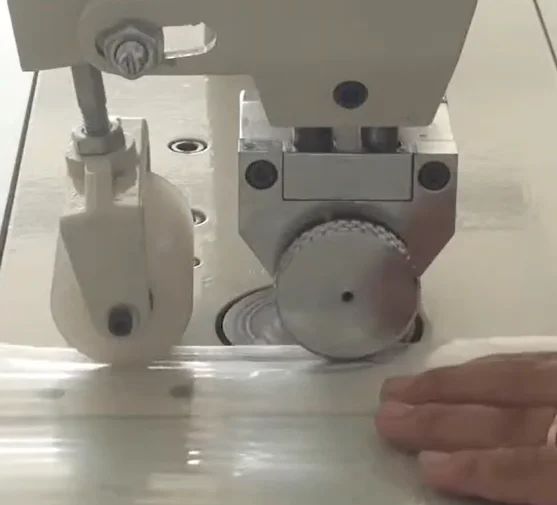
Ultrasonic horn and pressure roller assembly for PP plastic film
The ultrasonic horn and roller assembly is calibrated to the required seam profile.
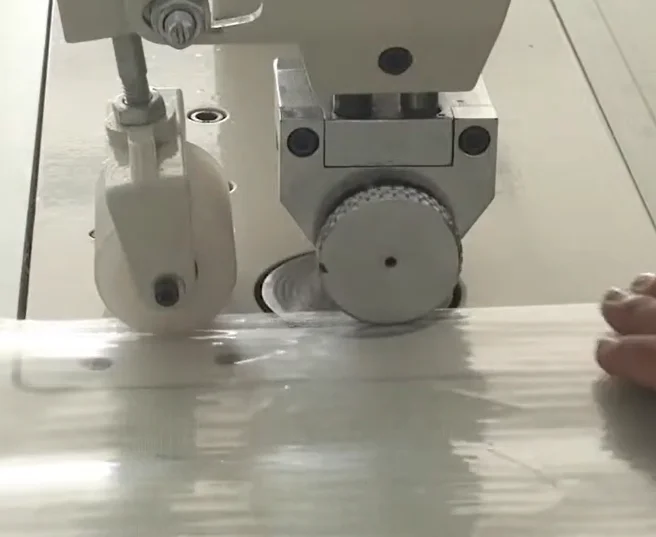
Feeding PP film through the ultrasonic sewing machine
The material is guided through the working area at a stable speed and pressure.

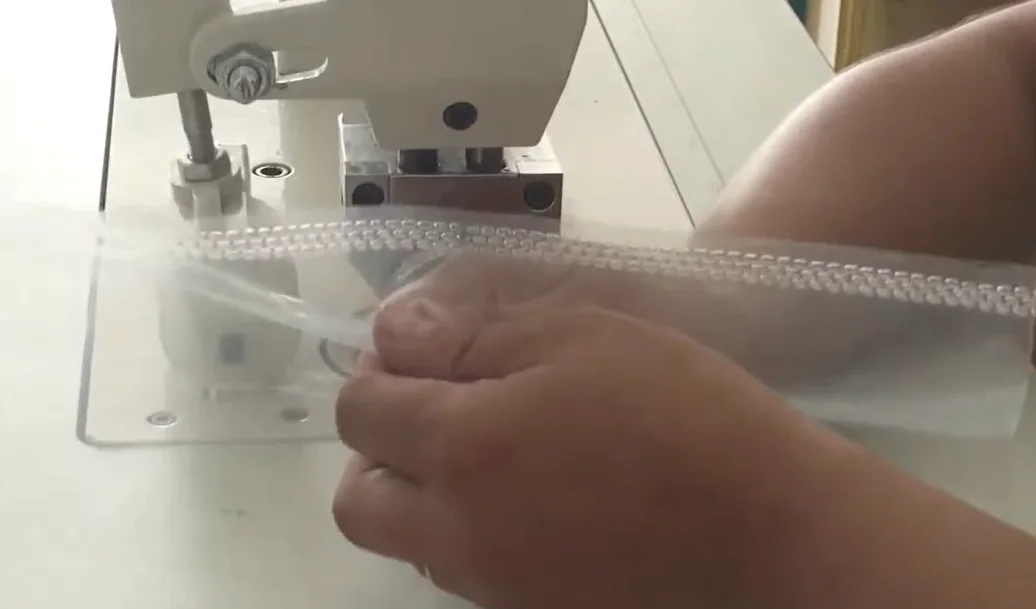
PP plastic film seam after ultrasonic sewing

After processing, the bonded seam should be evaluated for strength, consistency, and material deformation.

Production applications

The machine is configured for the product rather than limited to a single seam type

Based on the material type and output requirements, the engineering team will evaluate the appropriate tooling and material-feeding solution.

1

PP film edge joining

Create continuous bonded seams on PP film components with structures suitable for ultrasonic technology.

2

PP packaging processing

Applicable to joining, edge forming, and component finishing operations in packaging production.

3

Woven PP materials

Test and design tooling to match the product structure, thickness, and load-bearing requirements.

4

Nonwoven PP materials

Create pressed seams, patterns, or laminated joints without needles or thread.

5

Shaped components

Design rollers and guiding mechanisms according to the seam position or product profile.

6

Production line integration

Engineer the ultrasonic assembly for integration into existing feeding, pulling, or production processes.

Implementation process

From material sample to completed machine

The process is designed to reduce the risk of purchasing a machine that does not match the actual material or product.

Receive samples and requirements

The business provides PP samples, product dimensions, seam location, productivity requirements, and operating conditions.

Seam testing

Technicians evaluate bonding capability and deformation, then select suitable test parameters.

Machine configuration design

Define the ultrasonic system, roller, pressing mechanism, material guide, machine frame, and required adjustment solution.

Fabrication and delivery

The machine is assembled, tested with actual materials, inspected, and accompanied by operating instructions before delivery.

Why businesses choose us

VietSonic is directly involved from sample testing to machine fabrication

Machines are not selected from a catalogue alone

The configuration is evaluated based on material samples and the business’s specific output requirements.

In-house mechanical and tooling design

Rollers, guiding mechanisms, machine frames, and operating positions can be adjusted to suit the product.

Production troubleshooting support

The engineering team checks operating parameters, tooling, and production conditions when seam quality changes.

Send a PP film sample for machine solution evaluation

Provide material samples, product images, seam dimensions, and expected productivity. The VietSonic team will recommend the machine configuration, conduct sample testing, and propose a suitable fabrication solution.

VIETNAM ULTRASONIC EQUIPMENT COMPANY LIMITED · Website: vietsonic.vn