



Ultrasonic sewing machine for fray-free PP bag cutting
When PP bag edges fray, deform, or require rework after cutting, the issue goes beyond appearance. Manufacturers also lose finishing time, struggle to maintain consistent quality, and face a higher risk of disruption in downstream operations. The ultrasonic sewing machine designed by VietSonic for specific material samples cuts and seals PP edges directly at the contact area without needles or thread.
No needles or sewing thread
Sample testing before finalizing the configuration
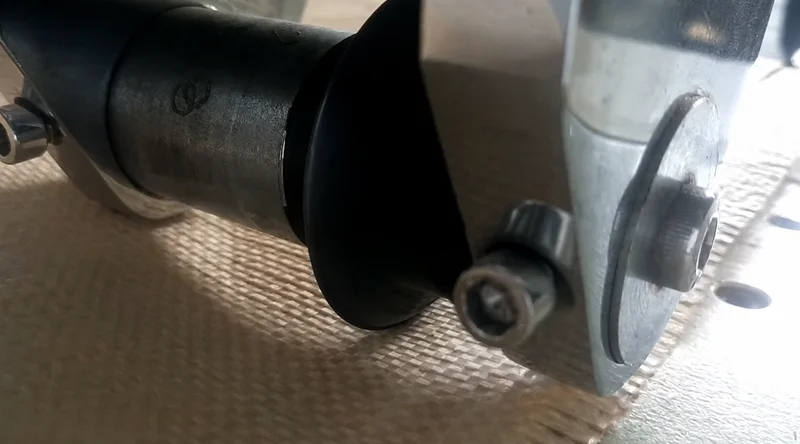
PP bag edges are more than an appearance issue
An unstable cutting process can create additional downstream work, including removing loose fibers, recutting defective edges, rejecting products, or readjusting equipment during packaging.
Common problems faced by manufacturers
- PP edges fray after mechanical cutting.
- Heat cutting produces thick, sticky, or deformed edges when the temperature and contact time are unstable.
- Product quality depends heavily on operator technique.
- An additional edge-finishing step is required before sewing, welding, or packaging.
The hidden cost behind the cut edge
The edge accounts for only a small part of the product, but it directly affects appearance, handling in the next process, and the rework rate. At high production volumes, a few additional seconds spent on each bag can accumulate into many hours of labor.
Manufacturers therefore need a configuration tested on the exact PP material they use, rather than selecting a machine based solely on the material name.
How does an ultrasonic sewing machine process PP bag edges?
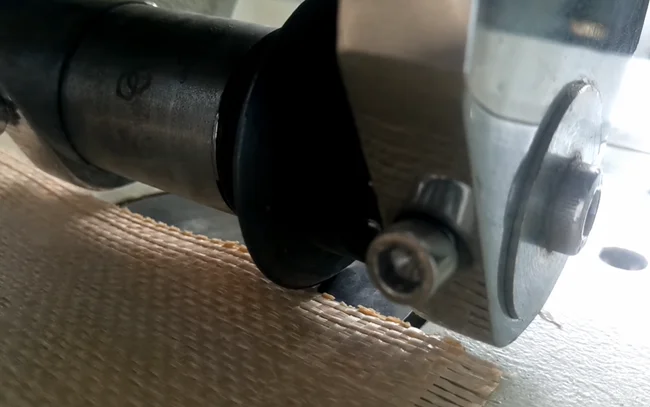
The machine generates ultrasonic vibration at the working head and combines it with pressure from the roller. Energy is concentrated at the contact area, bonding the thermoplastic fibers along the cut and allowing the edge to be shaped and sealed as the material passes through the machine.
Feed the material
The operator aligns the PP bag edge with the cutting head and guide roller.
Generate ultrasonic vibration
The generator and ultrasonic head deliver concentrated energy to the processing area.
Cut and seal the edge
The roller applies pressure to support material cutting while bonding the fibers along the edge.
Inspect the finished edge
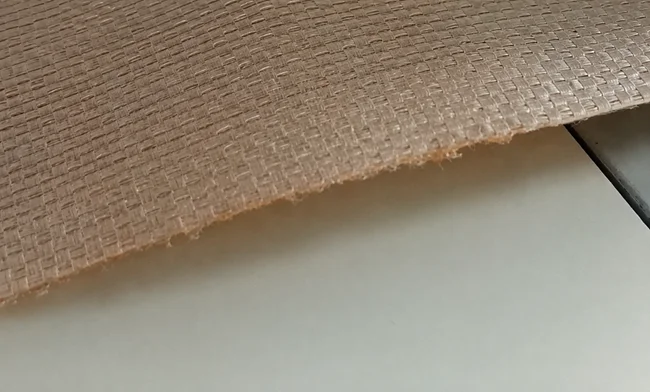
The cut edge is evaluated for cleanliness, bonding, and deformation before the parameters are confirmed.
How does ultrasonic cutting differ from mechanical and heat cutting?
| Method | Processing characteristics | Production considerations |
|---|---|---|
| Mechanical cutting | A blade separates the material through cutting force. | The equipment is simple, but woven PP edges may fray and require additional finishing. |
| Heat cutting | Heat is transferred from a blade or heating element to the material. | The edge can be sealed, but excessive heat or prolonged contact may create thick, sticky, or deformed edges. |
| Ultrasonic cutting | Energy is concentrated at the contact area between the ultrasonic head, material, and roller. | The heat-affected zone is narrow, the cut is clean, and cutting can be combined with edge sealing; the parameters must be adjusted to the actual PP sample. |
Watch the ultrasonic sewing machine cut PP bags without fraying
The video directly shows the cutting head, the PP bag passing through the machine, and the finished edge. Manufacturers can use it to compare the result with their current products and cutting process.
Visible improvements in the production process
Reduce rework
Sealing the edge during cutting helps reduce loose-fiber removal and recutting before the product moves to the next process.
Improve quality consistency
Speed, pressure, and energy parameters are set according to the sample, making the result less dependent on manual operator technique.
No needles or thread
Ultrasonic technology does not form a seam using needles and thread, eliminating these consumables from the edge-processing stage.
Suitable for continuous production
The roller mechanism supports continuous material feeding, making it suitable for standardizing a repetitive production operation.
VietSonic develops machines around each manufacturer’s material and process
Materials generally described as PP bags can differ in weave structure, thickness, coating, and finished-edge requirements. An effective solution must therefore begin with testing rather than relying on one fixed set of parameters for every application.
Receive samples and requirements
Document the material type, current defects, required edge profile, and target production capacity.
Test actual material samples
Evaluate PP bonding performance, cut cleanliness, and the level of deformation after processing.
Design the appropriate configuration
Select the ultrasonic head, roller, guide mechanism, machine table, and control method for the required process.
Conduct trials and hand over the machine
Fine-tune the parameters, provide operating and maintenance guidance, and support the machine after it enters production.
Which manufacturers should test this solution?
Woven PP bag manufacturers
Manufacturers that need clean edges for bags used to package rice, agricultural products, animal feed, fertilizer, or other industrial goods.
PP material processing companies
Companies cutting sheets, forming edges, or finishing woven PP components that want to reduce fraying after cutting.
Production lines requiring a standardized process
Production lines that need to reduce dependence on manual blades, blade temperature, and operator skill in a repetitive operation.
Provide the right details for faster sample testing and configuration proposals
| Information provided by the manufacturer | Purpose of evaluation |
|---|---|
| Actual PP samples or close-up photos/videos | Identify the weave structure, coating, and current edge condition. |
| Thickness, basis weight, number of layers, and material width | Select the appropriate power, working area, and guiding mechanism. |
| Required cutting profile or finished-edge sample | Design the roller and working profile according to the finished product. |
| Current and target production capacity | Determine whether the process should be manual, semi-automatic, or integrated into a production line. |
| Processes before and after the machine | Plan the material feeding direction, operator position, and product transfer method. |
Are frayed or deformed edges affecting your PP bag cutting process?
Send us your material sample, photos of the current cut edge, and target production capacity. The technical team at VietSonic will evaluate the application, propose a sample-testing method, and recommend a machine configuration suited to your production process.