



'%3E%3Cpath%20stroke='%23000'%20stroke-width='4'%20d='m-35-37-13%2020m5%203%2013-20m5%203-13%2020m63%2042%206-9m1-2%206-9m5%203-6%209m-1%202-6%209m5%203%206-9m1-2%206-9m-96%200%2013%2020m5-3-6-9m-1-2-6-9m5-3%2013%2020m63-42-6-9m-1-2-6-9m5-3%2013%2020m5-3-6-9m-1-2-6-9'/%3E%3Ccircle%20r='24'%20fill='%23cd2e3a'/%3E%3Cpath%20fill='%230047a0'%20d='M0%200a12%2012%200%201%201%2020%2013%2024%2024%200%201%201-40-26A12%2012%200%201%200%200%200'/%3E%3C/g%3E%3C/svg%3E)

Application of Ultrasonic Welding Machines in ABS Plastic Welding
Ultrasonic welding for ABS plastic is a fast, clean, and stable joining solution, suitable for technical products that require aesthetics, strength, and repeatability in mass production.
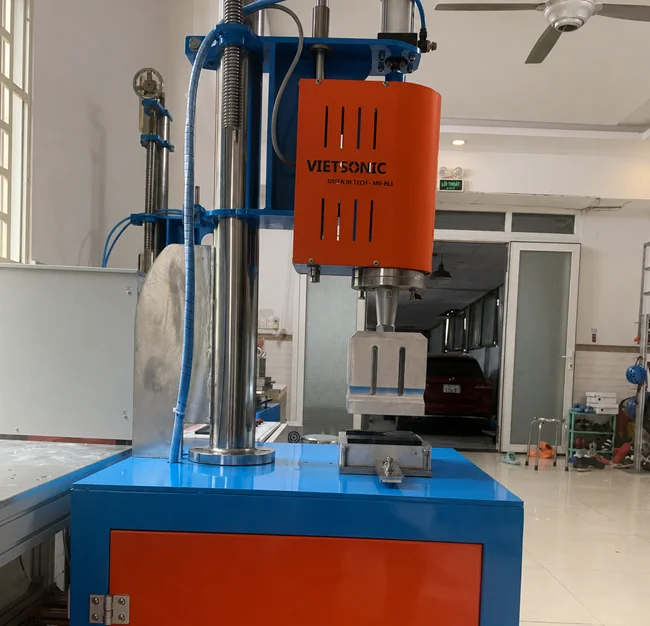
Why Is ABS Plastic Suitable for Ultrasonic Welding Technology?
ABS is an engineering plastic widely used in equipment housings, electronic components, plastic mechanical accessories, household products, and many industrial parts. With its rigidity, durability, ease of processing, and ability to form strong bonds when the weld profile is properly designed, ABS is one of the materials commonly used with ultrasonic welding machines.
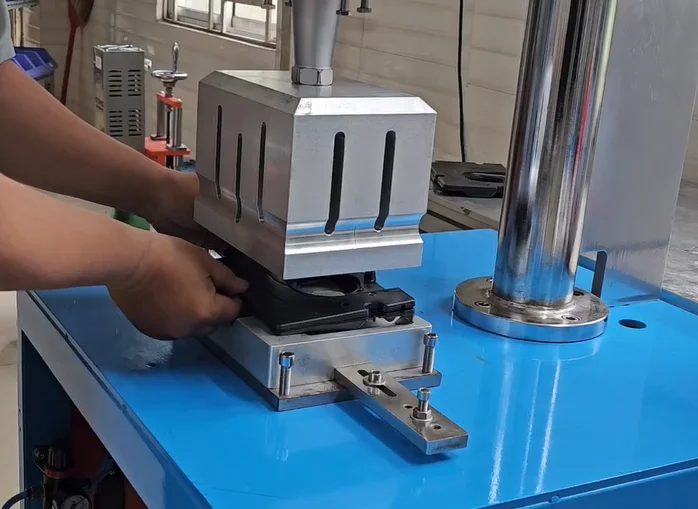
How Does Ultrasonic Welding Create Plastic Bonds?
An ultrasonic welding machine uses high-frequency mechanical vibration transmitted through the horn to the contact area between two plastic parts. Under the effects of pressure and ultrasonic vibration, localized heat is generated at the contact area, softening the material at the weld line and forming a bond after cooling.
The key advantage of this method is that heat is mainly generated at the area that needs to be welded, without heating the entire product. As a result, the welding process is usually fast, helps limit surface deformation, and is suitable for parts that require repeatable precision.
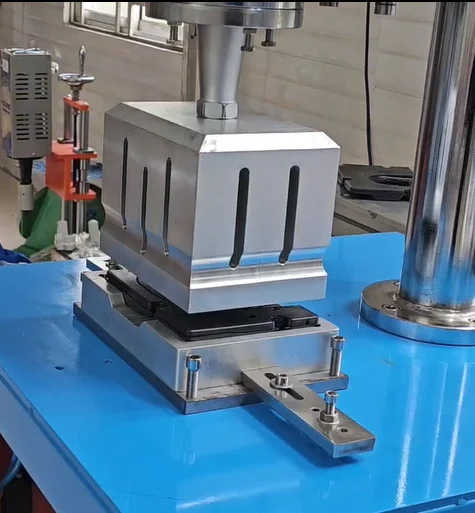
Advantages of Welding ABS Plastic with Ultrasonic Welding Machines
Clean and Neat Weld Joint
No adhesive, solvent, or mechanical screws are required, allowing the welded product to have a neater surface, suitable for parts with aesthetic requirements.
Fast Welding Speed
The welding cycle is usually short, making it suitable for high-volume production lines where stable operation time and high repeatability are required.
Easy Process Control
Parameters such as welding time, pressure, amplitude, and holding time can be set to optimize the process for each specific product.
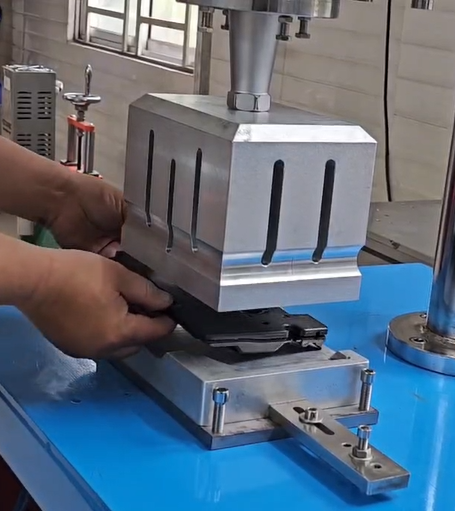
Fixtures, Horns, and Weld Line Design Must Work Together
To weld ABS plastic consistently, the welding machine is only one part of the system. Weld quality also depends on part design, contact position, energy director design, surface flatness, fixture rigidity, and horn geometry.
ABS Plastic Welding Process Using an Ultrasonic Welding Machine
An effective welding process must be developed based on the actual product, not only on machine parameters. For each ABS part, VietSonic usually evaluates the material, weld profile, fixture, horn, and post-weld inspection requirements together.
Product Inspection
Identify the plastic type, thickness, welding position, and technical requirements of the product.
Fixture Setup
Place the part into the fixture to ensure the product does not shift during the welding process.
Parameter Optimization
Adjust welding time, pressure, amplitude, and holding time based on test results.
Weld Inspection
Check the appearance, sealing performance, strength, and ability to meet actual usage requirements.
What Products Can ABS Ultrasonic Welding Machines Be Used For?
For ABS parts with suitable structures, ultrasonic welding technology can be applied to many groups of engineering plastic products. This is a method worth considering when businesses want to reduce dependence on adhesives, screws, mechanical clips, or complicated manual assembly steps.
| Product Group | Ultrasonic Welding Application |
|---|---|
| ABS plastic equipment housings | Welding covers, body housings, and assembled parts with aesthetic requirements. |
| Electrical and electronic components | Welding protective housings, engineering plastic assemblies, and parts that require stable bonding. |
| Industrial plastic products | Welding ABS parts in mass production where speed and repeatability are required. |
| Engineering plastic accessories | Welding small assemblies, shaped parts, and products that need to minimize the use of adhesives or screws. |
Important Notes When Evaluating ABS Plastic Weldability
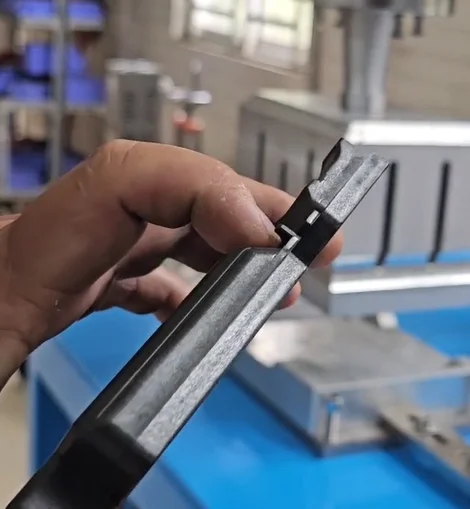
Not every ABS part can be welded successfully on the first trial. To achieve a stable weld, the product needs a suitable contact area, sufficient structural rigidity, a surface that is not excessively warped, and a clear energy transmission path. For new products, sample testing is very important to determine the appropriate horn, fixture, and parameter set.
VietSonic – Ultrasonic Welding Solutions for ABS Plastic Products
VietSonic supports consultation, sample testing, and configuration recommendations for ultrasonic welding machines suitable for each actual plastic product. The goal is not only to select a machine, but also to build a stable welding process for production.