Ultrasonic homogenization system for oil–water mixtures in fish feed production
Starting with a multi-phase mixture that was difficult to blend evenly, VietSonic evaluated the samples, conducted ultrasonic trials, and designed a mixing system suited to the company’s existing production process.
Trials with actual samplesDesigned for the production challengeLine-integration planning included
The production challenge
When oil, water, and powder are combined in one formulation
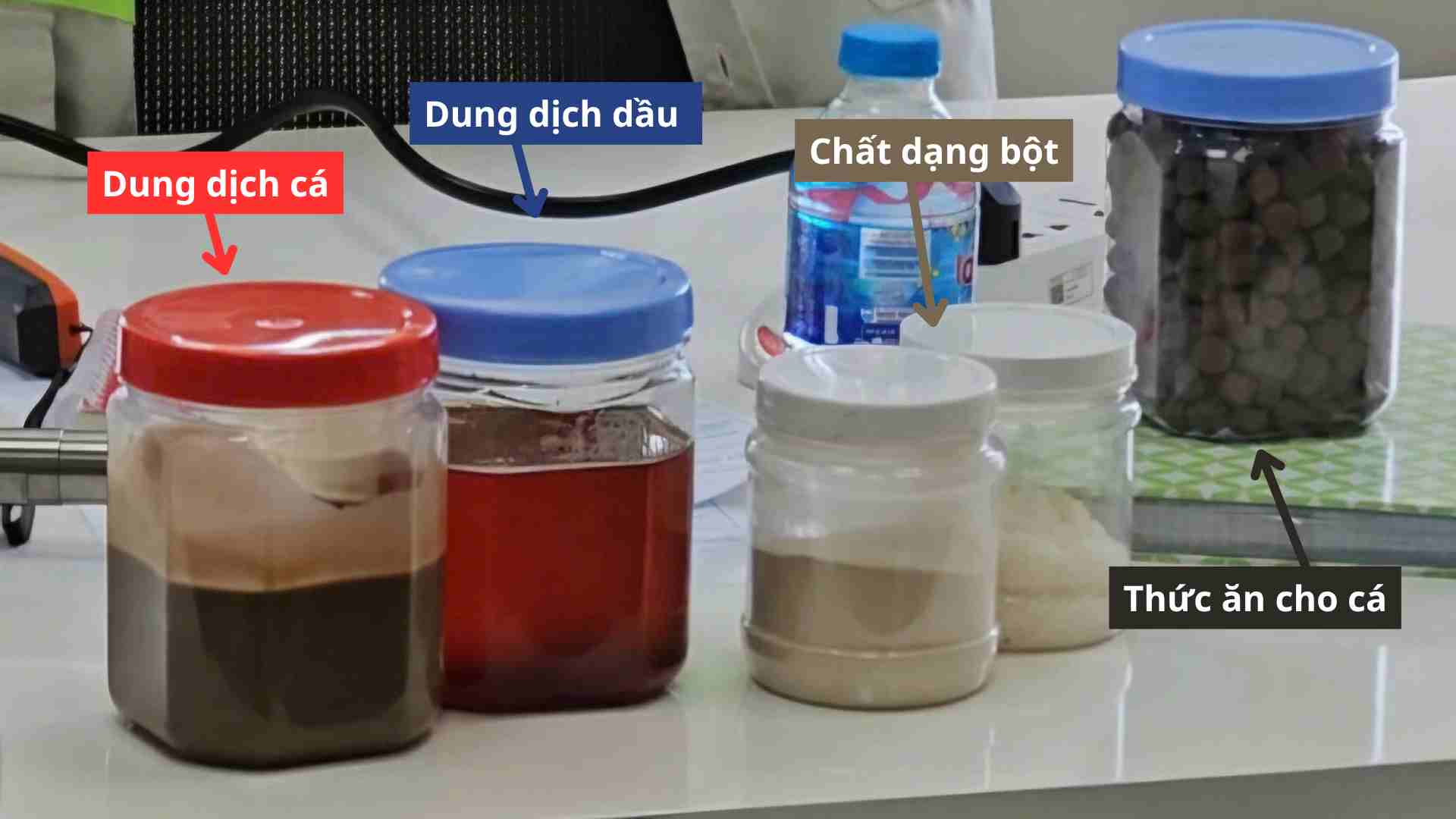
The liquid mixture used for spraying onto or blending with fish feed may contain multiple nutrients in different proportions. If this liquid–liquid–solid system is not processed correctly, the oil remains difficult to disperse in water, the powder is distributed unevenly, and the mixture tends to separate after mixing.
01
Difficulty creating a homogeneous mixture
Phases with different properties may not remain evenly distributed under the existing mixing conditions.
02
Uneven distribution of solids
Powders and additives may accumulate in localized areas, changing the composition of the liquid supplied at different times.
03
Inconsistent output
When the mixture is sprayed onto the feed pellets, some pellets may absorb more than others, while the amount of adhering powder can also vary.
Liquid and powder samples were evaluated before the processing method was selected.
Requirements defined from the finished product
The uniformity of the liquid mixture directly affects the feed pellets
In this actual case, the company needed to improve the distribution of oil, liquid nutrients, and powdered ingredients before the mixture was sprayed onto the product. The objective was to maintain a more consistent composition throughout the liquid-feeding process.
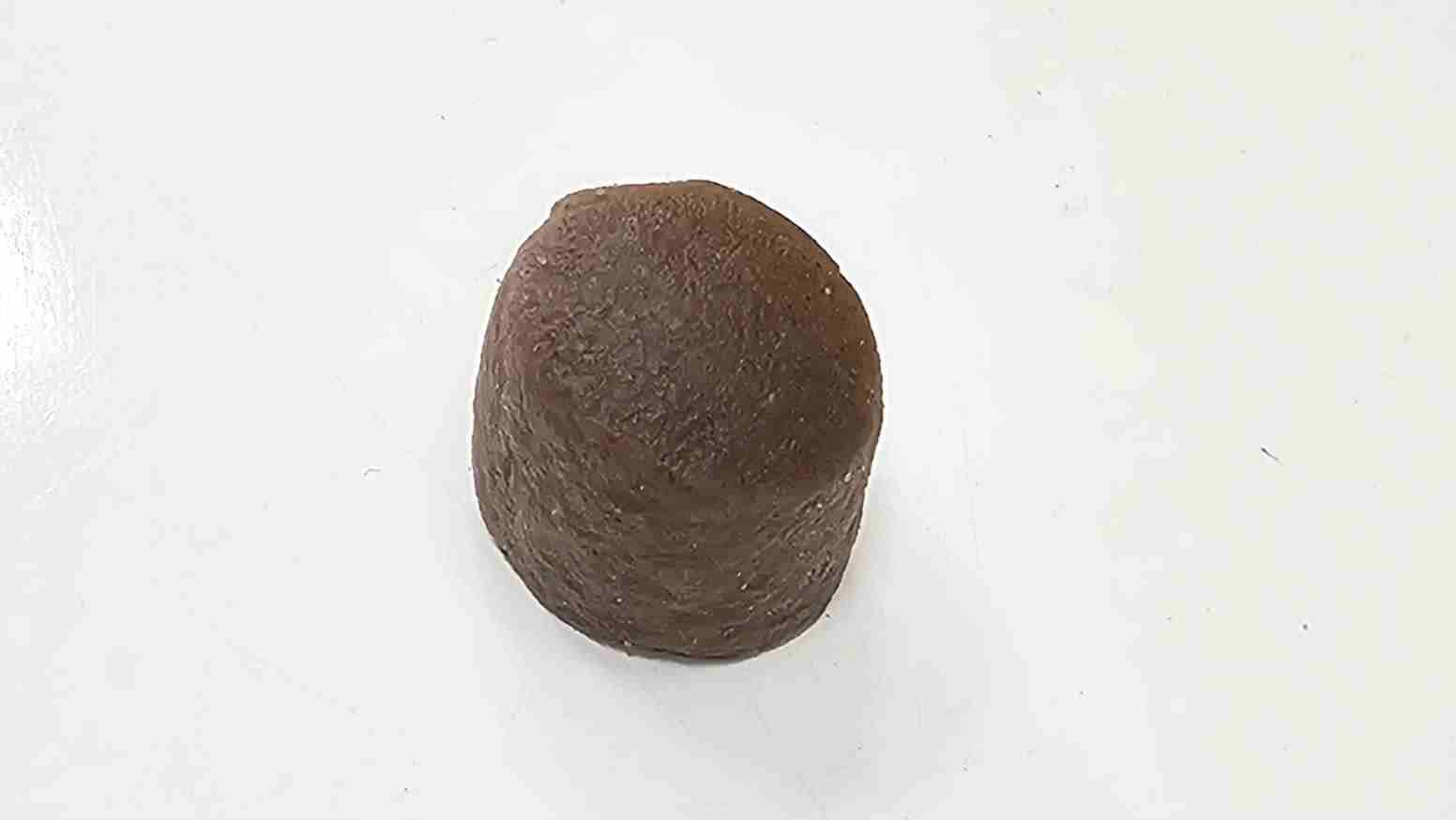
Fish feed pellet samples illustrate the need to control uniformity during the nutrient-spraying stage.
The machine must be designed around the actual liquid and production process
For a multi-phase system, selecting equipment solely by its rated power is not sufficient. Engineers must consider the sample composition, mixing ratios, powder characteristics, processing volume, operating time, and integration point to determine a suitable configuration.
Testing before fabrication
VietSonic validates ultrasonic homogenization using the customer’s samples
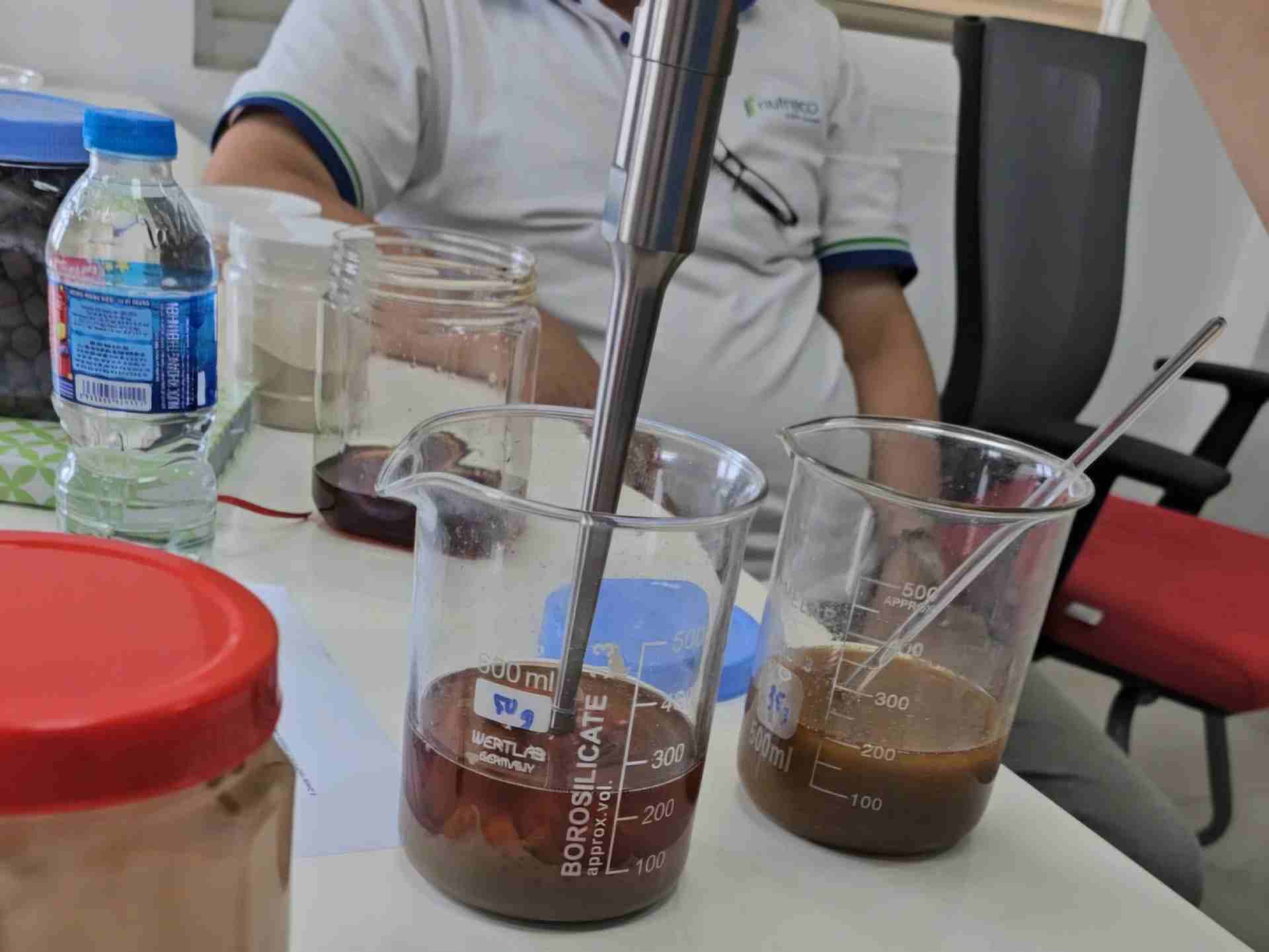
Ultrasonic waves create high-frequency vibrations in a liquid medium. Cavitation and the resulting shear forces within the treatment zone help reduce droplet size, disperse the phases, and distribute solid particles more evenly throughout the liquid.
Ultrasonic testing of a multi-component mixture before the equipment configuration was developed.
Focused action within the liquidUltrasonic vibration helps disrupt the boundaries between phases and disperse oil droplets throughout the water phase.
Evaluation of treated samplesTrial results allow the team to compare uniformity, separation tendency, and ingredient distribution before finalizing the machine design.
Results observed during testing
The treated mixture was more uniform than its initial state.
Phase separation was reduced under the trial conditions.
The liquid and solid components were distributed more evenly throughout the sample.
The mixture was better suited to uniform application onto the product.
The trial results provide the technical basis for designing the system instead of applying one standard machine configuration to every material.
Equipment implementation capability
From sample testing to a system that can be integrated into the production line
VietSonic develops each solution using data from the individual company. This process aligns the machine configuration with the raw materials, required throughput, and operating method at the production facility.
1Receive samplesRecord the composition, ratios, volume, and current production issue.
2Conduct trialsEvaluate the dispersion and homogenization performance of ultrasound.
3Select a configurationDetermine a processing method that matches the required output.
4Design and fabricateDevelop the ultrasonic assembly, machine structure, and connection method.
5Integrate and fine-tuneCoordinate installation and adjust the system to actual operating conditions.
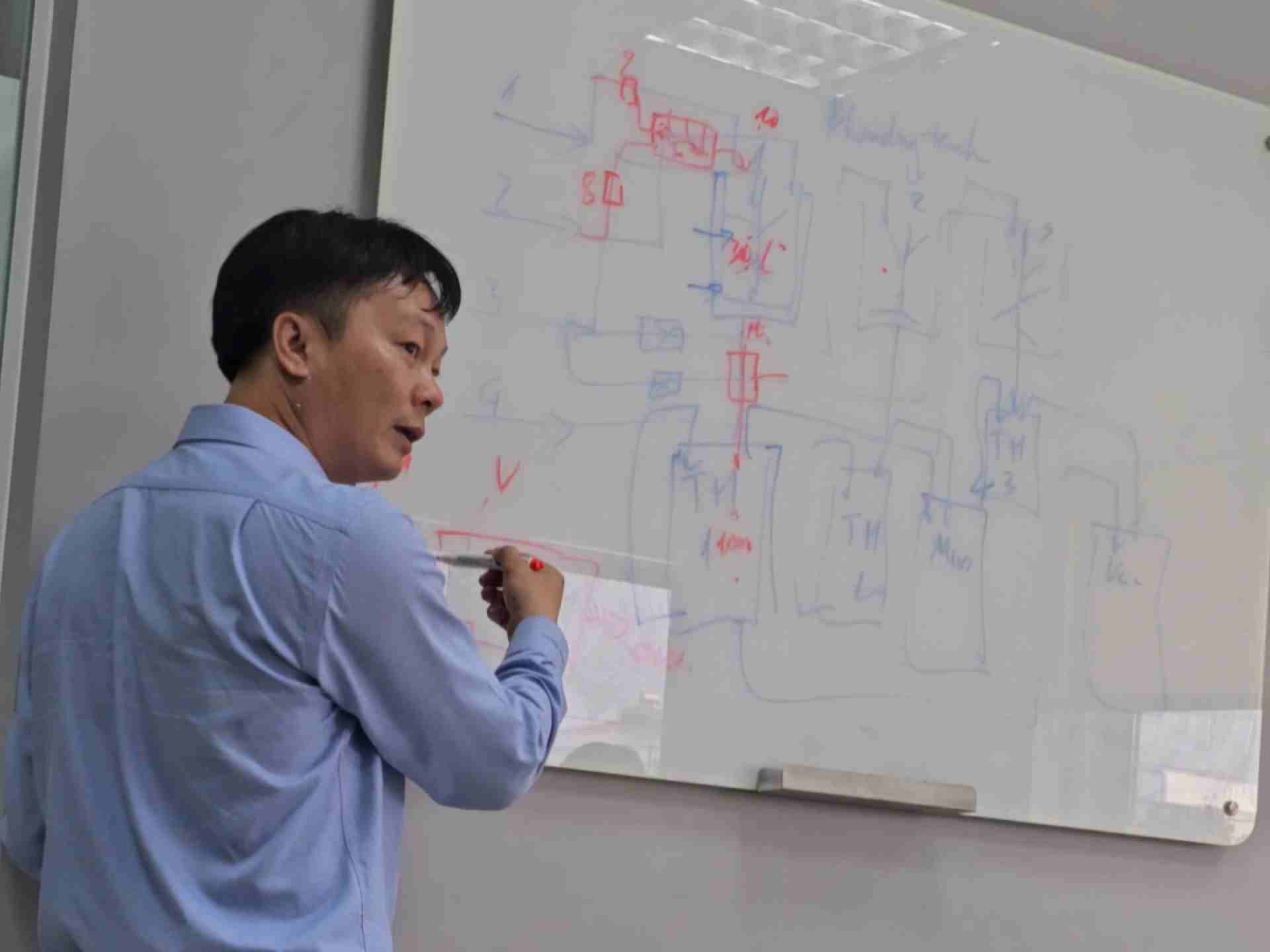
The engineering team discusses the operating diagram and the plan for integrating the ultrasonic mixing system into the existing production line.
Data required to design the right machine
What information should a company provide when requesting consultation?
The closer the information is to actual production conditions, the stronger the basis for testing and selecting the equipment configuration. Companies may send physical samples together with the information below.
Ingredients and mixing ratios
Specify the oils, water, liquid nutrients, powders, or additives in the system and their expected proportions.
Processing volume and operating mode
State the volume per batch, whether batch or continuous processing is required, and the desired production time.
Current production issue
Describe the separation time, powder settling, agglomeration, uneven distribution, or variations observed during spraying.
Required output
Define the criteria the company needs to control, such as uniformity, sprayability, stability time, or degree of dispersion.
Production-line conditions
Provide the installation location, current equipment, and process diagram so that an integration plan can be developed.
Application scope
The same principle requires a different machine configuration for each material system
Ultrasonic homogenization can be evaluated for a wide range of production challenges. However, its performance and the equipment configuration must be validated with actual samples rather than inferred from the application name alone.
Oil–water emulsificationSupports the dispersion of two immiscible liquid phases in food, chemical, and related formulations.
Powder dispersion in liquidsHelps distribute solid particles more evenly and reduce localized concentrations within the liquid.
Homogenization of multi-component systemsSuitable for evaluating formulations containing both liquid and solid phases in different proportions.
Integration into industrial processesThe configuration is developed according to processing volume, material-feeding method, and production-line operating conditions.
Send a sample for VietSonic to evaluate the homogenization solution
If your company is experiencing poor oil dispersion, powder settling, phase separation, or uneven application of ingredients onto the product, send us your formulation details and actual samples. Our engineering team will review the challenge, plan the trials, and recommend a suitable equipment configuration.