



Kombucha filling machine incorrect volume – Causes & Fixes
In the beverage manufacturing industry, especially premium products such as fermented Kombucha tea, accurate filling volume is a critical factor. However, many production facility owners are facing unstable bottling lines that fail to meet the required filling volume.
So what are the root causes, and how can they be solved thoroughly?
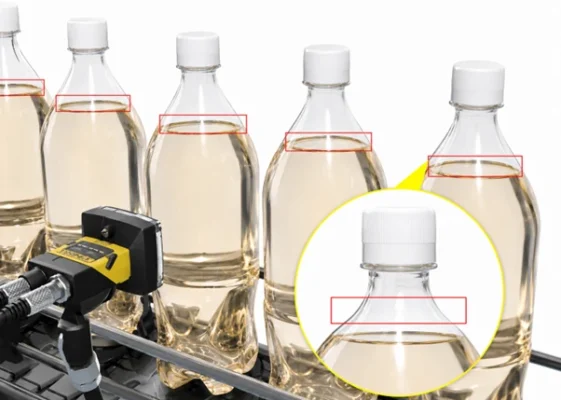
1. Incorrect Filling Volume – A “Gap” That Erodes Profit And Reputation Of Kombucha Factories
With production scales of thousands of bottles per shift, ignoring filling volume errors on each bottle can turn into a massive cost problem.
- Overfilling (Full bottle): Causes direct loss of high-value Kombucha ingredients, eroding the factory’s profit margin.
- Underfilling (Low bottle): Violates declared packaging standards. When customers hold an underfilled product in their hands, they will immediately lower their trust in the brand and assume your production process is unprofessional.
- Poor appearance: Products displayed on supermarket shelves with uneven liquid levels will automatically lose points in the eyes of consumers.
2. Signs That The Filling System Is Having Problems
Factory owners and production supervisors can easily recognize filling volume errors through actual symptoms on the production line:
- Full and low bottles appear alternately: In the same pump cycle, different filling nozzles produce completely different liquid levels.
- Foam overflow covers the filling level: The liquid foams heavily when poured into the bottle, causing sensors or operators to mistakenly think the bottle is full, but when the foam disappears, the actual volume is significantly lower.
- Error rate gradually increases during the production shift: At the beginning of the shift, the machine runs accurately, but toward the end of the shift, filling volume deviation becomes larger and appears continuously.
3. With Kombucha, Why Is Filling More Difficult Than Regular Water?
Unlike purified water, Kombucha is a “living” substance. The special characteristics of this beverage are the biggest challenge for every filling machine:
- Rich in foam and CO2 gas (carbonated): Natural fermentation produces CO2. When the liquid passes through the pump and valve system at high speed, sudden pressure changes cause gas bubbles to burst out, seriously affecting flow stability and filling accuracy.
- Contains floating SCOBY: Microorganisms and tiny yeast fibers can accumulate, causing slight blockage in the gaps of the filling valves.

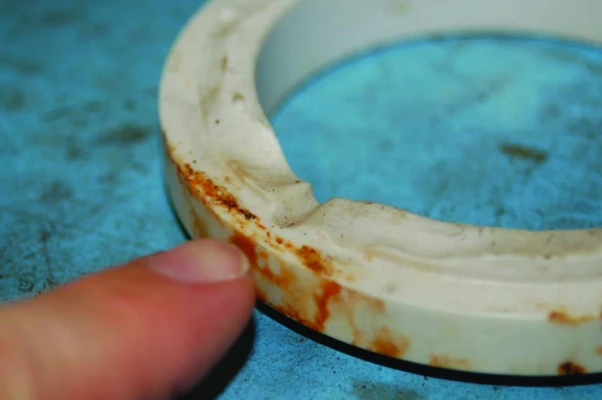
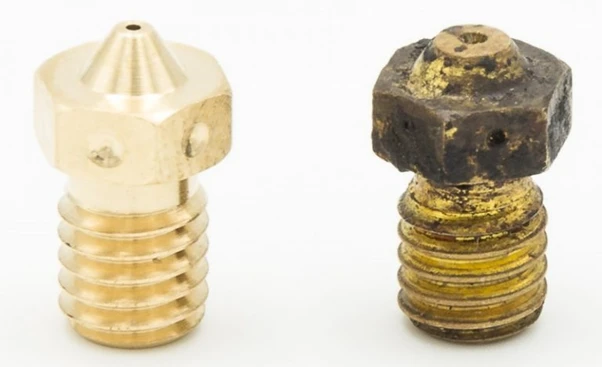
Biofilm buildup causes blockage and damages the valve head - Characteristic acidity: The low pH acidity of Kombucha corrodes ordinary rubber seals and low-quality metal surfaces, causing valve leakage after a short period of use.

4. Technical Causes That Make Filling Machines Deviate In Volume
From a maintenance expert’s perspective, filling volume errors usually come from the following 5 “critical weak points”:
- Filling valves operate unevenly: The nozzle assembly has worn seals or mechanical blockage caused by tea yeast residue, resulting in inconsistent valve opening/closing time between nozzles.
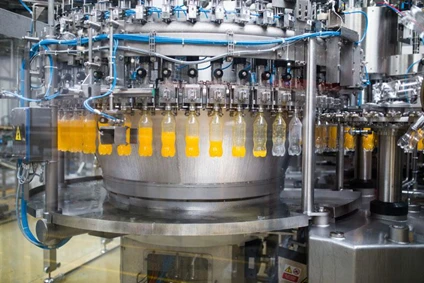
- Unstable compressed air pressure: Filling valve systems are often controlled by compressed air. If the air compressor loses pressure or the pipeline leaks, the valve opening/closing force becomes weak and delayed, causing excess liquid to be filled.
- Sensor deviation: The chemical level sensor may be blurred by Kombucha foam, causing incorrect signals. Or the cylinder position sensor may shift due to long-term machine vibration.

- Control program (PLC) not properly configured: Timer parameters or pulse counting from the flow meter on the HMI screen may not be optimized for the viscosity and foaming level of each Kombucha batch.
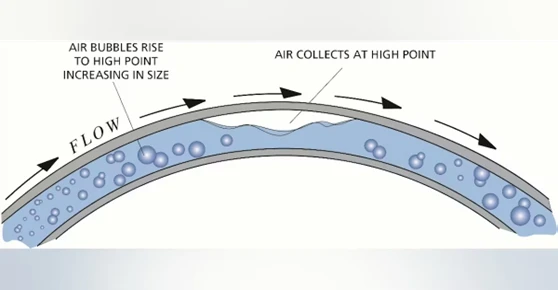
- Problems with the pump and feed pipeline system: Vane pumps or diaphragm pumps may operate unevenly, creating air traps inside the pipeline. When air bubbles are present, the filling machine dispenses “air” instead of tea liquid.
5. When Do You Need An Expert To Conduct A Full System Survey?
For complex Kombucha filling systems, temporary “fix it where it breaks” maintenance will quickly wear out the machine, reduce system synchronization, and cause filling volume errors to return soon.
You must call an expert for a full system survey when:
- The system has been adjusted many times and parts have been replaced, but the error keeps recurring.
- The defective product rate, including foam overflow and incorrect liquid level, exceeds 3% of total output per shift.
- Failures spread from the pump assembly to the valve assembly and then to the electrical cabinet system.
With experience in handling F&B production lines, our expert team does not only look at a leaking valve. We carry out a comprehensive survey process: from measuring pump pressure, evaluating pipeline materials, checking sensor sensitivity, to re-analyzing the entire PLC program logic.
Contact VietSonic now
If your Kombucha factory is facing filling volume problems.
- Phone: 0938 49 33 66 (Mr. Hải)
- Email: info.vietsonic@gmail.com
- Website: https://vietsonic.vn