



120-Ton Scrap Baler Manufacturing – Reduce Scrap Storage, Collection, and Transportation Costs
Is scrap taking up valuable floor space, forcing workers to collect it constantly, while transport vehicles fill up quickly without reaching an efficient payload? This is not only a housekeeping issue—it is also a hidden cost that reduces production efficiency every day.
VietSonic designs and manufactures 120-ton scrap balers based on each company’s material type, output volume, and actual operating conditions.

Custom-designed pressing force
How much factory space and labor is uncompressed scrap consuming?
In many factories, metal, plastic, paper, packaging, and other loose scrap materials are temporarily accumulated until there is enough for transportation. Although the actual weight may not be high, the bulky volume quickly fills storage areas, obstructs internal traffic, and requires repeated handling by workers.
Consumes factory floor space
Loose scrap takes up significant space, affecting production areas, warehouses, and internal transport routes.
Increases labor costs
Workers must repeatedly collect, move, arrange, and handle scrap before it can leave the factory.
Inefficient transportation
Vehicles run out of volume before reaching their weight capacity, increasing the number of trips and the transportation cost per ton of scrap.
Difficult to maintain safety
Piled-up scrap can block walkways, spill into work areas, expose sharp edges, and create safety risks inside the factory.
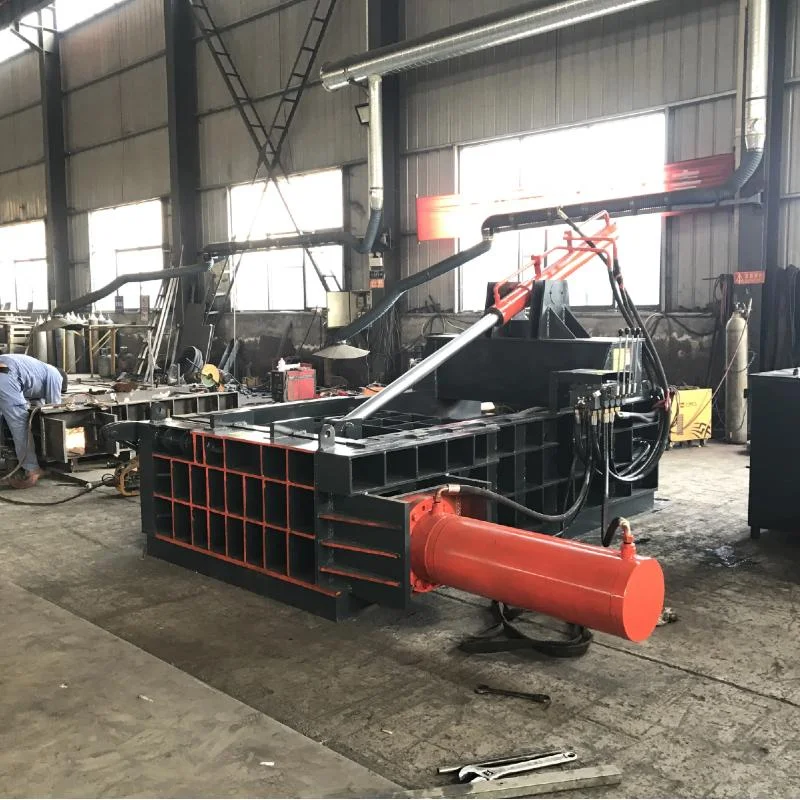
A 120-ton scrap baler turns bulky materials into compact, manageable bales
The machine uses a hydraulic system to generate high pressing force and compact scrap inside the compression chamber. After each cycle, loose materials are formed into higher-density bales that are easier to store, weigh, handle, transport, or transfer to the recycling stage.
- Significantly reduce scrap volume before storage and transportation.
- Reduce the number of times workers must collect and arrange loose materials.
- Keep scrap storage areas tidier, easier to clean, and easier to control.
- Improve utilization of vehicle payload capacity.
- Help businesses manage scrap quantities by individual bale.
Compression chamber size, cylinder stroke, cycle speed, feeding opening, bale discharge system, and scrap type all directly affect operating efficiency.
Factors VietSonic calculates when manufacturing a 120-ton scrap baler
Each type of scrap has different elasticity, dimensions, density, and deformation characteristics. Therefore, the machine must be designed using actual operating data rather than copied from an existing model.
Type of scrap to be baled
Thin steel, aluminum, cans, cardboard, plastic bottles, packaging, and mixed materials require different compression chamber structures.
Scrap generation volume
The amount of scrap generated per hour, shift, or day is the basis for determining chamber size, cycle speed, and system capacity.
Output bale dimensions
The bale must be compatible with forklifts, pallets, transport vehicles, storage facilities, and the requirements of scrap buyers.
Feeding method
Manual feeding, forklift feeding, loader buckets, conveyors, or supporting mechanisms must be considered from the initial design stage.
Site conditions
Factory height, foundation position, forklift routes, power supply, and maintenance clearance all affect the machine configuration.
Level of automation
The machine can be designed for manual, semi-automatic, or integrated control operation to suit the company’s workflow.
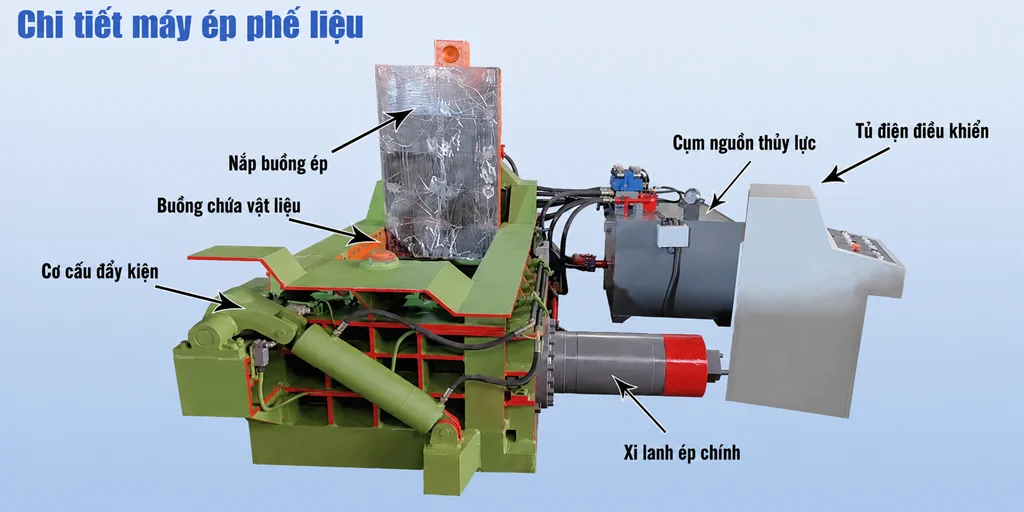
A baler operates under heavy loads—small design errors can lead to major failures
During pressing, the machine frame, compression chamber, platen, connecting pins, cylinders, and hydraulic lines are subjected to repeated loads. If the structure is not sufficiently rigid or the force is unevenly distributed, the machine may deform, the platen may become misaligned, hydraulic oil may leak, materials may jam, and equipment service life may be reduced.
- The frame and compression chamber are calculated according to the operating load.
- Load-bearing areas are reinforced appropriately.
- Cylinders, pumps, valves, and motors are selected according to the operating cycle.
- Hydraulic lines are arranged for convenient inspection and maintenance.
- Guards and control mechanisms are designed for the actual operating conditions.
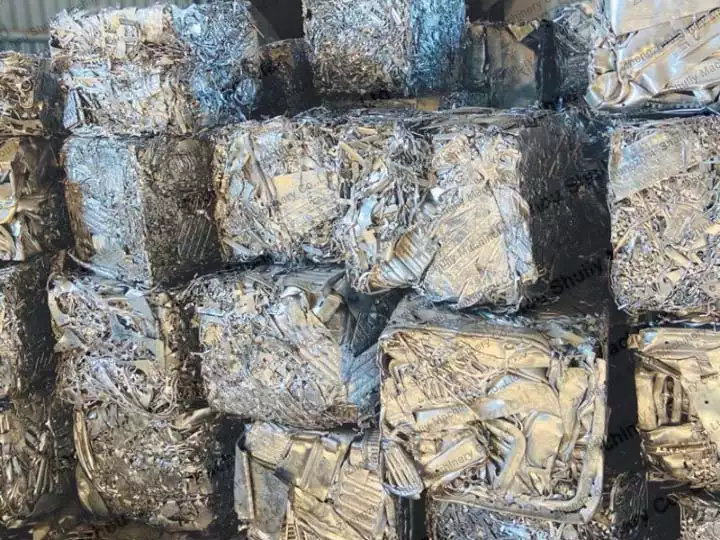
What types of materials are suitable for a 120-ton scrap baler?
Actual baling capability depends on the compression chamber configuration and material characteristics. VietSonic conducts an assessment before determining whether the machine is suitable for the company’s scrap.
Thin metal scrap
Thin sheet metal, steel scrap, metal containers, aluminum cans, wire, and other metal parts that can deform under pressure.
Paper and cardboard packaging
Cardboard boxes, waste paper, and packaging materials that need volume reduction before storage or transfer to a recycling company.
Plastic and PET bottles
Plastic bottles, plastic containers, packaging, and plastic films generated during production, packing, or product recovery.
Other industrial scrap
Other compressible loose materials should be tested or evaluated in advance to determine the appropriate machine configuration.
From scrap assessment to machine manufacturing and commissioning
VietSonic follows a technical implementation process to reduce the risk of manufacturing a machine that does not match the required capacity, available space, or factory operating method.
Requirement collection
Record the scrap type, output volume, desired dimensions, and operating conditions.
On-site assessment
Inspect the site, feeding method, power supply, forklift traffic flow, and installation location.
Technical design
Calculate the structure, hydraulic system, compression chamber, cylinder stroke, and bale discharge method.
Fabrication and assembly
Manufacture the frame and mechanical parts, then install the hydraulic, electrical, and control systems.
Commissioning and handover
Test the operating cycle, calibrate the machine, provide operating instructions, and hand over the equipment.
Not sure which machine configuration your business needs?
Simply provide photos of the scrap, the daily generated volume, the available installation area, and the required output bale dimensions. VietSonic’s technical team will use this information to discuss a preliminary solution before conducting an on-site assessment.
The goal is not merely to build a machine, but to ensure it operates effectively within the production line
A scrap baler is truly effective only when workers can feed it easily, the cycle time matches the scrap generation rate, the output bales are convenient to handle, and maintenance can be performed without prolonged disruption to production.
Therefore, VietSonic focuses on clarifying operating requirements before finalizing the machine design and configuration.
No single configuration is applied to every type of scrap.
Takes into account the machine location, transport routes, and feeding method.
Hydraulic units and inspection points are arranged for easier access.
Verify actual operation before the machine is put into service.
What to know before ordering a custom scrap baler
Can a 120-ton baler handle every type of scrap?
No. Baling capability depends on material thickness, hardness, dimensions, and elasticity. Some scrap must be cut into smaller pieces or pre-processed before being loaded into the compression chamber.
Can the compression chamber be custom-sized?
Yes. It can be adjusted according to the material type, feed quantity per cycle, output bale size, and installation space. These parameters must be calculated in coordination with the cylinders and hydraulic system.
What information is required for consultation?
The company should provide photos or samples of the scrap, daily generated volume, input material dimensions, desired bale dimensions, available installation area, and existing power supply.
Does VietSonic provide on-site assessment and installation?
Depending on the project scope, VietSonic can review requirements, assess actual site conditions, propose a solution, manufacture the machine, install it, and conduct commissioning.
Is scrap taking up valuable space and increasing transportation costs every day?
Send VietSonic photos of the scrap, the generated volume, and the required output bale specifications. We will discuss a suitable baler solution before your company makes an investment decision.
Vietnam Ultrasonic Equipment Co., Ltd.
Machine specifications and configuration are determined after evaluating the material, required capacity, and actual installation conditions.