Defect Assessment

Streaks and Uneven Color on Aluminum Coated Film – Causes and Inspection of Vacuum Metallizers

In plastic packaging film manufacturing, defects like streaks, color variance, inconsistent silver thickness, or uneven aluminum deposition on the film surface require serious technical investigation. This is not merely an aesthetic defect; it directly impairs light, moisture, and oxygen barrier properties, thereby ruining laminate quality in downstream processes.

Streaky FilmUneven Silver ThicknessColor Variance
Streaks and Color Variance Signal Unstable Coating Deposition

The aluminum layer on packaging film is formed by vaporizing aluminum wire inside a vacuum chamber, which then condenses onto the surface of the plastic film. If this vaporization or deposition process fluctuates, the aluminum layer will fail to distribute uniformly across the entire film web width.

Manufacturers often experience symptoms such as vertical streaks running along the machine direction, inconsistent silver surfaces, alternating bright and dark bands, micro-pinholes, mottled coating, or areas with discontinuous aluminum adhesion.

The core challenge is that while defects appear on the finished product, the root cause can originate from multiple distinct component assemblies inside the vacuum metallizing machine.

Avoid Rushing to Blame Raw Materials

When an aluminum coating defect occurs, do not simply inspect the finished film roll and prematurely blame the base substrate material. In many instances, the root mechanical and electrical causes lie hidden directly within the vacuum aluminum metallizer.

Key assemblies requiring close monitoring include: the thermal evaporation unit, aluminum wire feed system, evaporation boats, power source, vacuum chamber, and the condensation process on the film.

The evaporation boats assembly and input aluminum wire feed are the prime locations to inspect when film coating suffers from web-direction streaks.

Primary Inspection Zone

Thermal Evaporation Assembly Directly Decides Coating Quality

Inside the vacuum aluminum metallizer, aluminum wire is continuous fed onto heated evaporation boats. As the boats reach ultra-high temperatures, the aluminum melts and transforms into vapor. This aluminum vapor travels through the vacuum chamber and deposits onto the plastic film as it passes over the chill roll.

The boats are systematically arranged horizontally across the web width. Consequently, each individual boat acts as the vapor source for a specific section of the film width.

If a few boats experience low temperature, overheating, slag accumulation, or inconsistent wire feeding, the film at those corresponding positions will exhibit streaks, pale colors, or insufficient coating thickness.

Common Causes Behind Uneven Aluminum Coating Layers

Streaks and color variance errors rarely stem from a single, isolated issue. It is crucial to inspect component by component to prevent adjusting operational parameters without resolving the true source error.

01

Boat Slag Build-Up

Aluminum residue, metallic dust, burnt slag, or oxidation scale disrupts stable heat transfer and aluminum vaporization.

02

Inconsistent Wire Feed

Unstable aluminum wire feed into the boats causes vapor mass output to fluctuate between positions, yielding heavy or light coating zones.

03

Boat Temperature Deviation

An overheated boat causes aggressive vaporization or aluminum spitting, while an underheated boat creates thin or missing coating bands.

04

Poor Electrical Contact

Loose connectors, dirty power cables, oxidized busbars, or uneven boat clamping cause major operating temperature deviations.

05

Dirty Metallizing Chamber

Accumulated aluminum powder, burnt slag, and wall scales disturb the vapor path, creating pinholes or a rough coating surface.

06

Misaligned Boat Layout

Boats installed out of alignment or unbalanced heating zones lead to a completely unstable coating layout across the horizontal web width.

Aluminum Evaporation Boat

Slag-Ridden Boats Disrupt Uniform Aluminum Vaporization

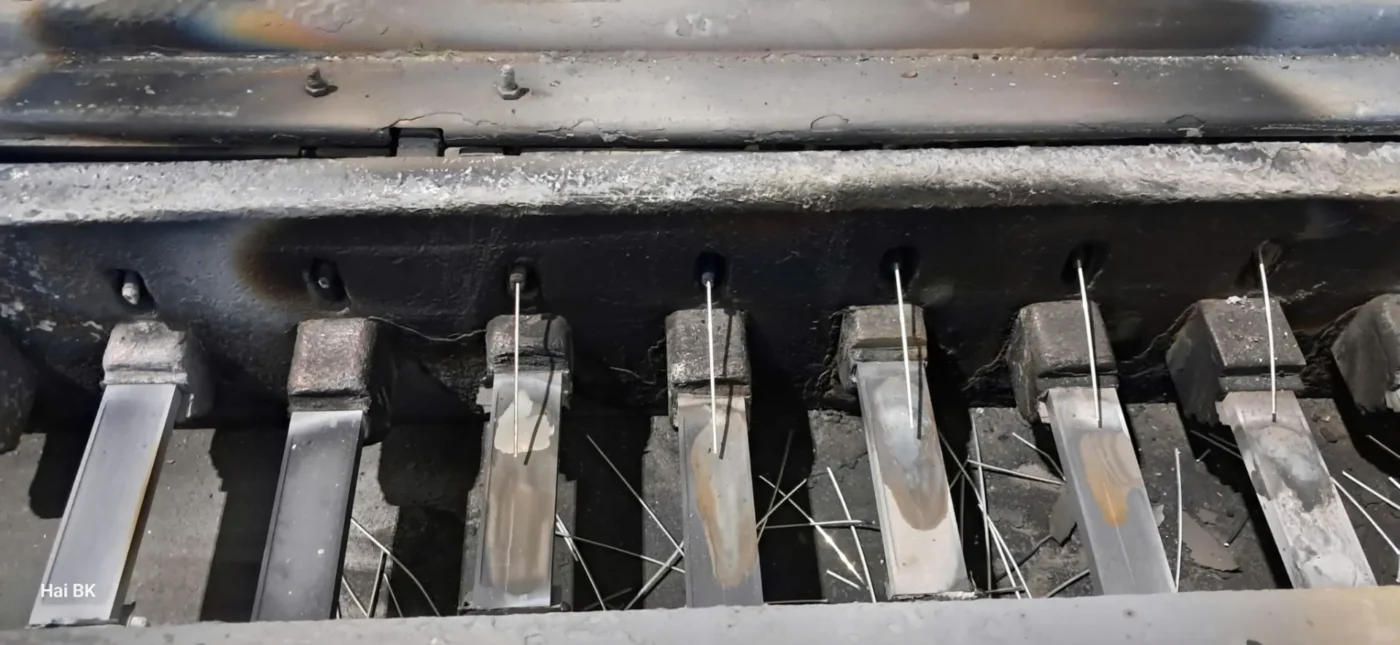
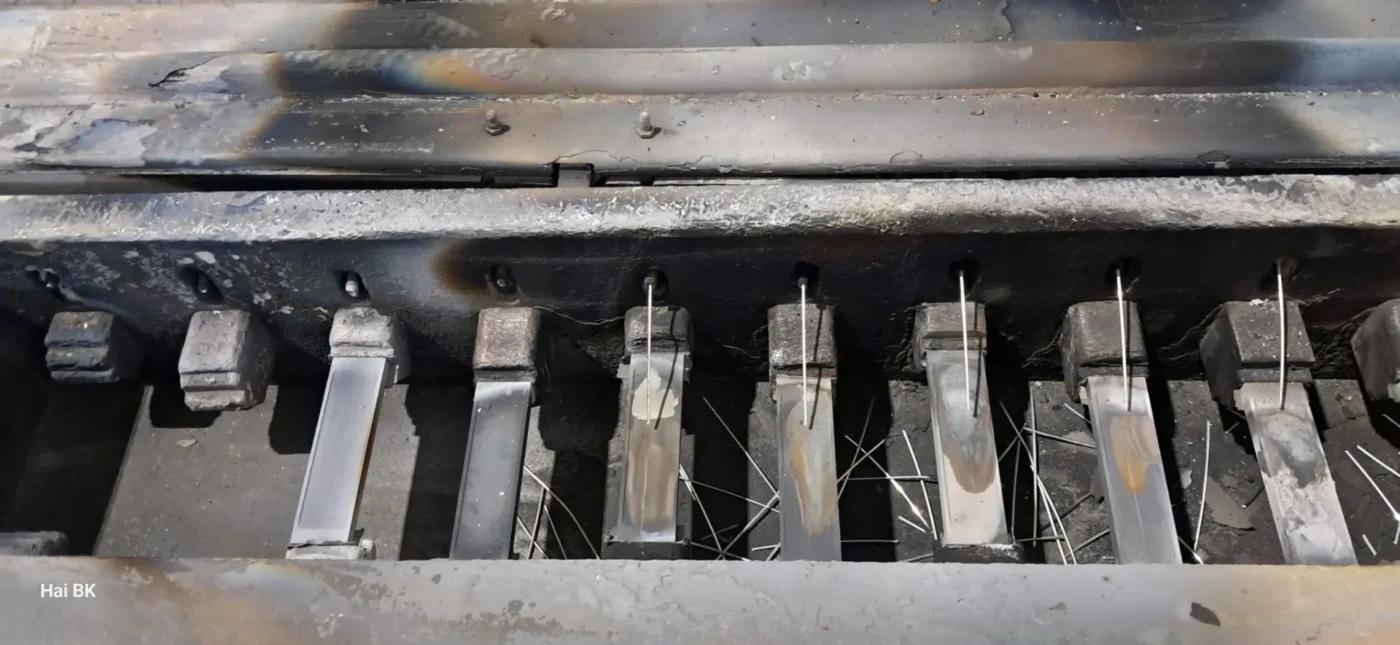
After extended production cycles, the boat zone heavily accumulates aluminum slag, metal powder, burnt residue, and oxidation marks. When the boat surface is no longer clean, uniform heat transfer and aluminum melting parameters break down.

The aluminum may fail to melt uniformly, vaporize erratically, or pool locally. Certain positions generate heavy vapor clouds while others weaken, resulting in a finished film coating that lacks absolute consistency.

Merely boosting power settings to compensate for thin coatings can overload the boats, accelerate slag accumulation, and trigger severe operational failures.

Slag build-up on the aluminum evaporation boat destabilizes the vital thermal transfer, melting, and vaporization processes.

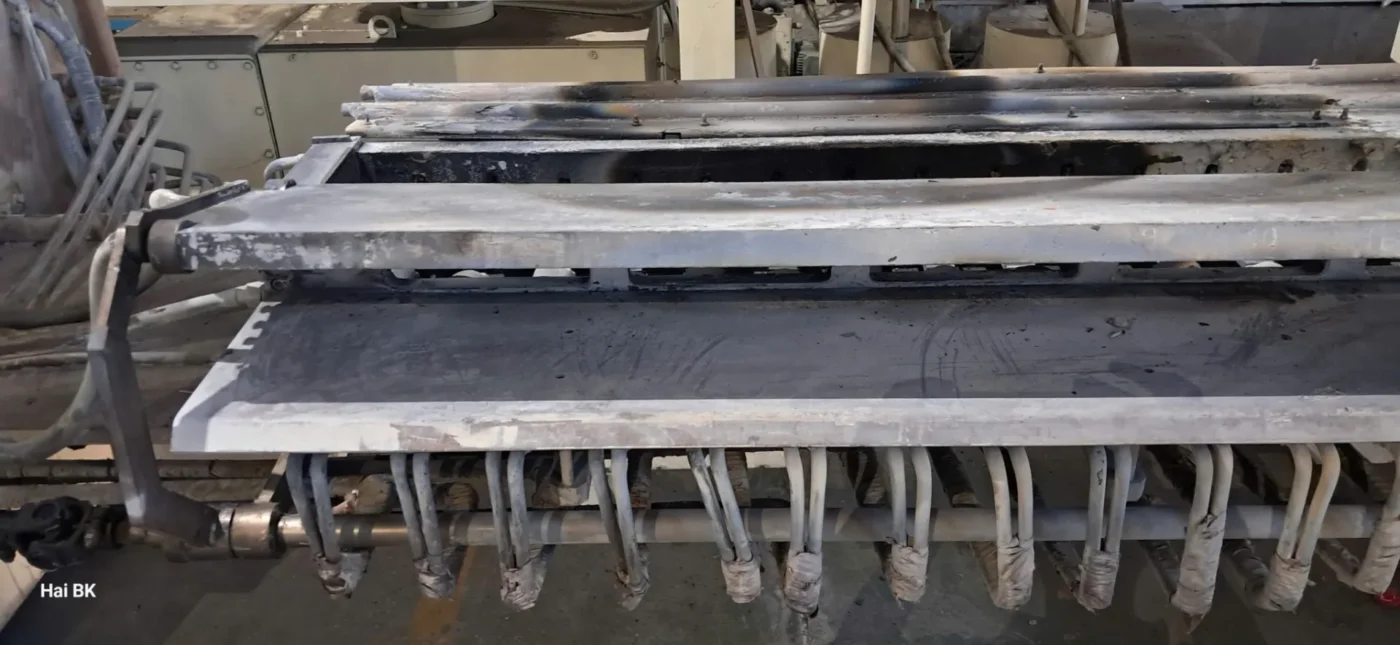
Power lines, boat clamps, and current supply cables must be thoroughly inspected whenever coating streaks or color mottle reappear recurrently.

Heat Source & Contacts

Power Feeds, Terminals, and Cables Influence Coating Consistency

Aluminum evaporation boats operate under immense electrical current. If electrical contacts are compromised—such as loose joints, dirty supply lines, oxidized busbars, or uneven boat clamping—temperatures across the boat rack will diverge heavily.

An overheated boat accelerates vaporization to create thick coating bands or severe metal spitting. Conversely, a underheated boat starves the vapor supply, causing thin lines or bare uncoated substrate.

Therefore, troubleshooting an uneven coating requires looking beyond the boats. Maintenance teams must inspect power supply lines, clamping mechanisms, cables, contact materials, and check for heat damage at every terminal point.

Chamber Cleanliness

Contaminated Chambers Destabilize Vapor Travel and Adhesion

Inside the vacuum environment, aluminum dust, burnt byproducts, and wall scales accumulate across multiple manufacturing cycles. If the vaporization zone is fouled, the vaporized aluminum path gets disrupted, causing metal to deposit on unintended shields or drop back onto the film.

This contamination generates critical defects such as pinholes, drop-marks, rough surfaces, or uneven specular reflectivity.

Chamber cleaning is not just routine maintenance; it is a vital engineering control to preserve competitive film barrier properties.

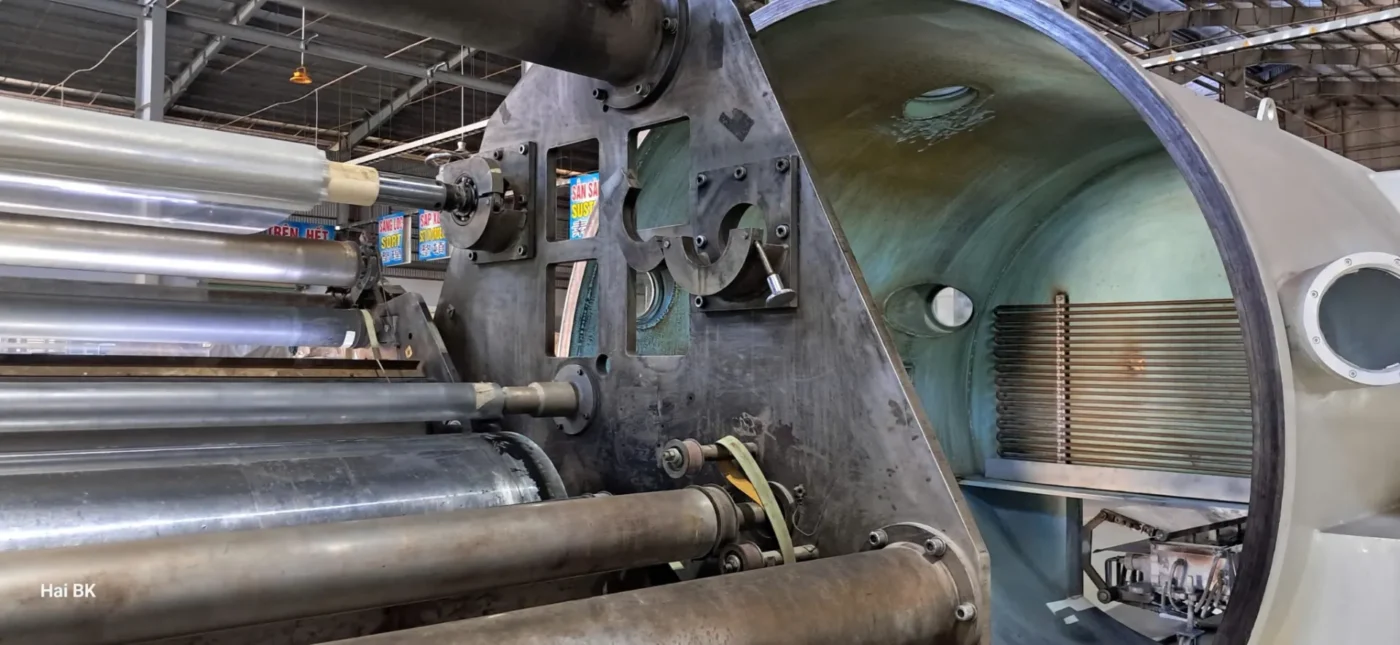
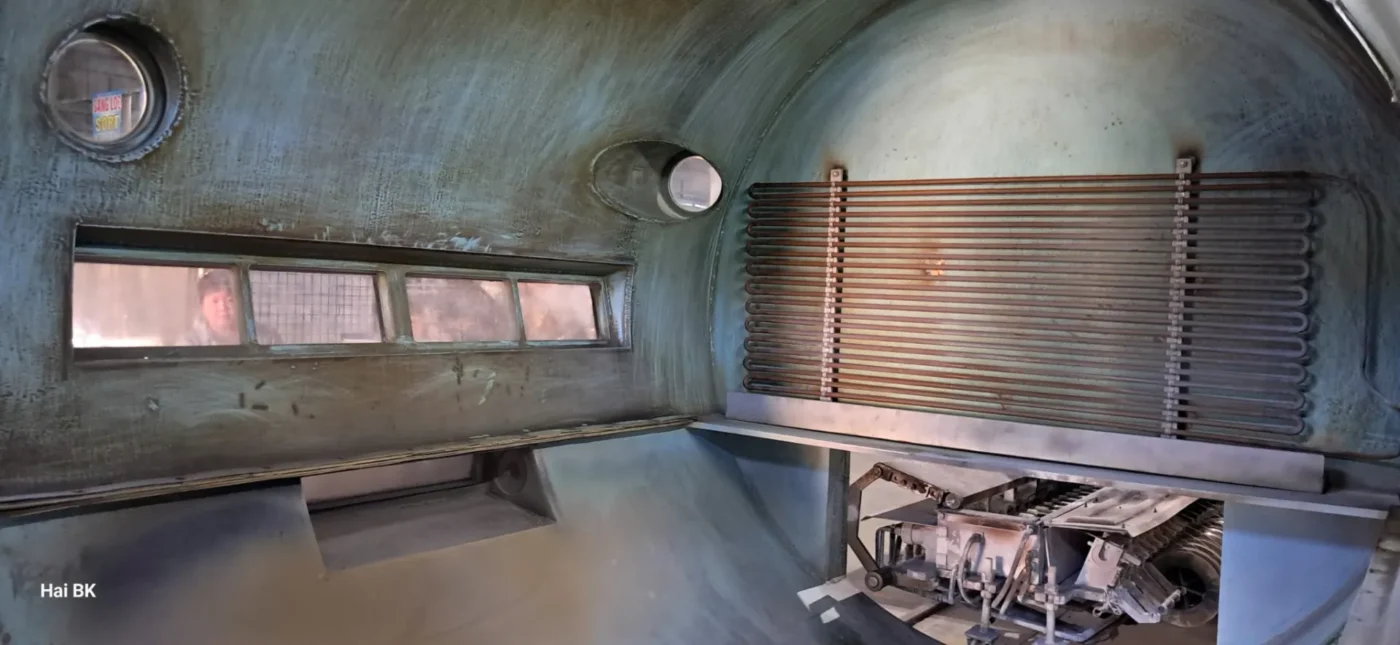
The aluminum vaporization zone inside the vacuum chamber must remain clean to restrict slag drop, pinholes, and irregular streaks.

The heating element array and boat positions must remain stable across the film width to eliminate alternating thick and thin coating zones.

Vapor Zone Layout

Boat Alignment and Heat Profile Govern the Full Web Width

If boats are installed out of position, vapor source spacing is uneven, or individual heating controls fluctuate, the coating across the film width will fall out of balance. Consequently, one side of the web width may come out dark silver while the other remains pale.

This specific defect pattern causes engineering teams to waste massive amounts of time tweaking process parameters without fixing the root cause. The system runs, rolls are wound, yet quality remains erratic.

For these cases, a systematic cluster audit is required: evaluate boats, wire feed units, power sources, vapor zones, and chill roll contact.

Discontinuous Coating Warns of Serious Subsystem Malfunctions

When the metallic layer lacks continuity, leaving bare spots or uneven coating edges, it is more than a surface blemish. It severely degrades the protection capabilities of the packaging film.

A discontinuous aluminum coating layer drastically reduces light, moisture, and oxygen barrier performance while ruining subsequent lamination bond strengths.

Root factors can include degraded boats, erratic aluminum wire feed speed, temperature cross-deviation, dirty chamber shields, poor ultimate vacuum levels, or uneven film contact against the chill roll.

Troubleshooting Framework for Streaky or Mottled Aluminized Film

Instead of blindly adjusting software parameters, follow this systematic diagnostic sequence tracing from the film defect back to each subsystem within the vacuum metallizer.

1

Analyze Film Defect

Pinpoint whether the symptom is a sharp line streak, wide mottle, pale coating, pinholes, or total coating discontinuity.

2

Audit Evaporation Source

Inspect the boats, aluminum wire feed paths, slag accumulation levels, heat cracks, wear profiles, and wire alignment.

3

Inspect Power Circuit

Check terminals, high-current feed cables, busbars, boat clamping contact zones, and detect any thermal damage hotspots.

4

Verify Vacuum Chamber

Evaluate inner chamber cleanliness, aluminum dust buildup, shield condition, vacuum levels, and pressure leak-back rates.

5

Check Chill Roll

Examine web-to-roll contact wrap, cooling fluid temperature control, and web tension stability through the coating zone.

6

Test Run Validation

Following corrective actions, execute a test production run to measure coating uniformity, gloss index, and layer continuity.

Conclusion

Streaky, mottled, or uneven aluminum coating layers are clear indicators that the physical vapor deposition process within your vacuum system has lost stability. Rather than merely adjusting software operational values, production plants must directly audit core subsystems: the evaporation boats, wire feed stability, electrical terminals, vapor cloud paths, shield cleanliness, and deep vacuum conditions.

By correctly identifying the mechanical or electrical root cause, repair and preventive maintenance protocols become highly targeted. This minimizes machine downtime, curbs raw material scrap rates, and ensures your film packaging line operates at peak performance.

Aluminized Film Suffering from Streaks or Mottle? Isolate the Correct Subsystem Error

VietSonic provides professional inspection, engineering evaluation, and technical advisory services addressing issues across evaporation boat assemblies, wire feeds, high-current heat circuits, vacuum chambers, and film coating barrier anomalies.

Consultation Hotline: 0938 49 33 66 Email Engineering Department
VietSonic

Technical solutions for ultrasonic equipment, ultrasonic plastic welding, vacuum aluminum coating systems, and industrial manufacturing optimization.

Hotline: 0938 49 33 66

Email: info.vietsonic@gmail.com