Damage Assessment

Pinholes and Metal Voids in Aluminum Coated Film – Warning Signs of Defects in Vacuum Coating Processes

In plastic packaging film production, defects like pinholes, metal voids, discontinuous coating, or film wrinkling and streaking are challenging issues for quality control. Some film rolls retain a silver sheen to the naked eye, but close inspection reveals micro-defects, bare uncoated zones, or uneven metal deposition.

Pinhole DefectsMetal VoidsDiscontinuous Coating
Micro Surface Defects, Major Impacts on Packaging Barrier Quality

For aluminum coated films used in food, pharmaceutical, coffee, or snack packaging that require exceptional light, moisture, and oxygen barriers, tiny coating defects can drastically degrade the protection of the product inside.

When encountering this, manufacturers should not simply blame the base film substrate or operator error. It is vital to audit the entire vacuum metallizing line: from the raw substrate surface, aluminum evaporation assembly, deep vacuum conditions, and chill roll, to the web handling system.

The key is to determine if the defects occur randomly, repeat along the machine direction, across the web width, or follow a roll cycle. Tracking these patterns isolates the root cause much faster.

Do Not Rely Solely on Visual Inspection

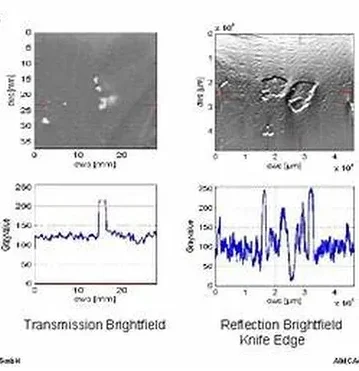
Many pinhole or metal void defects are microscopic. The film roll might still appear bright silver, but under proper backlit sources or via automated inspection systems, the hidden gaps become clearly visible.

Light PenetrationBare GapsUneven Thickness

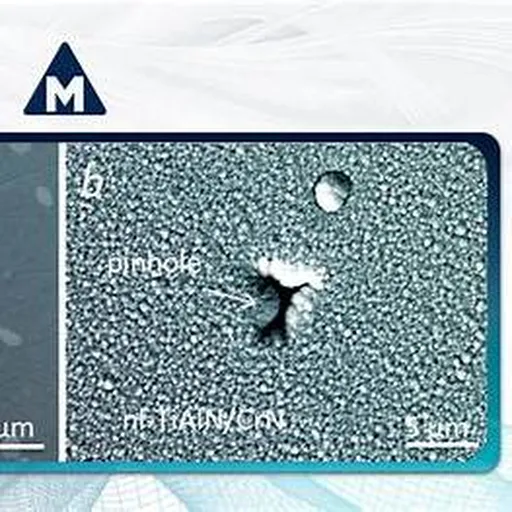
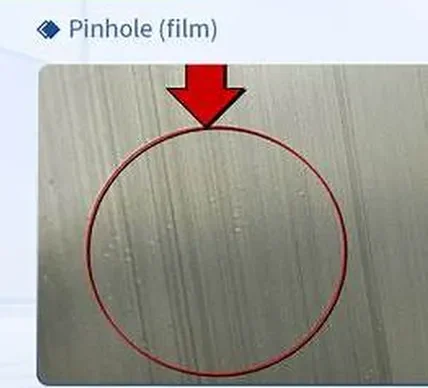
Pinholes are tiny gaps in the aluminum coating layer, typically requiring backlit source observation or professional inspection systems to detect.

Defect Definition

What Are Pinholes in Aluminum Coated Films?

Pinholes are simply microscopic gaps or missing spots within the deposited metal coating layer. At these specific micro-locations, the aluminum vapor fails to fully seal the plastic substrate surface.

When examined under backlight sources or proper inspection systems, pinholes reveal themselves as micro-dots, abnormal bright points, or light penetration spots.

The issue with pinholes is that while individual sizes are tiny, high counts compromise the overall shelf-life barrier properties. For packaging demanding high gas, vapor, or light protection, pinholes must be strictly controlled.

Missing Coating Area

Metal Voids – Areas Lacking Metal Deposition

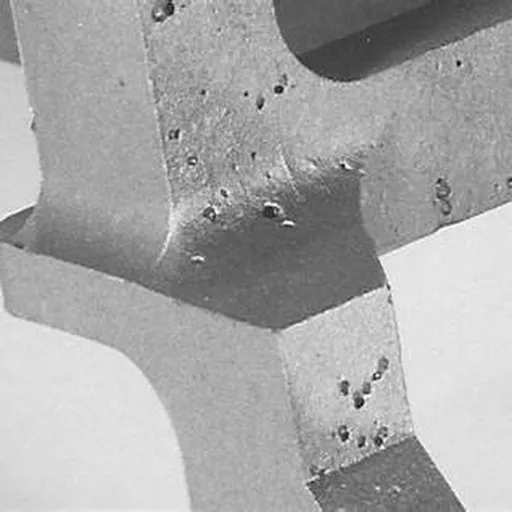
Unlike localized micro-pinholes, metal voids refer to larger bare zones lacking metal layers or areas where aluminum deposition is completely interrupted on the web surface.

This fault can be triggered by dust contamination on the base film, slag in the chamber, unstable aluminum wire feeding, or uneven web contact across the condensation zone.

When metal voids occur, the film surface might remain silver in many sections, but specific patches fail to hit target optical density. Scattered voids are notoriously difficult to spot with the naked eye.

During subsequent lamination, printing, or pouch-making processes, unaddressed metal voids can degrade final packaging stability.

Metal voids are areas of missing or interrupted metal coating on the film surface, which can degrade the protective capabilities of the packaging.

Why Do Pinholes Appear in Aluminum Coated Films?

Pinhole faults stem from interconnected variables. Auditing must cover the base substrate, vacuum level, evaporation source, chamber cleanliness, and web handling concurrently to avoid misdiagnosis.

01

Contaminated Substrate Surface

Dust, gel particles, residues, or micro-impurities on the base film block vapor deposition, creating bare uncovered spots.

02

Unstable Vacuum Environment

If the chamber fails to maintain proper ultimate pressure due to residual moisture or outgassing, aluminum travel paths are disrupted.

03

Erratic Evaporation Source

Slagged boats, erratic wire feed speed, temperature cross-deviations, or metal spitting generate immediate coating defects.

04

Fouled Coating Chamber

Accumulated aluminum powder, scales, or burnt particles in the hot zone can drop back onto the web or disturb vapor travel lines.

05

Uneven Chill Roll Contact

If the film exhibits wrinkles or gaps against the chill roll surface, condensation efficiency fails, creating non-uniform aluminum layers.

06

Fluctuating Web Tension Controls

Wrinkles, web tracking errors, or tension spikes cause localized thin bands, longitudinal streaks, or micro-fractured layers.

Microscopic or computerized inspection systems reveal tiny pinhole defects completely invisible to operators with the naked eye.

Substrate vs Coating

Dirty Base Substrate Surfaces Form Bare Gaps

A primary catalyst for pinhole defects is poor cleanliness on the incoming base film. Airborne dust, gel inclusions, static-bound particles, or chemical residues create physical shields on the film surface.

When vaporized aluminum condenses, these shielded locations fail to receive the metal layer, generating bare gaps. If these gaps appear randomly, reassess substrate film specs, storage conditions, slitting dust controls, or pre-treatment setups.

While not all pinholes stem from the metallizer, engineering teams should not exclusively blame the substrate without auditing evaporation boats, vacuum levels, and web handling systems first.

Machine Direction Faults

Streaks and Vertical Lines – Warning Signs Calling for Transverse Width Audits

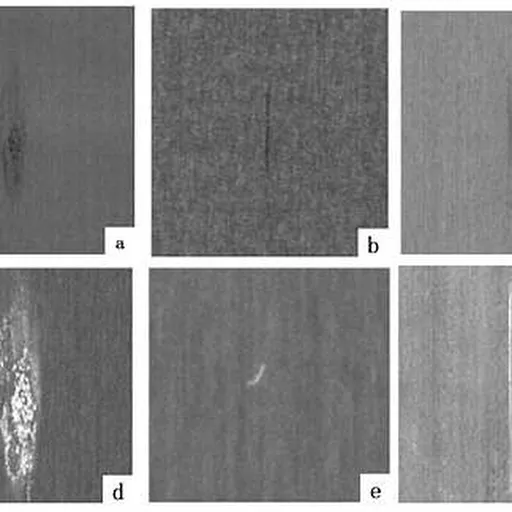
If the aluminum coating shows continuous streaks or vertical bands along the machine direction, technicians must audit variables governing metal distribution across the machine’s transverse width.

This pattern typically points to individual evaporation boats running colder than adjacent units, localized wire feed blockages, heavily slagged boats, or uneven web-to-chill-roll contact.

Longitudinal streaks cause heavy material scrap because they run throughout the roll length. Delayed detection often forces down-grading, extensive trimming, or total customer rejection.

Continuous longitudinal streaks along the machine direction call for immediate inspection of vapor output profiles across the web width.

Inspection Systems Expose Defects Hidden to the Naked Eye

When dealing with pinholes, metal voids, or broken coating profiles, simple visual cross-checks are insufficient. Plants must integrate optical backlighting, optical density (OD) meters, surface resistivity testing, or automated inspection arrays.

Automated inspection systems help determine if faults repeat across the web width, run along the machine direction, match roll rotations, or occur randomly.

1

Transverse Across Width

Points directly to boat degradation, local thermal profiles, unbalanced power circuits, or uneven wire feed alignments at specific slots.

2

Along Machine Direction

Tied to web handling oscillations, unstable unwind/rewind tension, film wrinkles, or continuous vapor source output surges.

3

Cyclic Roll Rotations

Calls for direct inspection of chill rolls, idler rolls, out-of-round roll shafts, accumulated dust on roll faces, or periodic web slippage.

Film wrinkles, tension mismatches, or poor chill roll wrap distance cause thin metal layers, fractured coatings, or broken profiles.

Web Handling & Cooling

Film Wrinkles Destabilize Metal Layer Uniformity

Not all deposition faults stem from evaporation boat settings or deep vacuum levels. If the film develops micro-wrinkles, tension mismatches, or fails to flatly wrap the chill roll, the distance between the web surface and the vapor clouds shifts continuously.

Consequently, the aluminum vapor condenses non-uniformly. Web wrinkling also causes localized thin bands, fractured coatings, or narrow tracking streaks.

Therefore, troubleshooting coating layer flaws requires evaluating tension systems, idler roll alignment, substrate flatness, and chill roll surface profiles.

Quality Alert

Small Surface Gaps, Massive Financial Scrap Rates

In high-barrier aluminum coated film production, small surface flaws present massive technical financial risks. A cluster of pinholes or isolated metal voids indicates an unstable vapor deposition system.

If left uncorrected, these micro-flaws propagate throughout entire production rolls, escalating material scrap rates and manufacturing overheads.

For packaging demanding absolute light, moisture, and gas barrier controls, discontinuous metal coatings compromise product shelf life inside.

Pinhole patterns or broken coating tracks must be resolved early to prevent repetitive defect tracks across entire film rolls.

Diagnostic Roadmap for Barrier Film Pinholes and Metal Voids

The correct engineering approach avoids hasty assumptions. Trace back systematically from the film roll symptoms directly to the metallizer sub-assemblies.

1

Map Defect Coordinates

Document if the flaw pattern is random, continuous vertical tracks, cross-web positions, or cyclical roll turns.

2

Audit Incoming Substrate

Check for airborne dust, gel clusters, surface contamination, roll flatness, and warehouse storage conditions before loading.

3

Inspect Evaporation Zone

Evaluate boat slag levels, wire feed speeds, heating uniformity, terminal conditions, and signs of localized metal spitting.

4

Verify Vacuum Systems

Audit inner chamber hygiene, ultimate pressure levels, moisture degassing rates, and outgassing variables.

5

Check Chill Roll Assemblies

Examine roll face hygiene, web-to-roll contact wrap, cooling fluid thermal efficiency, and rotation concentricity.

6

Execute Test Validation Run

Re-measure film outputs using backlit tables, OD meters, or surface resist meters to confirm defect parameters are controlled.

Conclusion

Pinholes, metal voids, longitudinal streaks, or discontinuous aluminum coatings are critical alerts that production plants must never ignore. While substrate quality plays a part, the root cause frequently originates from the vacuum metallizer subsystems: the evaporation source, deep vacuum profiles, chill roll wrapping, web handling tension, or hot-zone contamination.

Successful troubleshooting relies on avoiding hasty assumptions. Technical teams must analyze the finished roll defect parameters, map the repetition rules, and audit the physical status of boats, wire feeds, vacuum seals, cooling roll face condition, and web flat paths.

By accurately isolating the mechanical or process root cause, plants drastically trim product scrap rates, lock in barrier consistency, and reduce unplanned machine downtime.

Aluminized Film Facing Pinholes or Metal Voids? Isolate the True Failure Chain

VietSonic provides engineering inspection, technical evaluation, and professional consultation for issues involving discontinuous coatings, film pinholes, metal voids, streaks, web wrinkles, evaporation sources, and vacuum controls.

Consultation Hotline: 0938 49 33 66 Email Technical Support
VietSonic

Technical solutions for industrial ultrasonic equipment, plastic welding, vacuum aluminum metallizers, and manufacturing process optimization.

Hotline: 0938 49 33 66

Email: info.vietsonic@gmail.com