



VietSonic and Its Direction for Applying Ultrasonic Technology in Mai Cosmetics
In the modern cosmetics industry, product quality depends not only on ingredient selection and formulation, but is also closely linked to mixing, dispersion and emulsification technologies and the ability to control the manufacturing process. Building on its background in ultrasonic solutions and equipment, VietSonic plans to expand research into cosmetic applications of this technology as part of the development of the Mai brand.
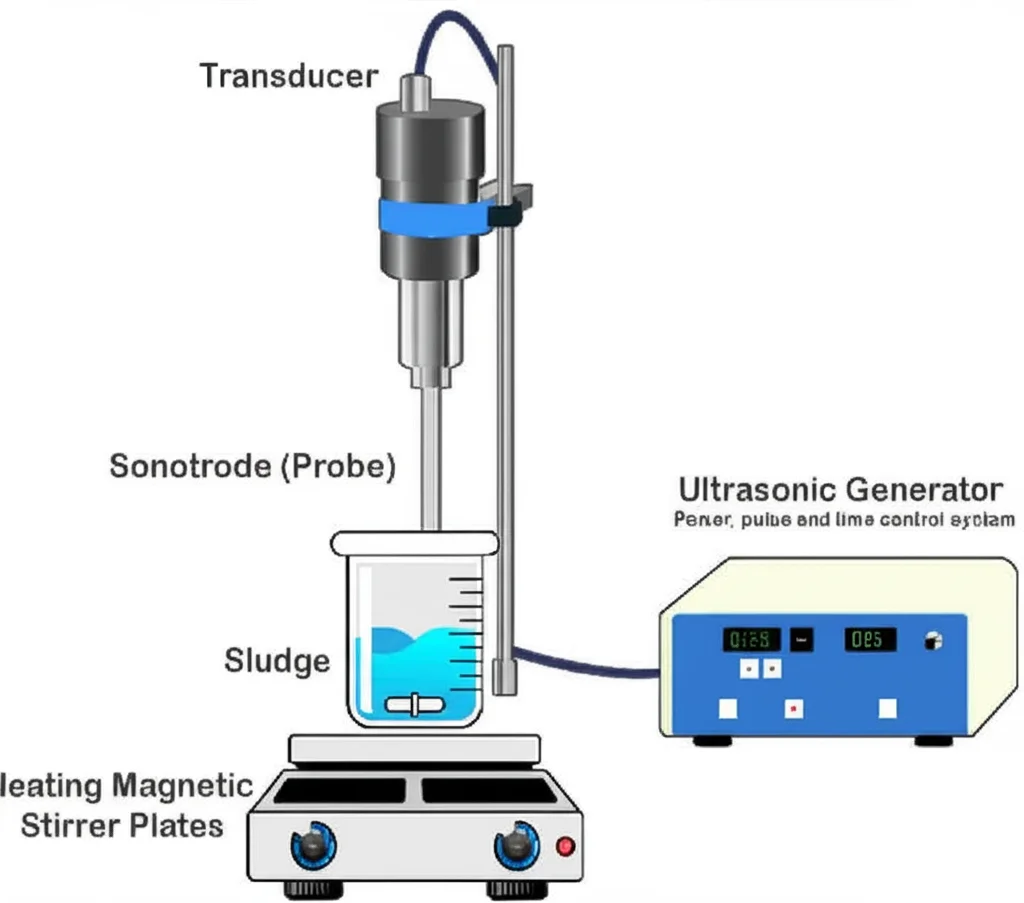
1. From ultrasonic equipment solutions to cosmetic applications
VietSonic provides solutions and equipment based on ultrasonic technology. Beyond familiar industrial applications, ultrasound can also be used in certain liquid-processing operations, such as dispersion, homogenization and emulsification.
This also provides a foundation for VietSonic to pursue further research into ultrasound applications in cosmetic manufacturing while expanding into skincare products under the Mai brand.
Technology foundation
Draw on knowledge and experience in ultrasonic equipment to investigate suitable liquid-processing steps in cosmetic manufacturing.
Product development
Focus on developing Mai’s two main product categories—skincare creams and serums—each with its own formulation and processing requirements.
Data-based evaluation
The effectiveness of the technology must be assessed using appropriate measurable criteria, rather than simply whether ultrasonic equipment is used.
2. Why is ultrasonic technology attracting interest in cosmetic manufacturing?
A skincare cream may contain water, an oil phase, moisturizing ingredients, active ingredients, structuring agents and various supporting components. Groups of ingredients with different physical properties do not always distribute themselves evenly when introduced into the same system.
In emulsion systems, such as oil-in-water emulsions, one phase needs to be distributed as small droplets within the other. Emulsifiers, mixing sequence, temperature and mechanical energy can all affect the formation and stabilization of the structure.
How ultrasound acts in liquids
When a probe transmits ultrasonic energy into a liquid under suitable conditions, acoustic cavitation can occur. Microscopic bubbles form, oscillate and collapse, generating localized mechanical effects within the liquid.
These effects can help break up droplets of the dispersed phase or disrupt certain agglomerates. Actual results depend on the formulation, the state of the ingredients, treatment volume, energy input, time, temperature and flow arrangement.
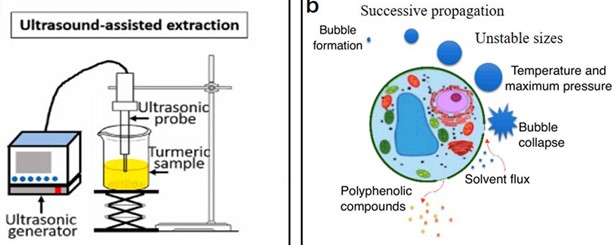
3. Potential roles of ultrasound to investigate in cosmetics
Supporting emulsification
Ultrasound can be investigated as a way to divide the dispersed phase into smaller droplets in suitable emulsion systems. Droplet size distribution must be measured to assess its effectiveness.
Supporting dispersion
For particulate ingredients or agglomerates, the mechanical effects of ultrasound can assist the distribution of material within a liquid medium.
Process optimization
The effects of treatment time, energy input, temperature, volume or flow regime on the properties to be controlled can be investigated.
Ultrasound is a processing tool that can be integrated at a suitable stage. It does not inherently replace emulsifiers, preservative systems, cleaning procedures or other quality-control steps in cosmetic manufacturing.
4. Directions for applying ultrasonic technology in Mai skincare cream
Skincare cream is one of the two product lines planned for development under the Mai brand.
According to the currently available basic ingredient list, Mai cream contains Tranexamic Acid, Alpha Arbutin, Vitamin B3, Panthenol (B5), aloe vera extract, chamomile extract, Vitamin E, an ingredient referred to as “Nano Nghệ Trắng” (Nano White Turmeric), Caprylic/Capric Triglyceride, Cosmagel 305, CBQ FEP100, Glycerin and Propylene Glycol, along with purified water.
This list provides basic formulation information and is not a complete INCI list. Concentration data are not currently available to determine the quantitative role of each ingredient.
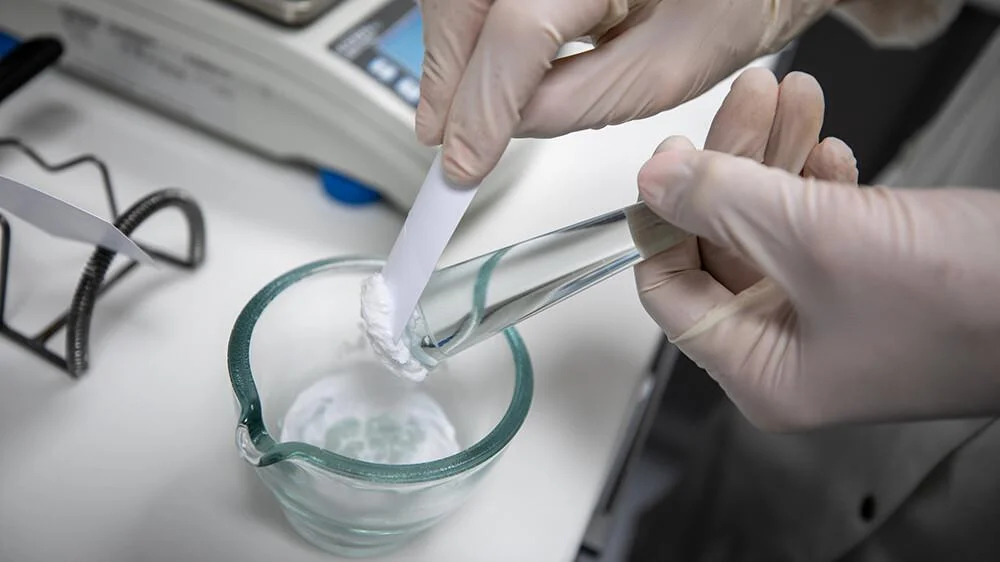
Homogenization and emulsification
The available product documentation mentions the use of an ultrasonic homogenizer in Mai cream manufacturing to support homogenization and emulsification. This provides a basis for further investigation of the relationship between processing conditions and the physical properties of the cream system.
Relevant parameters may include emulsion droplet size and distribution, homogeneity, viscosity, rheological properties and the ability to retain structure during storage.
Ingredient dispersion
Some cosmetic ingredients may be supplied as particles, suspensions or pre-existing dispersions. In suitable cases, ultrasound can be investigated to support deagglomeration and ingredient distribution.
For the ingredient referred to as “Nano Nghệ Trắng” (Nano White Turmeric) in Mai cream’s list, the supplier’s technical documentation must be checked to identify the material’s exact nature, size, dispersion state and suitable processing conditions. A name containing “nano” is insufficient to classify the entire cream system as a nano product.
5. Research directions for ultrasound applications in Mai serum
Serum is the second product line in Mai’s development plan. However, its formulation has not yet been confirmed in the technical dataset, so Mai serum should not be assumed to have the same ingredients or manufacturing process as the cream.
Serums can take various forms, including aqueous solutions, gels, dispersions or more complex structures. Each form has different processing objectives.

If the formulation contains particles or agglomerates that need dispersing, the role of ultrasound in distributing the material can be considered. If all components are already dissolved at the molecular level, the processing objective will differ, and the use of ultrasound must be assessed against actual needs.
Temperature control is particularly important. Energy delivered to the liquid can cause the temperature to rise during processing, so heat-sensitive active ingredients require separate assessment.
6. How should the effectiveness of the technology be assessed?
To determine whether an ultrasonic processing step genuinely adds value to a cosmetic formulation, the processing objective must be linked to specific measurable parameters.
| Objective | Assessment method | Conditions of application |
|---|---|---|
| Emulsion droplet distribution | Measure droplet size and size distribution using an appropriate method | Applicable to systems with a dispersed droplet phase |
| Homogeneity | Examine structure and sample at multiple locations | Define homogeneity criteria before testing |
| Texture characteristics | Measure viscosity or rheological properties | Compare using the same temperature conditions and measurement method |
| Physical stability | Monitor phase separation, changes in viscosity, droplet size or related parameters | Design appropriate monitoring conditions and duration |
| Repeatability | Compare multiple batches prepared under the same conditions | Record all relevant operating variables |
7. A research pathway from test samples to production scale
A systematic approach helps distinguish the actual effects of ultrasound from changes caused by the formulation or other processing steps.
-
Define the processing objective.
Clarify whether the aim is to improve emulsification, disperse a specific ingredient, reduce agglomerates or investigate another property. -
Review the formulation and ingredient documentation.
Identify the oil phase, aqueous phase, physical state of the ingredients, heat sensitivity and relevant technical limitations. -
Design control samples.
Compare samples with and without ultrasonic treatment under controlled conditions. -
Measure the relevant parameters.
Select measurements that match the initial objective rather than relying solely on sensory assessment. -
Validate before scaling up.
When moving from small samples to production, reassess flow, energy transfer, temperature, residence time, cleanability and batch-to-batch repeatability.
8. Mai within the technology development direction of VietSonic
Developing Mai cosmetic product lines opens up a new application area for the ultrasonic knowledge base of VietSonic.
For Mai skincare cream, the available documentation already mentions ultrasonic homogenization to support homogenization and emulsification. Further development should aim to quantify the effects of this step using appropriate measurements.
For Mai serum, research should start with the formulation and specific technical objectives. Only after the state of the system has been identified can the appropriate placement and role of ultrasonic technology be selected.
In the long term, VietSonic can build an approach that connects three elements: knowledge of ultrasonic technology, controlled manufacturing processes and product quality assessment data.
9. Frequently asked questions
Can ultrasonic technology be used in cosmetic manufacturing?
Yes. Ultrasound has been studied in many liquid-processing operations, including emulsification and dispersion. Practical applicability depends on the formulation, equipment and processing objectives.
Does using an ultrasonic device make the product nano?
No. Determining whether a system is in the nanoscale range requires appropriate measurements and size distribution data. The equipment name or power rating is not evidence of size.
Does every serum need ultrasonic treatment?
No. The need for ultrasound depends on the serum’s structure and the processing problem to be solved. Many solution systems may only need suitable dissolution and mixing.
Can ultrasound replace emulsifiers in a cream?
This cannot be assumed. Ultrasonic energy can help form dispersed droplets, while emulsifiers play an important role at the interface and in system stability.
Which variables should be monitored when investigating ultrasound?
Depending on the formulation, variables may include volume, energy input or amplitude, treatment time, temperature, probe geometry, mixing state and flow. Parameters should not be copied directly from another formulation.
10. Conclusion
Building on its background in ultrasonic equipment and solutions, VietSonic is pursuing a direction of expanding research into cosmetic applications of this technology through the Mai brand.
From skincare creams to serums, each formulation has its own requirements for ingredients, structure, mixing and quality control. Ultrasound applications should therefore begin with a specific technical objective, followed by verification through controlled comparisons and appropriate measurements.
This approach can help make ultrasonic technology a practically useful tool in product development rather than merely a term included in the manufacturing process.
Discuss ultrasound applications in cosmetic manufacturing
VietSonic welcomes discussions on potential applications of ultrasonic technology in liquid processing, homogenization, emulsification and ingredient dispersion.
Telephone: 0938 49 33 66
Email: info.vietsonic@gmail.com
Website: vietsonic.vn