



'%3E%3Cpath%20stroke='%23000'%20stroke-width='4'%20d='m-35-37-13%2020m5%203%2013-20m5%203-13%2020m63%2042%206-9m1-2%206-9m5%203-6%209m-1%202-6%209m5%203%206-9m1-2%206-9m-96%200%2013%2020m5-3-6-9m-1-2-6-9m5-3%2013%2020m63-42-6-9m-1-2-6-9m5-3%2013%2020m5-3-6-9m-1-2-6-9'/%3E%3Ccircle%20r='24'%20fill='%23cd2e3a'/%3E%3Cpath%20fill='%230047a0'%20d='M0%200a12%2012%200%201%201%2020%2013%2024%2024%200%201%201-40-26A12%2012%200%201%200%200%200'/%3E%3C/g%3E%3C/svg%3E)

Air shaft repair, maintenance and industrial machine transmission system service
VietSonic supports inspection, diagnosis, bearing replacement, pulley–belt alignment and restoration of stable operation for air shaft assemblies used in slitting machines, paper cutting machines and production lines.
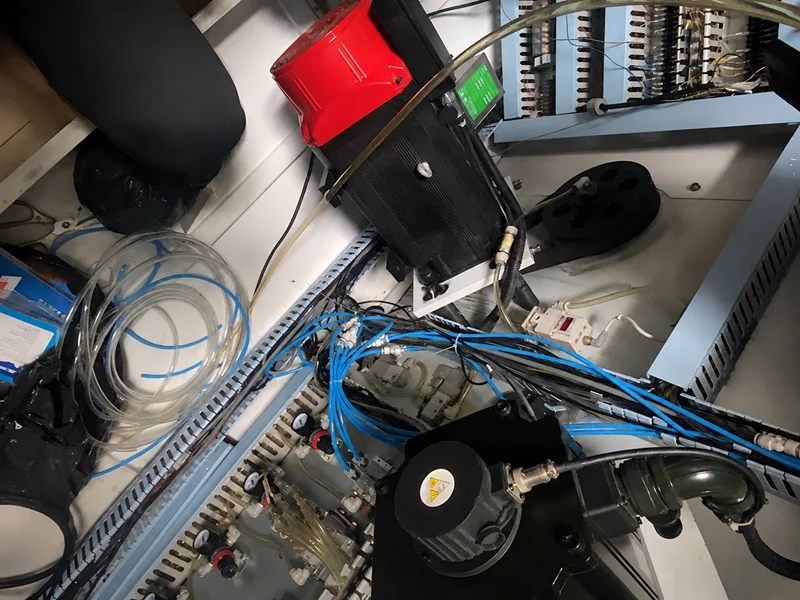
During the operation of slitting machines, paper cutting machines, packaging machines or production lines that use winding and unwinding shafts, the air shaft is a very important mechanical assembly. The shaft is responsible for holding the core, ensuring the material is evenly tensioned, rotates stably and does not shift during production.
After a long period of continuous operation, the air shaft may show signs such as sagging, off-center rotation, abnormal noise, vibration, material roll misalignment or a transmission system that no longer runs smoothly. If not inspected and handled in time, minor faults in the bearing, retaining ring, pulley or belt can lead to damage spreading to other mechanical assemblies.
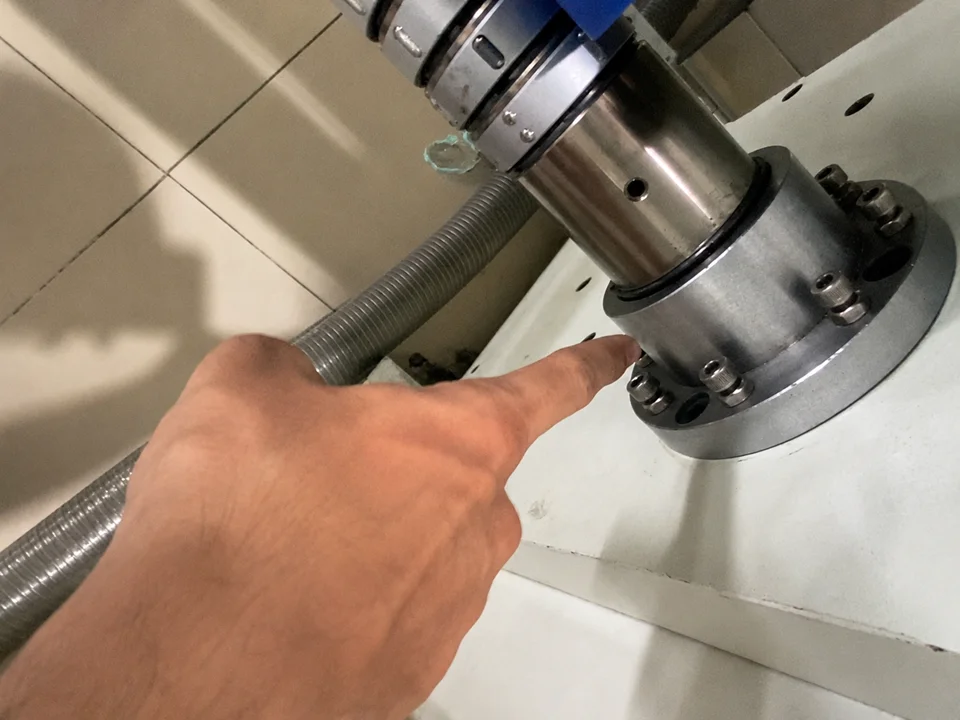
When should the air shaft be inspected?
Some common signs indicate that the air shaft system needs to be inspected:
Signs on the shaft assembly
- The air shaft shows signs of sagging compared to its standard position.
- The shaft rotates off-center, easily causing vibration when the machine is running.
- The bearing area produces abnormal noise.
Signs during production
- The material roll is no longer centered properly.
- The transmission belt becomes misaligned, loose or vibrates.
- The finished product after cutting or winding shows edge deviation, unevenness or dimensional errors.
In many cases, the cause does not come from the entire shaft but from small components such as worn rolling bearings, loose retaining rings, incorrectly positioned pulleys, belts losing tension or worn bearing mounting surfaces.
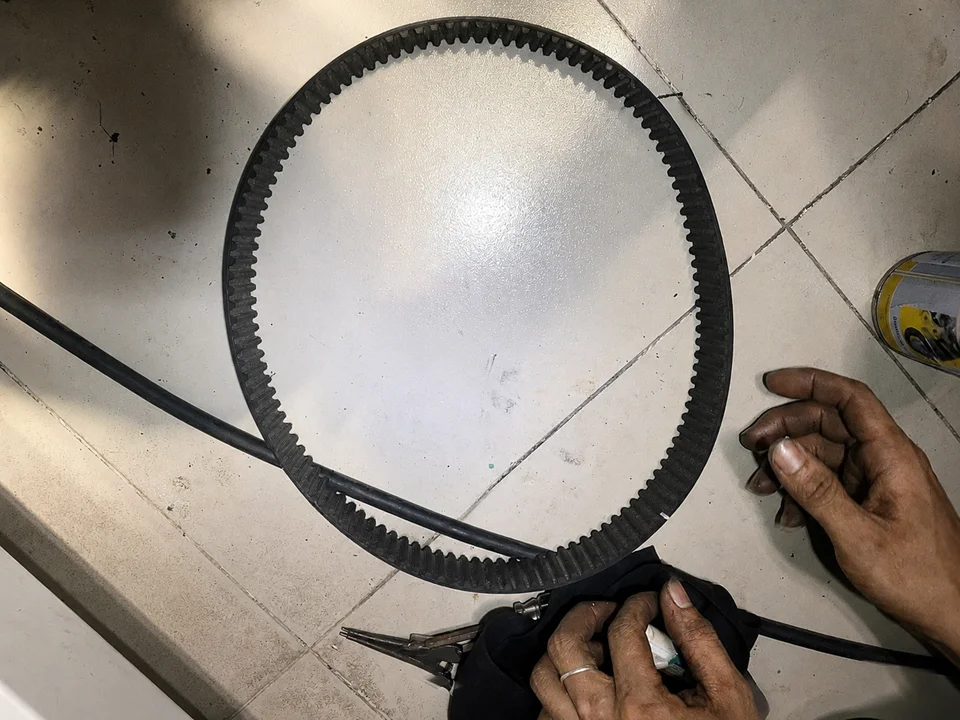
Air shaft repair process at VietSonic
VietSonic approaches repair work by identifying the correct root cause before replacing components, limiting guesswork repairs and helping the equipment operate more stably after handover.
Inspect the current machine condition
First, the technician inspects the current machine condition, checks the shaft sagging level, bearing mounting position, pulley assembly, belt and fixing points. The machine compartment is then opened to access the internal transmission assembly.
Remove the transmission assembly for inspection
When removing the pulley and belt system, the technician can more clearly inspect the condition of the bearings, retaining rings, shaft surface and fitting positions. In cases where the air shaft is sagging, a common cause is damaged rolling bearings or bearings slipping out of their working position, causing the shaft to no longer be supported concentrically.
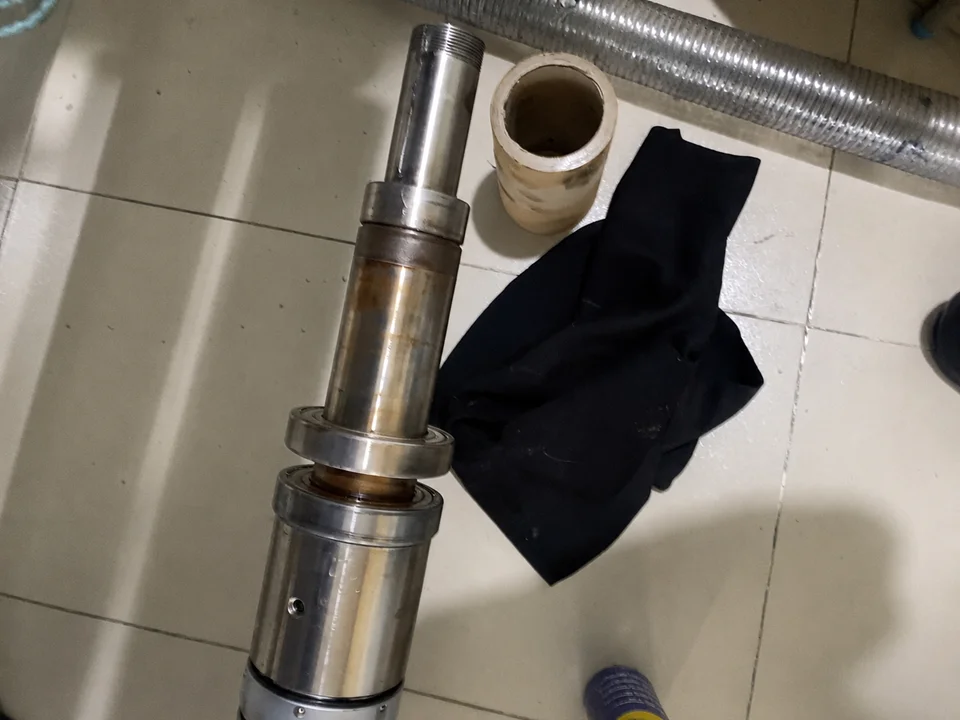
Measurement before installing new bearings
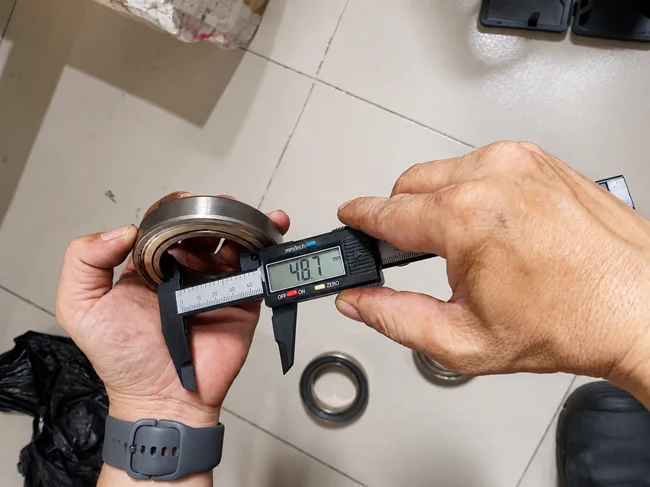
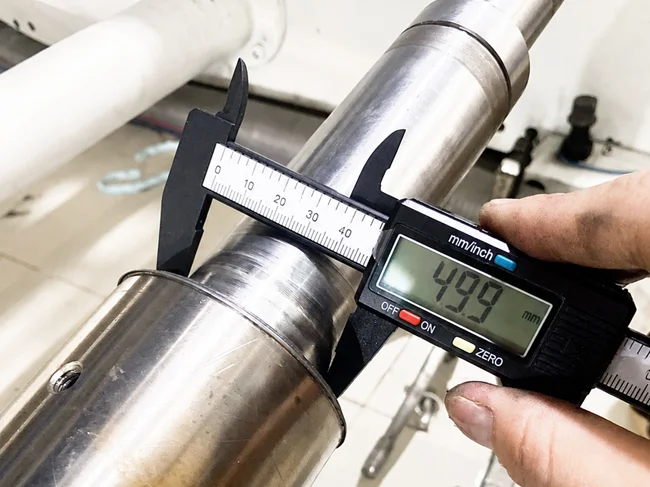
An important step in mechanical repair is measuring dimensions before reinstallation. VietSonic does not only replace new bearings but also checks the compatibility between the bearing and the mounting position on the shaft.
The technician measures the inner diameter and outer diameter of the bearing, while also checking the diameter at the bearing mounting positions on the shaft. This helps evaluate whether the shaft surface is still suitable for installing a new bearing, preventing the situation where the bearing is replaced but the shaft remains loose, misaligned or quickly fails again.
Replacing rolling bearings and reinstalling the air shaft
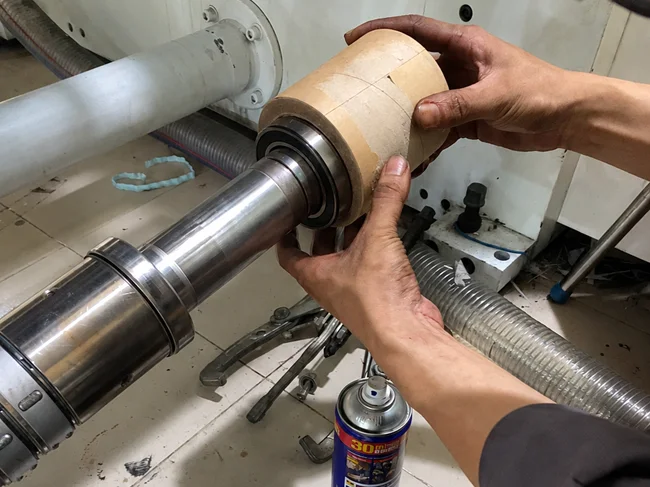
After confirming the suitable dimensions, the technician installs the new bearing onto the shaft. This process must be performed carefully to avoid damaging the inner ring or outer ring of the bearing, or causing incorrect installation positioning.
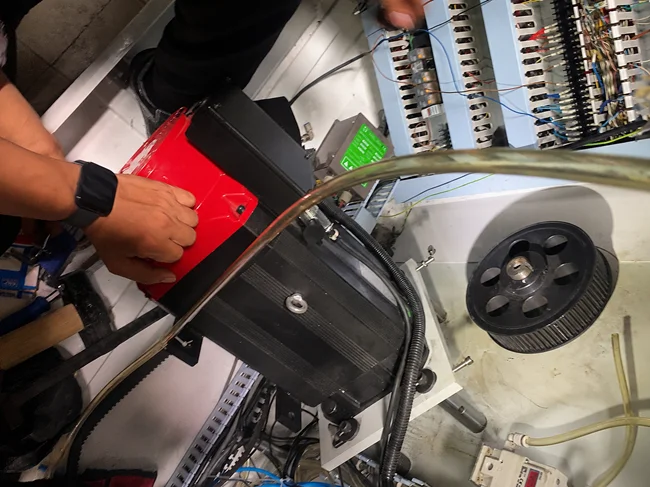
Once the rolling bearings have been replaced and fixed in the correct positions, the air shaft is reinstalled into the machine assembly. After that, the pulley and transmission belt system is reinstalled, aligned and adjusted so that the belt has the proper tension. This is an important step that helps the transmission system run smoothly, reduce vibration and limit abnormal load on the bearings.
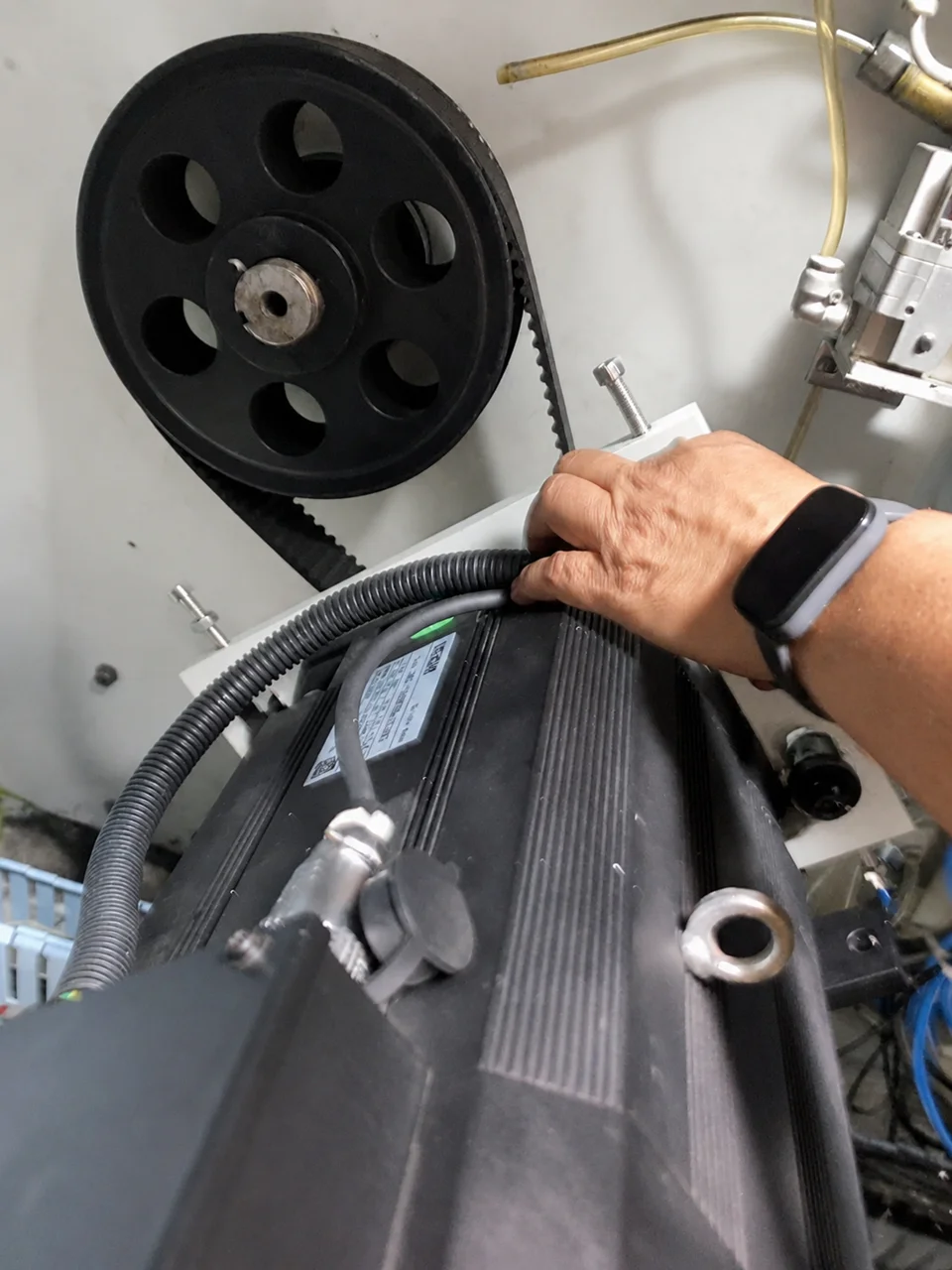
Results after repair
After installation is completed, the air shaft is returned to its correct working position, eliminating the initial shaft sagging condition. The pulley–belt system is reinstalled and tension-adjusted, helping the transmission process become more stable.
Repairing the correct root cause helps the machine reduce vibration, lower the risk of repeated bearing assembly failure and support the cutting, slitting, winding or unwinding process with better stability.
VietSonic provides industrial equipment repair and maintenance services
In addition to industrial ultrasonic technology equipment, VietSonic also provides repair, maintenance and restoration services for production equipment used in factories, machining workshops and industrial production lines.
Supported service items include:
Mechanical transmission assemblies
- Repair of air shafts, winding shafts and unwinding shafts.
- Bearing replacement, retaining ring inspection and mounting surface inspection.
- Alignment of pulleys, transmission belts and guiding mechanisms.
Industrial production machines
- Maintenance of slitting machines, paper cutting machines and packaging machines.
- Inspection of rollers, material guiding assemblies and continuously operating mechanisms.
- Condition assessment and recommendation of suitable repair solutions.
The key point in maintenance is not only replacing damaged components, but also identifying the correct root cause, checking compatibility, aligning after installation and monitoring actual operating performance. This helps businesses reduce downtime, limit repeated failures and extend equipment service life.
When the machine shows abnormal signs, early inspection is recommended
Issues such as shaft sagging, noisy bearings, loose belts, misaligned pulleys or machine vibration usually begin with small warning signs. If inspected early, repair costs are usually lower and damage can be prevented from spreading to other components.
VietSonic can support equipment inspection, condition assessment, repair solution recommendations and maintenance implementation based on the actual operating conditions of each factory.