



Professional Autoclave Sterilizer Repair with On-Site Inspection
VietSonic provides repair, maintenance, and inspection services for autoclave sterilizers used in clinics, dental clinics, laboratories, spas, hospitals, schools, and manufacturing facilities. We support common issues such as no pressure buildup, no heating, steam leakage, error alarms, failed sterilization cycles, wet instruments after sterilization, or the machine stopping midway through a cycle.
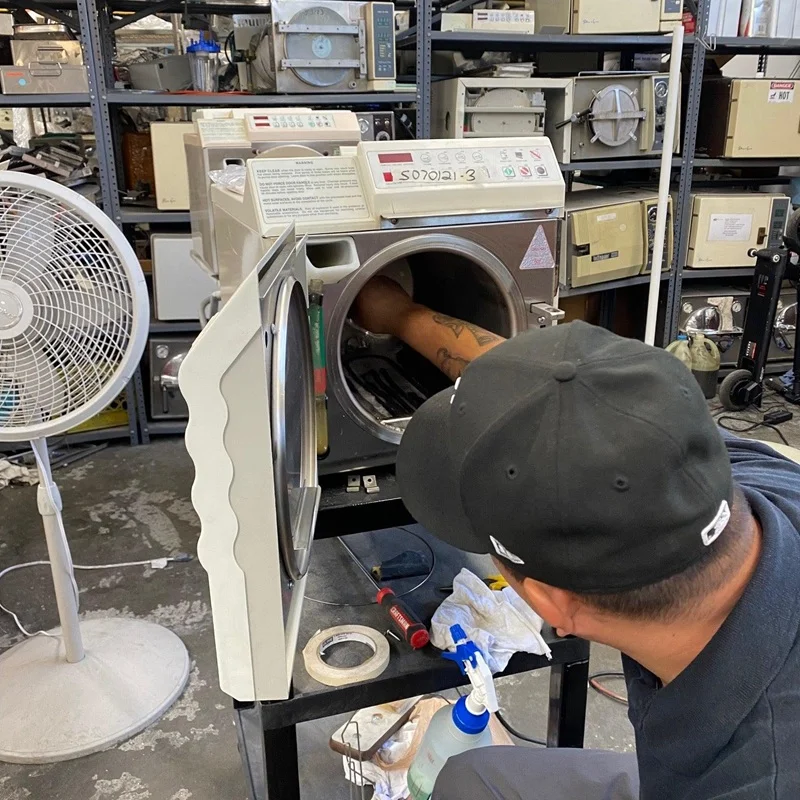
Autoclave sterilizer repair must be performed properly because this equipment operates at high temperatures and high pressure, and is directly related to sterilization effectiveness. When the machine operates unstably, it not only interrupts work but may also cause sterilization cycles to fail required standards.
VietSonic supports on-site condition inspection, root-cause identification, suitable repair recommendations, and maintenance guidance to help reduce recurring faults.
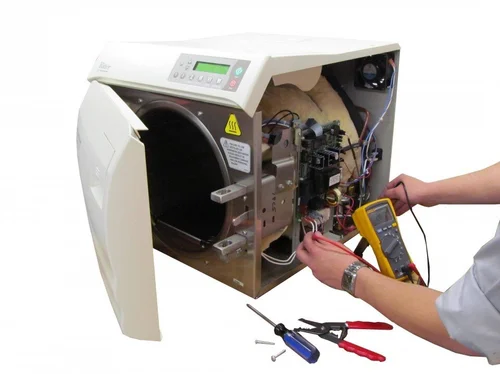
When should an autoclave sterilizer be repaired?
If the autoclave shows any of the following signs, it should be inspected early to prevent more serious damage or impacts on sterilization quality.
No pressure buildup
Pressure rises slowly, fails to reach the set pressure, or the machine displays a pressure error during operation.
No heating
The chamber temperature does not reach the required level, the machine heats slowly, the heating element is weak, or the temperature sensor gives incorrect readings.
Steam leakage at the door
Steam escapes around the door edge, the door gasket is hardened, torn, deformed, or the door does not seal properly.
Error alarms
The display shows low pressure, low temperature, door error, water error, or cycle-related errors.
Instruments remain wet
After sterilization, sterilization pouches, towels, instruments, or the chamber still contain an unusual amount of water.
No power
The machine does not power on, the display does not light up, buttons do not respond, or power is lost midway through a cycle.
Autoclave sterilizer repair services supported by VietSonic
Repairing autoclave sterilizers with no pressure buildup
We check steam generation, pressure retention, steam leakage, drain valves, solenoid valves, door gaskets, pressure sensors, and steam piping. This is one of the most common issues in autoclaves that have been operating for a long time.
Repairing autoclaves with no heating or slow heating
We test the heating element, resistance, steam generator, relay, SSR, contactor, temperature sensor, power cable, and temperature control circuit. This fault often causes the machine to run for a long time without reaching sterilization conditions.
Replacing door gaskets and fixing steam leakage or door sealing issues
We inspect the door gasket, door edge, hinges, locking handle, door sensor, and chamber sealing condition. A hardened, torn, or deformed gasket can cause pressure loss and repeated error alarms.
Repairing drain valves, safety valves, solenoid valves, and steam lines
We clean, inspect, or replace valves that are stuck, leaking, unable to seal properly, or operating at the wrong time. The valve system directly affects pressure buildup, pressure retention, and safe pressure release.
Repairing temperature sensors, pressure sensors, and water level sensors
We check sensor signals, parameter deviations, signal wires, probes, and connections to the controller. Faulty sensors may cause the machine to display errors even when the mechanical parts are still operating.
Repairing circuit boards, controllers, displays, and electrical systems
We inspect the power supply, control board, display screen, buttons, relay, contactor, SSR, fuse, wiring, and terminal connections. This is suitable for faults such as no power, power loss, or incorrect cycle operation.
Maintenance, descaling, and periodic inspection of autoclaves
We clean the sterilization chamber, inspect scale buildup, water lines, drain lines, steam generator, water pump, door gasket, and common leakage points. Periodic maintenance helps reduce the risk of unexpected machine failure.
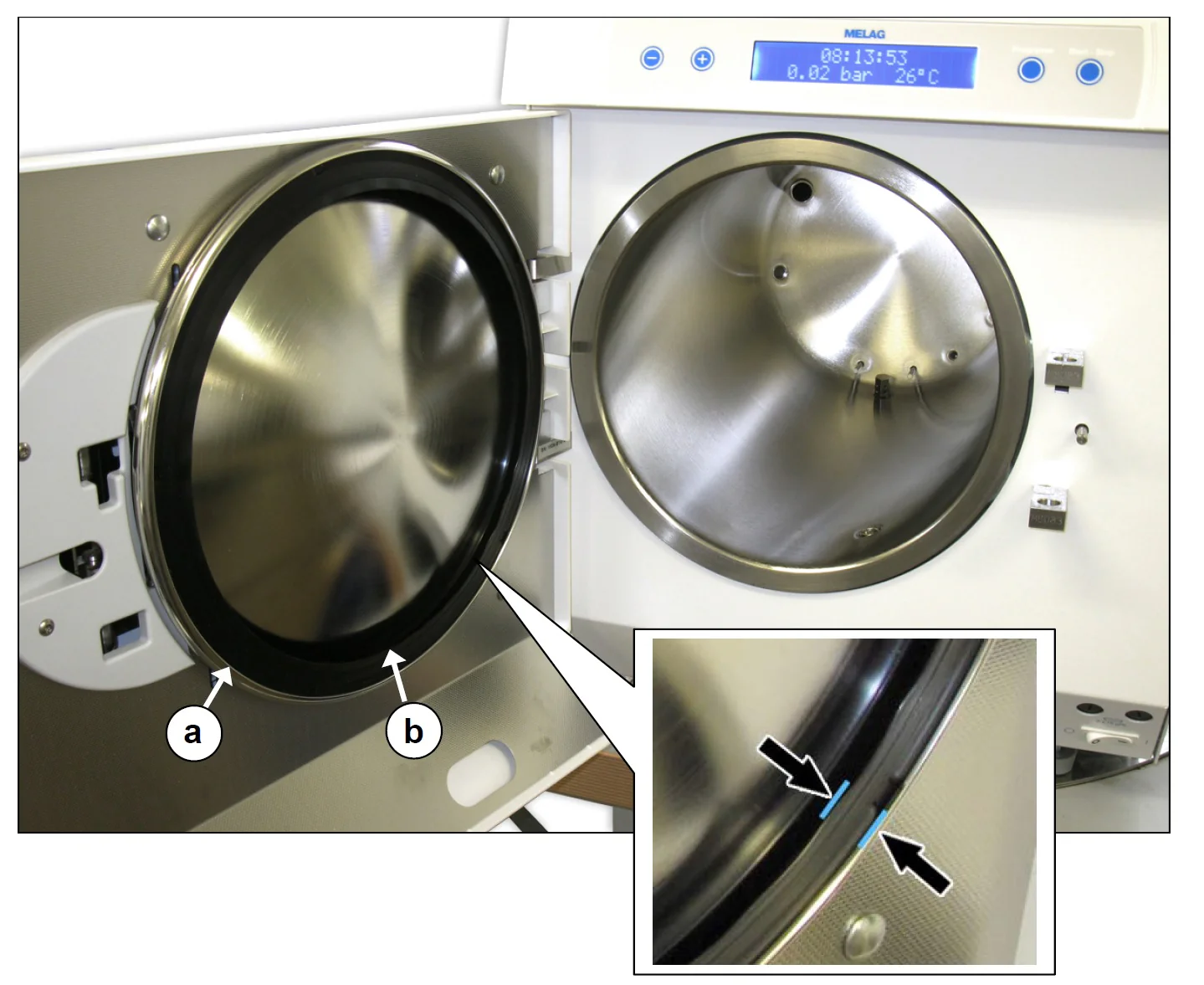
Why do autoclave sterilizers easily develop faults after a period of use?
Autoclave sterilizers often operate in hot steam, high-pressure environments, with repeated cycles many times a day. Without proper cleaning and maintenance, many components will degrade over time.
- The door gasket becomes hardened, deformed, or torn.
- The heating element, resistance, or steam generator becomes scaled.
- The drain valve, solenoid valve, or steam piping becomes clogged or leaks.
- The water pump becomes weak, or the water level sensor operates incorrectly.
- The temperature sensor or pressure sensor becomes inaccurate.
- The control panel, relay, contactor, or SSR deteriorates.
- Users overload the chamber or select an incorrect sterilization program.
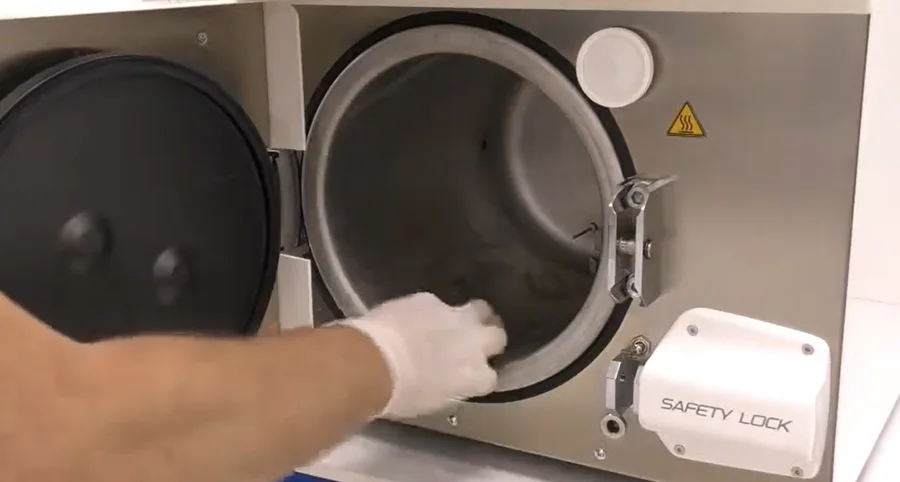
Safety note: Do not remove the safety valve by yourself, do not block the steam discharge line, do not open the door while the machine is still under pressure, and do not interfere with the electrical system without proper expertise. An autoclave sterilizer is equipment that operates at high temperature and high pressure.
Common faults and initial inspection directions
| Fault symptom | Common causes | Technical inspection direction |
|---|---|---|
| Autoclave does not build pressure | Leaking door gasket, steam leakage, insufficient water, drain valve not sealing, weak heating element, incorrect pressure sensor reading | Check pressure retention, steam line, door gasket, valves, steam generator, and pressure sensor |
| Autoclave does not heat up | Damaged resistance, scaled heating element, faulty relay/SSR, incorrect temperature sensor reading, weak power supply | Test the resistance, temperature control circuit, temperature sensor, and power supply |
| Steam leakage at the door | Hardened gasket, scale buildup on the door edge, misaligned door, lock not sealing tightly | Clean the door edge, adjust the door, inspect the locking mechanism, and replace the gasket when necessary |
| Water error alarm | Insufficient water, weak water pump, clogged water supply line, faulty water level sensor | Check the water tank, water pump, water supply line, and water level sensor |
| Sterilization cycle stops midway | Pressure/temperature not reached, sensor fault, power fault, control board issue, or valve malfunction | Read the error code, check operating parameters, control circuit, and related assemblies |
| Instruments remain wet after sterilization | Incorrect loading, drying fault, steam discharge fault, weak vacuum pump, unsuitable cycle | Check loading method, sterilization program, discharge system, drying system, and vacuum pump if available |
Autoclave sterilizer repair process at VietSonic
The process is carried out by inspecting the actual machine condition, identifying the correct root cause, and prioritizing safe repair solutions suitable for the machine’s condition.
Information intake
Record the machine model, fault symptom, error code, images/videos, and frequency of the fault.
Equipment inspection
Inspect the power supply, chamber, door gasket, valves, sensors, heating element, pump, and controller.
Repair proposal
Recommend repair, maintenance, or component replacement solutions based on the actual machine condition.
Test run and inspection
Run a test cycle, monitor pressure, temperature, leakage, and operating stability after repair.
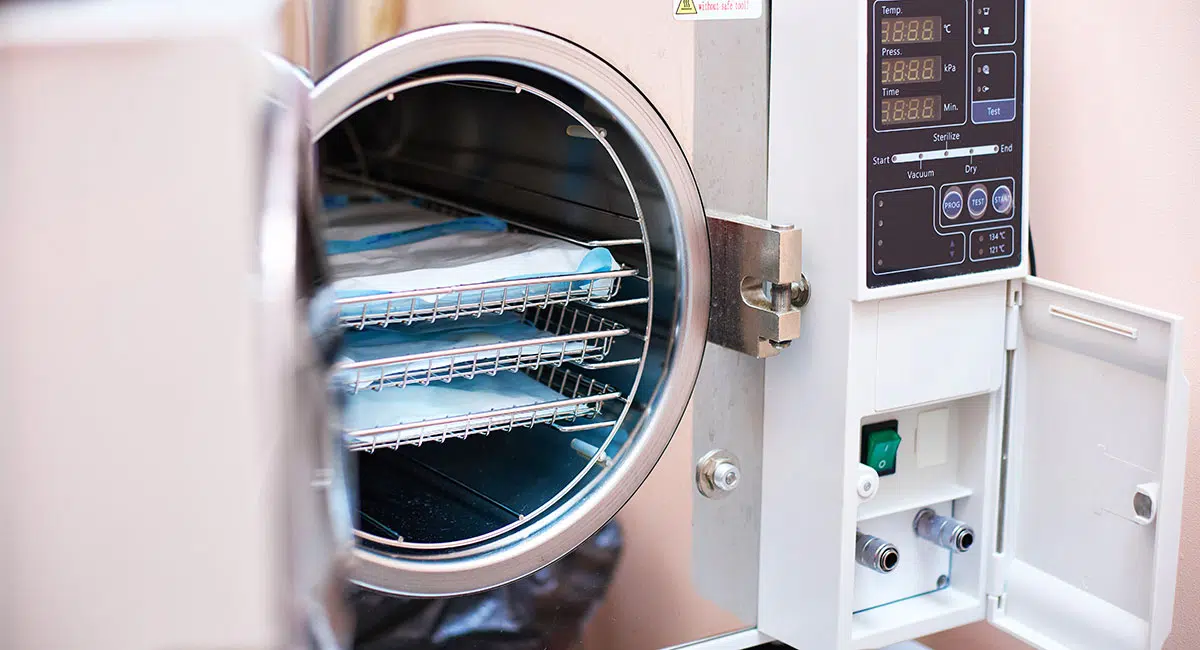
Service suitable for many types of autoclave sterilizers
VietSonic receives, inspects, and repairs many types of autoclave sterilizers currently used in real-world applications.
Medical, clinic, and dental autoclaves
Suitable for clinics, dental clinics, medical facilities, beauty clinics, and organizations that need to sterilize instruments regularly.
Laboratory autoclaves
Support for checking pressure faults, temperature faults, valves, sensors, chambers, and operating issues in laboratory environments.
Industrial and production autoclaves
Suitable for manufacturing facilities, schools, factories, research units, or production lines using sterilization equipment.
Autoclave sterilizer maintenance
Door gasket replacement
No pressure buildup repair
No heating repair
Sensor inspection
Valve system repair
Control board repair
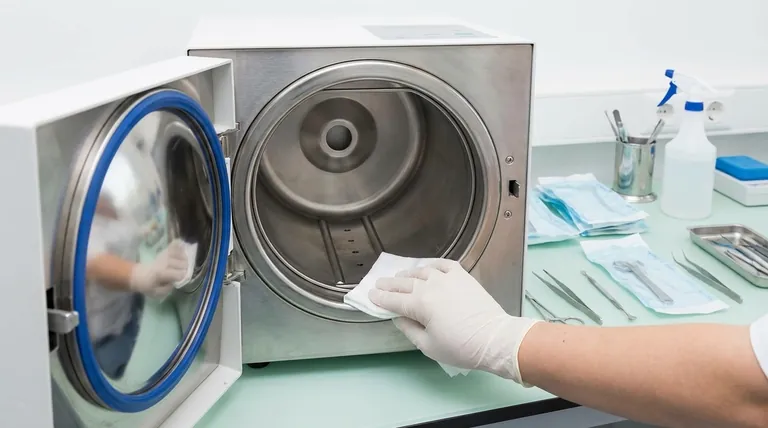
Periodic autoclave sterilizer maintenance helps reduce unexpected faults
In addition to repair when the machine has already failed, periodic maintenance helps detect degraded components early before they cause machine stoppage, pressure loss, or failed sterilization cycles.
- Clean the sterilization chamber, trays, and door edge area.
- Inspect the door gasket, hinges, locking handle, and door sensor.
- Check the heating element, steam generator, and scale buildup condition.
- Inspect the drain valve, solenoid valve, safety valve, and steam line.
- Check the water pump, water supply line, and water level sensor.
- Inspect the temperature sensor, pressure sensor, and control system.
- Run a test cycle to evaluate pressure buildup, pressure retention, and pressure release.
Frequently asked questions about autoclave sterilizer repair
Can an autoclave sterilizer with no pressure buildup be repaired?
Yes. However, the specific cause must be checked, such as a leaking door gasket, steam leakage, insufficient water, drain valve not sealing, weak heating element, incorrect pressure sensor reading, or controller fault.
What causes steam leakage at the autoclave door?
It is usually related to a hardened or torn door gasket, scale buildup on the door edge, door misalignment, or the locking mechanism not sealing tightly. If not handled, the machine may fail to reach sterilization pressure.
Why does the machine heat up but fail to reach pressure?
This may be caused by steam leakage, drain valve not sealing, weak steam generator, insufficient water, scaled heating element, or incorrect pressure sensor reading. The steam system, electrical system, and sensors should be checked together.
Should users repair an autoclave sterilizer by themselves at the facility?
Users should only check basic items such as power supply, water supply, door closing, and loading method. They should not disassemble the electrical system, safety valve, steam generator, or open the machine while it is still hot or under pressure.
When should an autoclave sterilizer be maintained?
Maintenance should be performed periodically depending on usage frequency. If the machine operates heavily or is used regularly for sterilizing medical, dental, laboratory, or production instruments, it should be inspected early when signs such as slow pressure buildup, steam leakage, error alarms, or incomplete drying appear.
Need autoclave sterilizer repair?
Please send the machine model, images/videos of the fault symptom, or error code shown on the display. VietSonic will support initial assessment and recommend a suitable inspection and repair solution.
Vietnam Ultrasonic Equipment Co., Ltd.
Phone: 0938 49 33 66 – Mr. Hải
Email: info.vietsonic@gmail.com
Website: https://vietsonic.vn