A solution engineered around your actual tubing sample

Automatic ultrasonic PVC tube welding and cutting machine

VietSonic designs and manufactures each machine around the product, weld position, cutting length, and operating cycle required by the customer. The system combines ultrasonic welding and cutting in one cycle, helping manufacturers reduce separate handling steps and maintain more consistent output between production runs.

Reference configuration: 20 kHzPower: 2,600 WAutomatic welding and cutting
CALL 0938 49 33 66 SEND REQUIREMENTS BY EMAIL
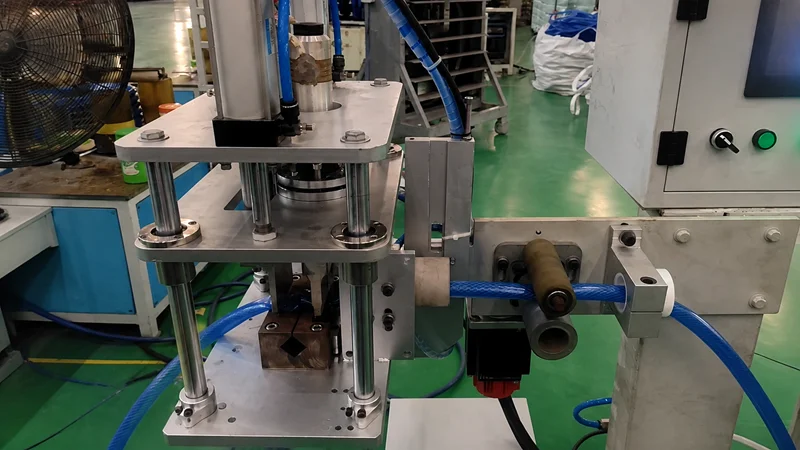
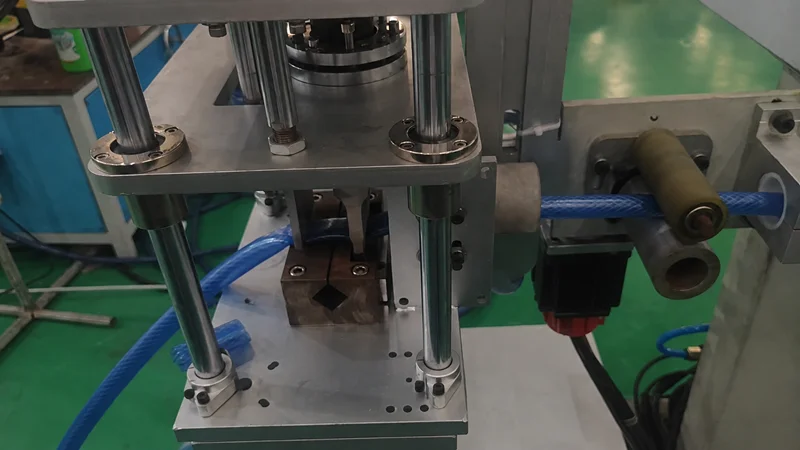
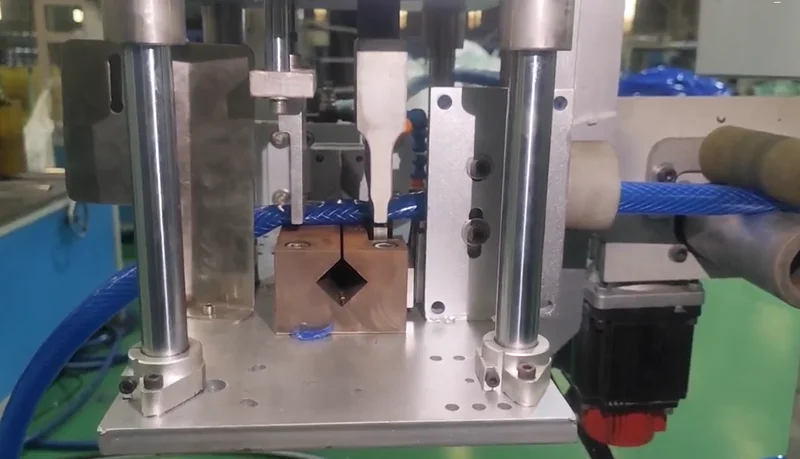
VietSonic automatic PVC tube welding and cutting machine in operation

Manufacturers need a process cycle tailored to the product being made

With PVC tubing, output quality depends on more than the ultrasonic generator. The tube-holding position, welding tool geometry, vibration amplitude, operating time, and cutting mechanism must work together correctly for the actual material. For this reason, VietSonic develops each project from the customer’s product sample and operating requirements instead of applying one configuration to every type of tubing.

01

Reduce handling between two operations

The welding and cutting mechanisms are integrated into one system, limiting the need to transfer semi-finished parts between multiple stations and reducing dependence on manual handling.

02

Control the weld position and cutting length

The positioning guide, holding mechanism, and control sequence are designed around the tubing sample so that each production cycle follows the programmed settings.

03

Adapt the system to the production line

Material feeding, signal exchange, and product discharge can be developed around the factory layout, target output, and the upstream and downstream processes.

VietSonic designs the mechanics, welding tooling, and cycle control in-house

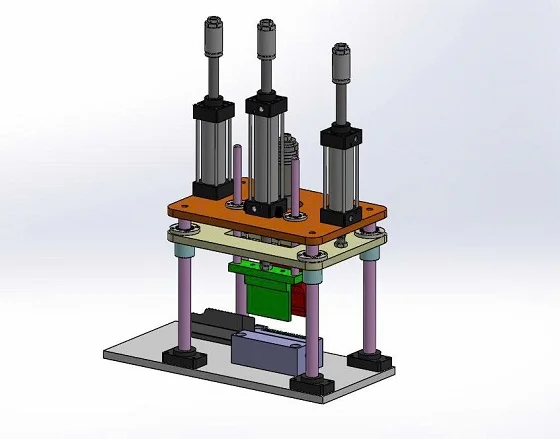
The 3D design of the welding assembly allows engineers to determine the sonotrode position, support points, travel range, and space required for the cutting mechanism in advance. This is an important step in ensuring that the machine acts on the correct welding area without displacing the tubing.

  • Evaluate the tubing sample, material, dimensions, and weld requirements.
  • Design the welding tool, fixture, and cutting mechanism around the product geometry.
  • Program the tube-holding, welding, cutting, and product-release sequence.
  • Run trials with actual samples and adjust the parameters before delivery.
3D design of the VietSonic PVC tube welding assembly
VietSonic PVC tube welding and cutting machine assembly

The machine assembly is arranged to weld and cut tubing in a single cycle.

The video shows how the machine operates on PVC tubing

Manufacturers can observe the sequence in which the tubing enters the working position, the welding assembly is activated, and the cutting mechanism completes the part. The video provides direct evidence of how VietSonic integrates ultrasonic technology with mechanical automation.

How the weld is formed

The ultrasonic generator converts electrical energy into mechanical vibration at the welding tool. The vibration acts on the material’s contact area for the programmed duration, after which the holding mechanism keeps the part in position while the joint stabilizes before the product moves to the next step.

The actual result also depends on the PVC formulation, wall thickness, welding-area geometry, and end-use requirements. The customer’s sample must be tested before the final machine configuration is confirmed.

Finished parts must be evaluated against application criteria

VietSonic can work with the customer to define suitable inspection criteria, including weld appearance, leak tightness, dimensions after cutting, or customer-specified functional tests.

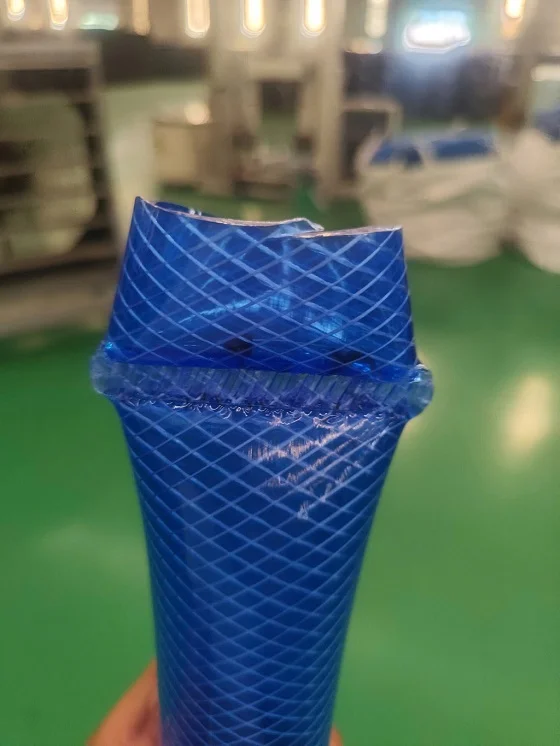
PVC tube welded using ultrasonic technology

Reference configuration for the VS-HCO 2026 machine

ModelVS-HCO 2026
Ultrasonic frequency20 kHz
Power2,600 W
Power supply220 V – 50 Hz
Main functionsAutomatic ultrasonic welding and cutting
The specifications above are the published configuration for the model presented in this article. The welding tool, fixture, cutting mechanism, automatic sequence, and process parameters must be determined again for the actual tubing sample.

What should manufacturers send for a faster consultation?

  • A PVC tubing sample and the material specification or material code.
  • The diameter, wall thickness, geometry, and required weld position.
  • The cutting length and acceptable dimensional tolerance.
  • The target production output or desired cycle time.
  • Inspection criteria such as appearance, leak tightness, dimensions, or functional testing.
  • Requirements for feeding, product discharge, and connection to the existing production line.

Once the sample and criteria are available, the engineering team can assess feasibility, propose a trial plan, and discuss a configuration that more closely matches the customer’s requirements.

Applications should be verified through sample testing

The solution can be evaluated for PVC tubing used in technical systems, water supply and drainage, irrigation, or specialized tubular components. However, each material formulation and product structure responds differently to ultrasonic energy. VietSonic recommends sending actual samples for testing before making an equipment investment decision.

PVC tubing after the automatic welding and cutting cycle

Application of the automatic PVC tube welding and cutting machine.

Send a tubing sample so VietSonic can evaluate the welding and cutting solution

Manufacturers seeking to automate PVC tube welding and cutting can send a product sample, dimensional specifications, and expected production output. The engineering team will review the requirements, evaluate the sample, and propose a configuration suited to the existing production process.

CONTACT MR. HAI: 0938 49 33 66 EMAIL: INFO.VIETSONIC@GMAIL.COM
Vietnam Ultrasonic Equipment Co., Ltd. · Workshop: 85/2A, Hamlet 4, Ba Diem Commune, Ho Chi Minh City