



Vacuum Chamber Leakage, Machine Cannot Reach the Required Vacuum Level – How Does VietSonic Inspect and Resolve the Issue?
When a vacuum coating system takes increasingly longer to evacuate, cannot reach the required pressure, or the pressure continually rises again, the vacuum pump is not necessarily the only cause. A leak at the chamber door, shaft seal, flange, piping, or a feedthrough assembly can also disrupt the entire production line.
Root Cause Isolation
Condition-Based Repair
Slow evacuation, failure to reach the required vacuum level, or fluctuating pressure.
Longer cycle times, increased defects, and delayed deliveries.
A coordinated inspection of the chamber, door, seals, valves, piping, and pump assembly.
A leaking vacuum chamber is the type of failure that can consume significant troubleshooting time without revealing the true cause. The machine may still run and the pump may still operate, yet evacuation becomes progressively slower, pressure becomes unstable, and coating quality begins to fluctuate.
The Machine Still Runs, but Productivity Is Being Eroded Every Day
In a plastic-film metallizing line, each production cycle can begin only after the chamber reaches the required vacuum level. When air continuously enters the chamber, the pumping system must run longer to compensate for the incoming gas load.
At first, the business may notice only a few extra minutes of waiting time. As the leakage becomes more severe, however, the impact spreads across the entire production process.
Each production batch requires additional waiting time, reducing the number of operating cycles completed per day.
The system does not reach the pressure threshold required to start evaporation and metal deposition.
The pump assembly operates under higher load, generating more heat, consuming more electricity, and shortening equipment life.
The film may develop streaks, color variations, uneven coating, or reduced adhesion.
Finished products may require rework, downgrading, or disposal, wasting materials and labor.
A prolonged failure disrupts production planning and increases the risk of late orders.
Because the machine may not stop completely, businesses often extend the evacuation time or adjust operating parameters to keep production running. This approach only masks the symptom while the vacuum pump and auxiliary assemblies continue operating under unfavorable conditions.

Why Is the Vacuum Chamber No Longer Airtight?
An industrial vacuum coating machine is not simply a sealed enclosure. Its chamber includes multiple doors, drive shafts, flanges, cooling-water lines, electrical connections, viewing ports, valves, and assemblies that pass through the chamber wall.
A single deteriorated or incorrectly assembled point can allow air to enter continuously, preventing the system from reaching the required vacuum level.
- The door gasket has hardened, cracked, deformed, or accumulated heavy deposits.
- The door contact surface is scratched, warped, or compressed unevenly.
- Seals on the roller shafts and drive shafts are worn.
- Flanges, fittings, or vacuum piping are leaking.
- A valve does not close tightly, or its control mechanism is operating incorrectly.
- The pump oil, filter, suction line, or cooling assembly has a problem.
Areas VietSonic Focuses on During On-Machine Inspection
Fault isolation must be based on the machine structure and pressure-change behavior. Replacing only the door gasket or repairing the pump based on assumptions is not sufficient.
Chamber Door, Gasket, and Sealing Surfaces
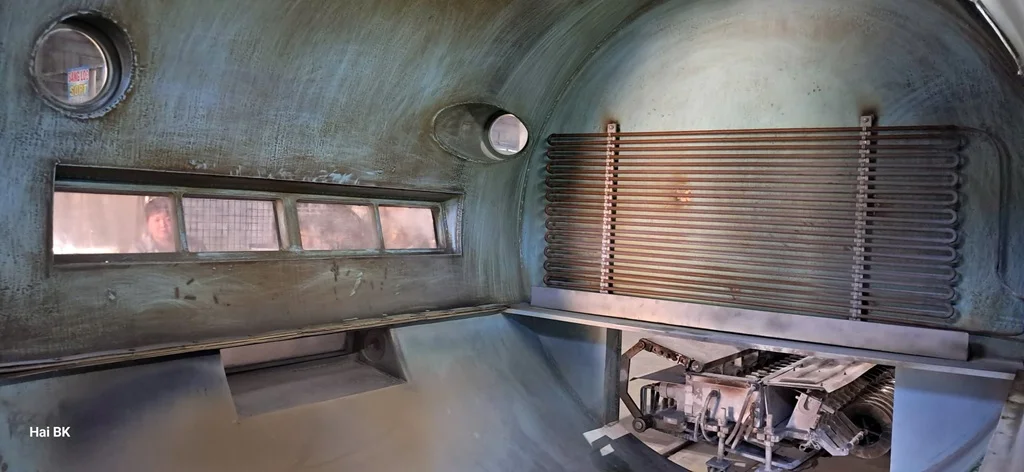
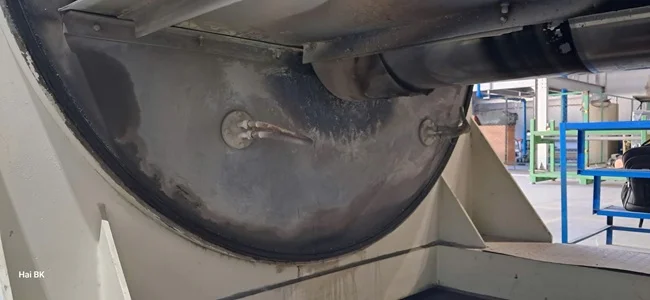
Because the chamber door is large, clamping force must be distributed evenly around the entire perimeter. A hardened, contaminated, or inelastic gasket can create a leak path. Hinges, door locks, and contact points must also be inspected for misalignment or uneven compression.
Roller Shafts, Shaft Seals, and Feedthrough Points
The machine has multiple rotating shafts passing through the chamber wall. These locations must allow mechanical movement while maintaining vacuum integrity. Worn seals, shaft eccentricity, misaligned bearings, or deteriorated mounting surfaces can all cause air leakage.
Piping, Flanges, Valves, and the Vacuum Pump Assembly
In many cases, the chamber remains sealed but the required vacuum is not achieved because the suction line is blocked, a valve does not open or close correctly, the pump oil is contaminated, the cooling system is inadequate, or pump performance has deteriorated.
Metal Deposits, Dust, and Thermal Effects Inside the Chamber
Long-term deposits can affect sealing surfaces, moving assemblies, and heat dissipation. Areas showing discoloration, flaking, or repeated thermal exposure must be cleaned and carefully evaluated before the machine returns to operation.
Leakage Cannot Be Identified by External Observation Alone
Some major leaks can be detected from gasket condition, air sounds, or contamination marks. However, many leaks appear only when the system begins evacuating, when shafts rotate, or when equipment temperature changes.
Therefore, VietSonic approaches the problem by inspecting the entire system, isolating each assembly, and correlating findings with the machine’s pressure-change behavior.
This approach reduces the risk of replacing multiple parts while the machine still fails to reach vacuum, and it also minimizes unnecessary downtime.
The Process VietSonic Applies on Actual Systems
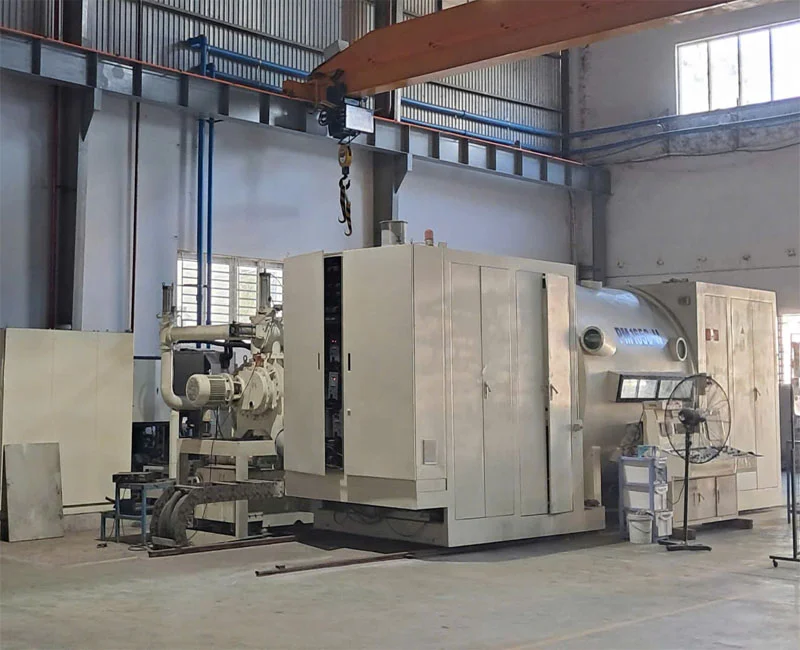
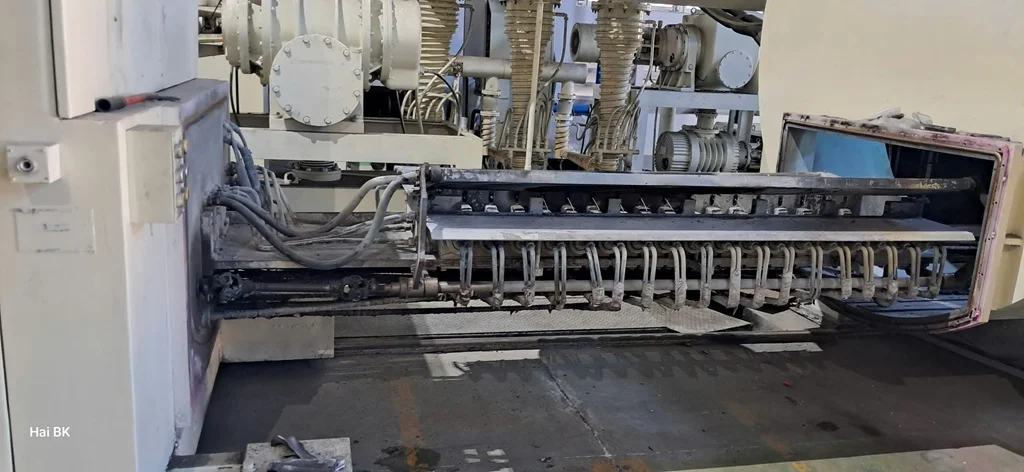
On the vacuum coating equipment shown in the image series, VietSonic directly inspected the chamber structure, opened the relevant assemblies, and examined locations that could reduce vacuum integrity.
Record Operating Conditions
Check evacuation time, the pressure level achieved, pressure fluctuation trends, and the system’s ability to maintain vacuum when isolated.
Inspect the Overall Machine Structure
Inspect the chamber door, gasket, door locks, roller shafts, drive assembly, viewing ports, flanges, piping, valves, and vacuum pump assembly.
Isolate Sections and Locate Abnormalities
Isolate each section to determine whether the fault lies in the chamber, piping, valves, or pump assembly, avoiding parts replacement based on assumptions.
Clean, Align, and Repair
Clean sealing surfaces, remove deposits, align the door mechanism and shafts, and restore or replace components that no longer meet technical requirements.
Test Run and Post-Repair Evaluation
Recheck evacuation time, the vacuum level achieved, the rate of pressure rise, and system stability throughout the operating cycle.
Repair Capability Is More Than Simply Getting the Machine Running Again
For VietSonic, the objective of the repair process is to help businesses identify the actual failure mechanism, restore operating conditions, and reduce the risk of recurrence.
Evaluate the chamber, film-winding system, evaporation assembly, and auxiliary components together.
Combine mechanical, vacuum, electrical, cooling, and control-system assessments rather than evaluating each assembly in isolation.
Recommend repair or replacement only after the cause has been isolated.
Organize the inspection in a logical sequence so the business can establish a production recovery plan as soon as possible.
Evaluate the impact of the fault on the pump, valves, roller shafts, heating system, and coating quality.
Recommend items for periodic monitoring to reduce the likelihood of recurrence.

Results the Business Should Achieve After Repair
The system should be evaluated by its ability to evacuate, hold vacuum, and remain stable during production—not merely by whether the machine can restart.
Shorter Evacuation Time
Stable Pressure During the Coating Cycle
Reduced Load on the Pumping System
Fewer Uneven-Coating Defects
Lower Rework Rate
Better Control of Energy Use and Operating Costs
Lower Risk of Unplanned Downtime
More Proactive Production Planning
Does Your Vacuum Coating Machine Take Too Long to Evacuate, Fail to Reach Pressure, or Show Continuous Pressure Fluctuations?
Do not continue extending evacuation time or replacing parts based on assumptions. VietSonic provides on-site inspection, assessment, and repair services for vacuum chambers, piping, valves, pumps, and related mechanical assemblies at the factory.