



INDUSTRIAL REPAIR AND MAINTENANCE SERVICES
Industrial Air Shaft Repair Services – Bladder Replacement, Expansion Mechanism Repair and Air Leak Troubleshooting
Is your air shaft leaking, failing to expand when inflated, gripping the roll poorly or unable to deflate? Identifying and repairing the faulty part can help businesses keep using their existing shaft without investing in new equipment yet.
VietSonic accepts inspection requests, assesses damage and advises on air shaft repair options suited to the condition of the equipment.
1. Industrial air shafts and their role in production
Industrial air shaft (Air Expanding Shaft), also known as a pneumatic expanding shaft or pneumatic shaft, is a component used to grip material roll cores securely in winding and unwinding machines.
In shafts equipped with an air bladder, compressed air causes the bladder to expand, pushing the expanding bars or lugs outward to grip the roll core. When the air is released, the expansion mechanism retracts, allowing the operator to remove or replace the roll easily.
Air shafts are commonly used in equipment such as:
- Packaging printing machines and industrial printing presses.
- Plastic film slitting and cutting machines.
- Laminating and material coating machines.
- Paper, aluminum foil and packaging production machines.
- Machines processing fabrics, nonwoven fabrics and roll materials.
- Automatic winding and unwinding systems.
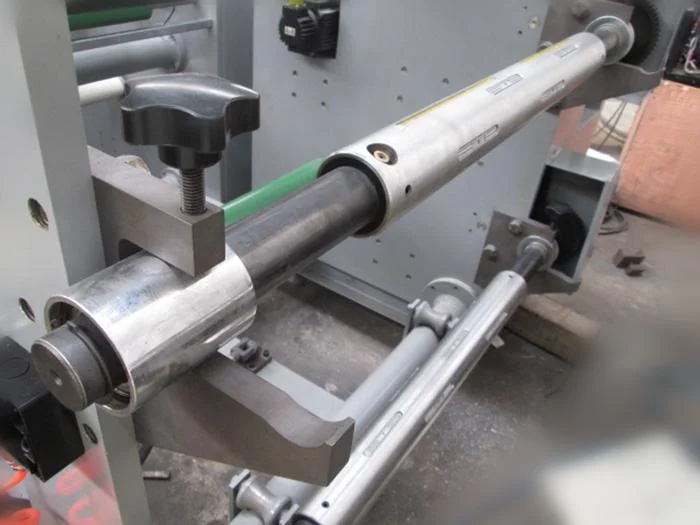
After a period of operation, internal air shaft components may wear, deteriorate or become damaged. When the shaft can no longer grip the roll securely, production may suffer from roll slippage, misalignment, unstable tension or machine downtime to resolve the problem.
2. Signs that an air shaft needs repair
Not every air shaft fault requires replacing the entire shaft. Many faults originate only from the air bladder, inflation valve or a few parts of the expansion mechanism.
| Signs of damage | Possible causes |
|---|---|
| Air shaft leaks air | Punctured or cracked bladder, damaged valve or seal. |
| Shaft does not expand when inflated | Damaged bladder, blocked air passage, incorrect supply pressure or jammed expansion mechanism. |
| Uneven expansion of bars | Worn, dusty or deformed expanding parts, or uneven bladder operation. |
| Air shaft fails to grip the roll core securely | Insufficient pressure, air leakage, worn expanding bars or unsuitable roll core size. |
| Difficulty removing the roll after deflation | Expansion mechanism fails to retract, damaged return springs if fitted, or a faulty deflation valve. |
| Shaft vibrates or has runout during rotation | Bent shaft body, worn journals, problems with shaft supports or installation. |
| Frequent need to reinflate | The shaft may have a slow air leak at the valve, connector or bladder. |
Note: The above signs may have several causes. Do not increase pressure beyond the permitted limit to compensate for poor roll grip. Stop the machine and investigate the cause before resuming operation.
3. Industrial air shaft repair services
Depending on the design and extent of damage, repairs may include replacing internal components, restoring the expansion mechanism or fixing air leaks.
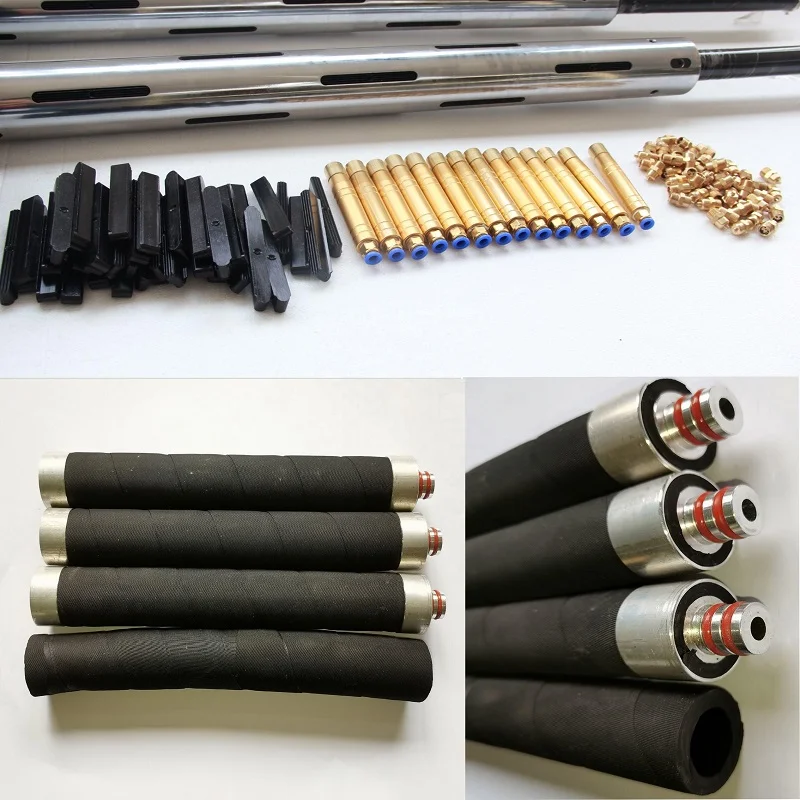
3.1. Industrial air bladder replacement
The air bladder expands when supplied with compressed air, generating force that pushes the expanding bars or lugs against the material roll core.
During use, the bladder may age, harden, crack, become punctured or suffer damage from friction against internal shaft parts.
When the bladder can no longer retain air, the shaft may fail to expand or grip the roll for only a short time.
- Inspect the existing air bladder.
- Identify the correct bladder size and type.
- Replace punctured, cracked or deteriorated bladders.
- Inspect connectors and sealing points.
- Check air retention after installation.
3.2. Air shaft expansion mechanism repair
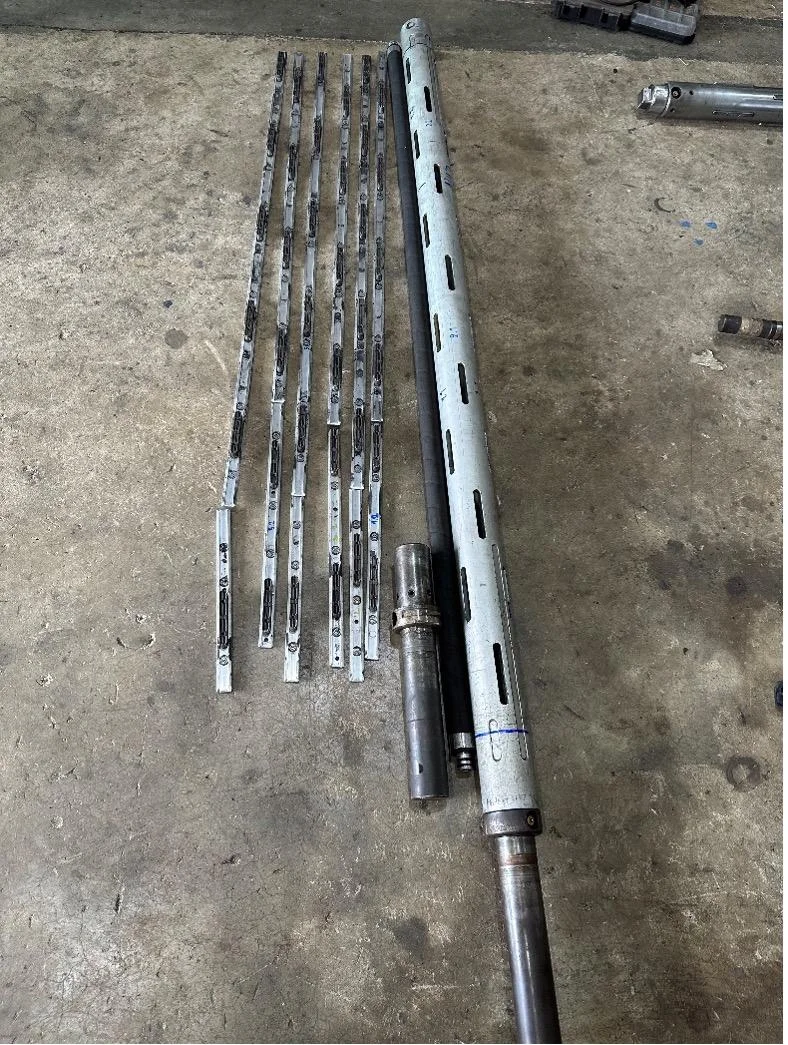
The expansion mechanism directly contacts and grips the roll core. Depending on the shaft type, it may consist of lugs, long expanding bars or strips running along the shaft body.
When expanding components wear, deform or jam in their slots, the shaft may no longer grip the roll evenly across its working length.
Inspection and repair tasks include:
- Inspect expanding bars, lugs and slots.
- Remove dust and material deposits from inside the mechanism.
- Inspect worn or deformed parts.
- Replace damaged expanding components if suitable parts are available.
- Check expansion and retraction after repair.
3.3. Air leak troubleshooting
Air leakage is a common industrial air shaft problem. In some cases, the shaft expands normally immediately after inflation but gradually loses its gripping force during operation.
Leaks may occur at the inflation valve, seals, bladder connectors or within the bladder itself.
Repairs should identify the exact leak location before replacing parts, avoiding situations where a new bladder is installed but the shaft still loses air because of a faulty valve.
- Check the shaft’s ability to retain pressure.
- Locate air leaks.
- Inspect seals, connectors and sealing points.
- Replace damaged components.
- Test airtightness after completing repairs.
3.4. Air valve repair and replacement
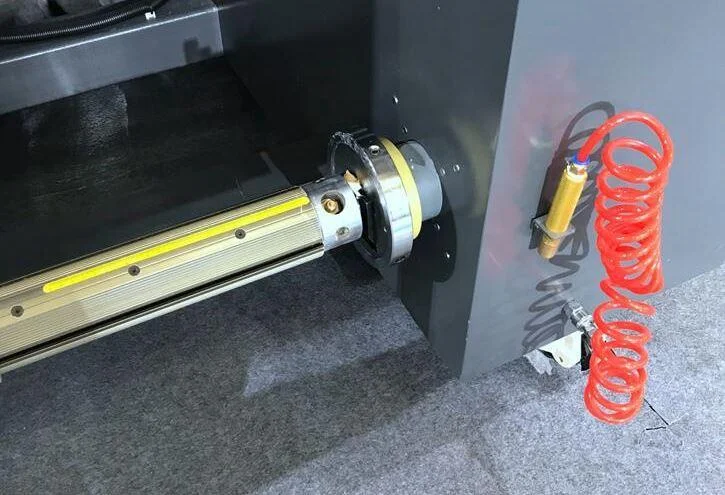
The air valve admits and retains air inside the shaft and allows air to be released when the material roll needs to be removed.
A faulty valve may make inflation or deflation difficult or cause pressure loss during operation.
Depending on its condition, the valve may be cleaned, its seals replaced or the entire valve replaced with one of suitable dimensions and characteristics.
3.5. Shaft body and journal inspection
In addition to pneumatic faults, air shafts may develop mechanical problems due to impacts, heavy loads or prolonged use.
- Inspect the shaft body.
- Check shaft straightness and runout.
- Assess wear at the shaft journals.
- Inspect mounting points on the machine.
- Recommend restoration or replacement if necessary.
For shafts that are bent, cracked or severely deformed, load capacity and safety must be assessed before deciding whether to restore them for continued use.
4. Types of air shafts accepted for assessment and repair
Lug-type air shafts
Lugs are positioned at multiple points along the shaft body. When air is supplied, they protrude to grip the material roll core securely.
Bar-type air shafts
Long expanding bars run along the shaft body to provide contact with the roll core over the working length.
Aluminum and steel air shafts
Assessment of the shaft body, expansion mechanism, bladder and journals for designs made of aluminum or steel.
Air shafts in various sizes
Information on shafts for 1-inch, 2-inch, 3-inch, 6-inch and custom-size roll cores is accepted for repair assessment.
Since manufacturers may use different bladder designs, expansion mechanisms and component dimensions, identifying the shaft type before repair helps ensure the correct spare parts are selected.
5. When should an air shaft be repaired instead of replaced?
In many cases, the shaft body and journals remain serviceable while damage is limited to a few internal components. Repairing or replacing these parts can help businesses reduce equipment investment costs.
Consider repair when
- The bladder is punctured or aged.
- The air valve is leaking.
- Expanding bars or lugs are worn.
- The expansion mechanism is jammed.
- The shaft body and journals remain fit for use.
- Suitable replacement parts are available.
Consider replacement when
- The shaft body is cracked or severely deformed.
- The shaft no longer meets load requirements.
- Several critical components are damaged at once.
- Suitable replacement parts are unavailable.
- Restoration is too expensive compared with replacement.
- The shaft no longer meets production requirements.
The appropriate option should be selected based on the shaft’s actual condition, repair costs, operating capability after restoration and machine safety requirements.
6. Air shaft intake and repair process at VietSonic
Equipment information intake
Customers provide photos, dimensions, shaft type, fault details and information about the machine in use.
Inspection and diagnosis
Inspect the bladder, air valve, expansion mechanism, airtightness and related mechanical parts.
Repair proposal and quotation
Identify parts requiring repair or replacement, parts availability and estimated costs for customer review.
Perform repairs
Disassemble, clean, repair and replace components according to the agreed scope of work.
Post-repair inspection
Check inflation, air retention, deflation, expansion mechanism operation and relevant technical requirements for each shaft type.
Equipment handover
Return the air shaft after completing the agreed checks and highlight points to consider during operation.
7. How to reduce air shaft damage during use
Air shafts frequently undergo inflation and deflation, particularly on production lines where material rolls are changed often.
To reduce faults and extend shaft service life, businesses should:
- Use compressed air pressure recommended by the manufacturer.
- Use clean compressed air and minimize water and contaminants entering the shaft.
- Do not use rolls exceeding the permitted load.
- Clean the expansion slots and shaft surface periodically.
- Avoid impacts when moving and installing the shaft.
- Periodically check air retention and component expansion.
- Stop using the shaft if pressure loss, vibration or poor roll grip is detected.
Early inspection and repair of minor faults such as air valve leaks or jammed expanding bars can help prevent unexpected production line stoppages and reduce the risk of further damage.
8. Industrial air shaft repair costs
Air shaft repair costs depend on the design, dimensions, extent of damage and number of components requiring replacement.
To help VietSonic assess the equipment and recommend suitable options, customers can provide the following information:
- Overall photos of the air shaft.
- Close-up photos of damaged areas.
- Inner diameter of the roll core in use.
- Working length and overall shaft length.
- Expansion mechanism type: lugs, bars or other design.
- Manufacturer and model number, if available.
- Compressed air pressure currently used.
- Video showing the fault, if it can be recorded safely.
- Number of shafts requiring repair.
This information makes identifying parts and assessing repair feasibility easier. The exact cost will be determined after reviewing the equipment condition.
9. Frequently asked questions about air shaft repair
Does a leaking air shaft need to be replaced entirely?
Not necessarily. If the shaft body and mechanical parts are still in good condition, it may only be necessary to replace the bladder or valve, or repair the leaking area.
Why does an air shaft fail to expand when inflated?
Possible causes include a damaged bladder, blocked air passage, incorrect supply pressure or a jammed expansion mechanism. Each component needs to be inspected to determine the exact cause.
Can damaged expanding bars be replaced individually?
Individual replacement can be considered if the shaft design allows it and parts matching the original dimensions, materials and design are available.
Can an air shaft be repaired without manufacturer information?
It can still be assessed using photos, dimensions and its actual construction. Repair feasibility depends on the extent of damage and the availability of spare parts.
How long does air shaft repair take?
Repair time depends on the damage, workload and availability of spare parts. The estimated timeframe will be discussed after the equipment is inspected.
What needs to be checked after air shaft repair?
Airtightness, inflation and deflation, expansion of the roll-gripping mechanism and relevant mechanical requirements must be checked before returning the shaft to production.
Contact us for industrial air shaft repair services
If your business is experiencing air leaks, failure to expand, uneven expansion, poor roll core grip or needs bladder replacement, send your equipment information to VietSonic for inspection and advice on suitable repair options.
VIETNAM ULTRASONIC EQUIPMENT COMPANY LIMITED
Hotline: 0938 49 33 66 – Mr. Hải
Email: info.vietsonic@gmail.com
Website: vietsonic.vn
View more industrial repair and maintenance services from VietSonic