



Precision rubber roller manufacturing, durable and customized by sample or drawing
VietSonic provides manufacturing, refurbishment, and machining services for rubber rollers used in printing machines, packaging lines, textile equipment, conveyors, woodworking, paper production, and many industrial manufacturing systems. Each product is designed according to the correct dimensions, hardness, rubber material, and actual operating conditions of the machine.

What is a rubber roller and why does precision machining matter?
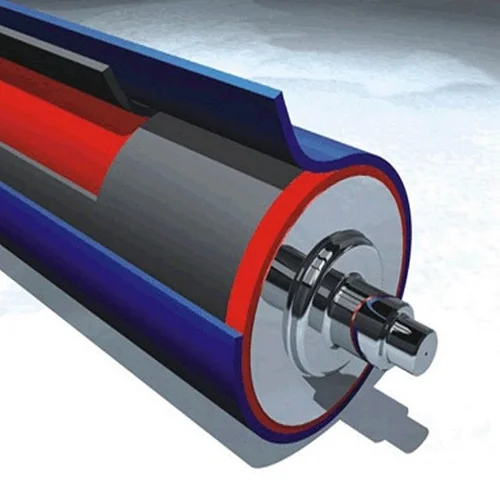
A rubber roller is a cylindrical component consisting of an inner metal core and an outer rubber layer. When installed in a machine, it is used for feeding, pressing, calendaring, transmission, positioning, or guiding materials. If the roller is off-center, the surface is worn, or the wrong rubber material is selected, the production line may experience material slipping, vibration, product misalignment, reduced product quality, and increased machine downtime.
Feeding and guiding materials
Helps materials move steadily through the machine, reducing slipping, misalignment, or surface wrinkling.
Pressing and calendaring
Creates even pressure across the surface, suitable for paper, film, fabric, packaging materials, thin wood sheets, or sheet materials.
Reducing vibration
The elastic rubber layer helps the machine run more smoothly compared with direct metal-to-metal contact.
Protecting the product
Helps limit scratches, pressure marks, or deformation during transmission and processing.
Basic structure of a rubber roller
Each rubber roller must be designed based on actual working conditions such as load, rotation speed, temperature, chemical exposure, required grip, and mounting method. A common structure includes the shaft core, bonding layer, and finished rubber layer.
- Metal shaft core: usually made of steel, stainless steel, or aluminum to ensure rigidity, concentricity, and load-bearing capability.
- Bonding layer: helps the rubber adhere firmly to the shaft core and reduces the risk of peeling during operation.
- Outer rubber layer: selected according to Shore A hardness, elasticity, oil resistance, heat resistance, abrasion resistance, or chemical resistance.
- Finished surface: can be ground smooth, roughened, grooved, diamond-patterned, spiral-grooved, or machined according to specific requirements.
Rubber materials can be selected for each application
No single rubber material is suitable for every machine. VietSonic evaluates the operating environment to recommend the right material, hardness, and surface finish.
| Material | Key characteristics | Suitable applications |
|---|---|---|
| NBR | Good oil resistance, abrasion resistance, and stable durability. | Packaging machines, printing machines, conveyors, and environments with light oil exposure. |
| EPDM | Resistant to weather, steam, ozone, and certain chemical environments. | Feeding rollers and pressing rollers in humid or outdoor environments. |
| PU | High abrasion resistance, good load-bearing capability, and a firm working surface. | Heavy-duty feeding rollers, support wheels, and rollers in production lines requiring long service life. |
| Silicone | Good heat resistance, soft surface, and suitable for certain clean applications. | Packaging machines, heat-press applications, and food-related applications depending on material standards. |
| Natural rubber / SBR | Good elasticity, reasonable cost, and suitable for general working conditions. | Feeding rollers, pressing rollers, and guide rollers in light to medium-duty production lines. |
Rubber roller manufacturing and refurbishment process at VietSonic
Receiving sample, drawing, or technical requirements
We record dimensions, diameter, length, shaft-end design, bearings, keyways, rubber hardness, and operating conditions.
Inspecting old rollers when refurbishment is required
We check the shaft core, bending, wear, rubber peeling, surface cracks, eccentricity, or damage at the shaft ends.
Machining the core and preparing the bonding surface
The shaft core is turned, milled, ground, or repaired according to the required dimensions, then surface-treated to improve rubber adhesion.
Rubber covering, finishing, and inspection
After rubber covering, the roller surface is machined and finished, then checked for dimensions, concentricity, hardness, and surface quality before delivery.
When should a rubber roller be refurbished or replaced?
- The roller surface becomes hardened, cracked, peeled, swollen, or unevenly worn.
- The machine vibrates, materials slip, materials are pulled off-track, or marks appear on the product.
- The rubber no longer provides sufficient grip or stable pressing force.
- The production material has changed, requiring a different hardness or rubber material.
- The shaft core is still usable, allowing rubber recovering to save cost compared with replacing the entire roller.
Reference video for rubber material processing
The video below can be placed after the process section to help viewers better understand VietSonic’s capability in processing rubber materials. If you have an actual workshop video showing turning, rubber covering, grinding, or roller inspection, simply replace the YouTube video ID in the embed link.
Applications of rubber rollers in industrial production
Printing and packaging industry
Feeding rollers, pressing rollers, drive rollers, laminating rollers, and guide rollers for paper, plastic film, or roll materials.
Textile industry
Fabric tensioning rollers, winding rollers, guide rollers, and pressing rollers in fabric and nonwoven material processing lines.
Conveyors and automation
Drive rollers, idle rollers, rubber-coated conveyor rollers, pressure wheels, and product feeding assemblies.
Wood and paper processing
Pressing rollers, feeding rollers, and calendaring rollers used in sheet material, paper, thin wood, or laminate production lines.
Food and packaging machines
Film feeding rollers, pressing rollers, dough rollers, or rollers in contact with products; proper material selection is required based on usage standards.
Special-purpose machines
Custom machining based on samples for imported machines, modified equipment, old production lines, or machines with discontinued spare parts.
Rubber roller reference images


Technical factors to consider when ordering custom rubber rollers
Concentricity
The roller must rotate steadily, limiting runout and vibration, especially in high-speed machines.
Shore A hardness
Rubber hardness directly affects grip, pressing force, elasticity, and roller service life.
Core adhesion
The rubber layer must bond firmly to the metal core to prevent peeling, slipping, or separation during loaded operation.
Working surface
Depending on the application, the surface may need to be smooth, rough, spiral-grooved, cross-grooved, diamond-patterned, or specially coated.
Environmental resistance
Temperature, oil, chemicals, water, dust, friction, and load must be identified to select the suitable material.
Mounting design
Shaft ends, bearings, keyways, threaded holes, mounting flanges, or drive mechanisms must match the existing machine design.
Information needed for VietSonic to advise and quote quickly
If you have a sample roller
- Send overall photos of the roller and both shaft ends.
- Measure the total length, outer diameter, core diameter, and bearing mounting positions.
- Describe the current condition: wear, cracks, rubber peeling, bent shaft, or vibration during operation.
- Provide the required quantity for new manufacturing or refurbishment.
If you have a technical drawing
- Send the 2D/3D drawing or key dimensional specifications.
- Specify the core material, rubber material, and Shore A hardness if already required.
- Provide rotation speed, load, temperature, and working environment.
- State the surface requirements: smooth, rough, grooved, patterned, anti-stick, or abrasion-resistant.
Frequently asked questions
Does VietSonic refurbish old rubber rollers?
Yes. If the shaft core is still usable, VietSonic can inspect it, prepare the surface, recover it with rubber, and finish the roller to help reduce cost compared with replacing the entire component.
Can rubber rollers be made to custom dimensions?
Yes. Rollers can be manufactured based on the actual sample, technical drawing, or specifications provided by the customer.
Which rubber material should be selected for a roller?
The rubber material depends on the working environment. For example, NBR may be considered for oil resistance, PU for high abrasion resistance, and Silicone for heat resistance. VietSonic will recommend the suitable option based on the specific application.
How long does it take to complete a rubber roller?
The lead time depends on the size, material, quantity, and machining requirements. Customers should send a sample, drawing, or photos so VietSonic can check and provide a specific production timeline.
VietSonic manufactures custom rubber rollers on request
Need to manufacture, refurbish, or replace rubber rollers for your production machines? Send your sample, drawing, or photos of the current roller so VietSonic can advise on the suitable material, machining solution, and quotation.