



Lug-type air shaft
Small lugs are arranged along the shaft body. When air is supplied, the lugs expand outward to grip the roll core firmly.
Suitable for various industrial winders, unwinders and slitting machines.
VietSonic | INDUSTRIAL EQUIPMENT SUPPLY
A solution for securely gripping roll cores, making roll changes easier and working with magnetic powder brake systems to control tension during production.
01 / INTRODUCTION
In production lines for paper, plastic film, packaging, fabric and other roll materials, holding the material roll securely on the rotating shaft is an important requirement.
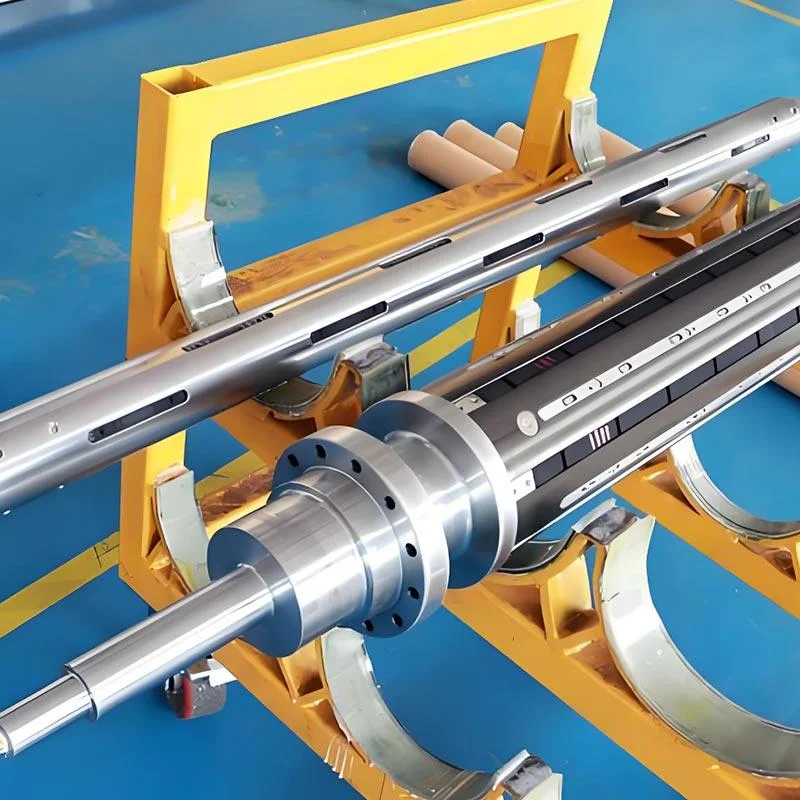
Industrial air shaft (Air Shaft), also known as an air expanding shaft, pneumatic expanding shaft or pneumatic shaft, is a device that uses compressed air to grip the roll core during winding or unwinding.
Instead of using manual tightening and locking mechanisms, operators can supply compressed air to expand the shaft and grip the roll core firmly. To change rolls, simply stop the machine and release the air to remove the roll from the shaft.
02 / OPERATING PRINCIPLE
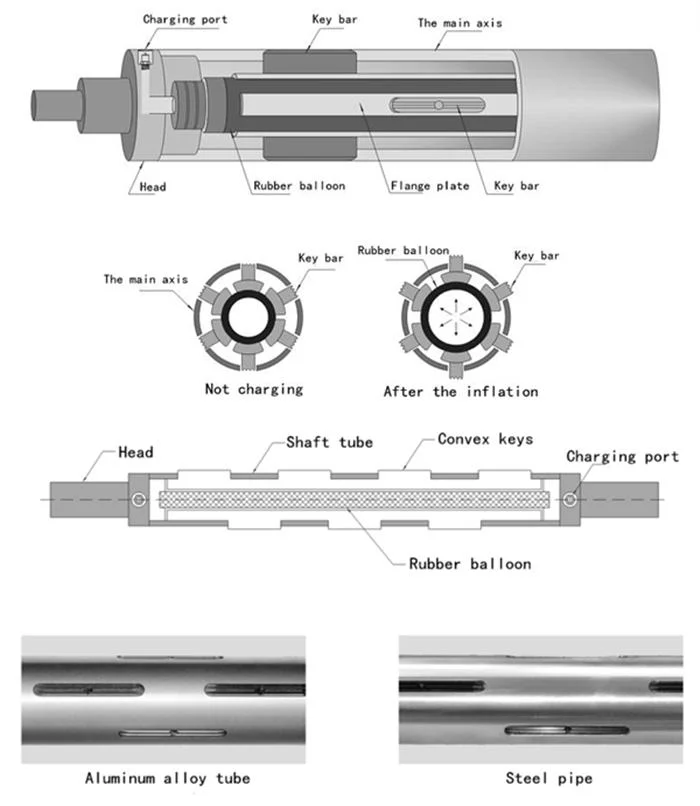
An air shaft usually contains an air bladder or rubber tube that expands when compressed air is supplied. This expansion pushes the gripping lugs or strips outward against the inside of the roll core.
Insert the air shaft into the paper, plastic or metal roll core while the shaft is unexpanded.
Compressed air enters the shaft through the air valve, expanding the internal air bladder.
The expanding lugs or strips press against the roll core, helping reduce slipping as the shaft rotates.
After stopping the machine and ensuring safety, release the air to retract the expanding mechanism and remove the roll from the shaft.
03 / TYPES
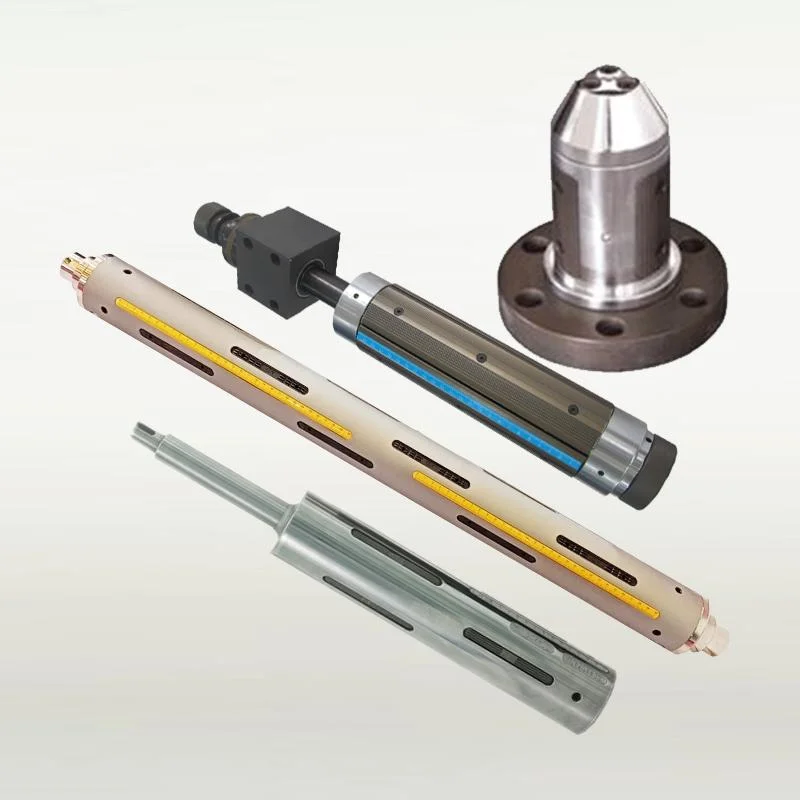
Air shafts can be designed in different forms depending on roll core size, material weight, operating speed and machine configuration.
Small lugs are arranged along the shaft body. When air is supplied, the lugs expand outward to grip the roll core firmly.
Suitable for various industrial winders, unwinders and slitting machines.
Long expanding strips run along the shaft body, creating lengthwise contact with the roll core.
Suitable for applications that require the gripping force to be distributed over a long contact area.
Expanding leaves with wide contact surfaces grip the roll core when compressed air is supplied.
An option for applications that require increased contact area with the roll core.
04 / BENEFITS
Reduces mechanical dismantling, installation and tightening operations when changing material rolls.
Helps prevent the roll core from slipping on the shaft when equipment operates within its design conditions.
Helps transmit motion and braking torque between the rotating shaft and the material roll.
The shaft body, shaft ends and expanding mechanism can be designed to suit each application.
Shortens roll change times, helping reduce production downtime.
Can be used with magnetic powder brakes, magnetic powder clutches, motors and tension controllers.
05 / INTEGRATED SOLUTIONS
In a production line using roll materials, gripping the material roll firmly is not enough. The material must also maintain suitable tension as it passes through the production stages.
If tension is too low, the material may sag or wrinkle. If tension is too high, it may stretch, deform or break.
To help address this issue, air shafts are often combined with industrial magnetic powder brakes (Magnetic Powder Brake) and tension control devices.
Grips the roll core firmly, helping transmit motion and braking torque between the shaft and the material roll.
Generates adjustable braking torque to help control unwinding and maintain suitable tension.
ILLUSTRATIVE UNWINDING SYSTEM
→
→
→
In this system, the magnetic powder brake generates braking torque that is transmitted to the air shaft through a suitable coupling mechanism. The air shaft grips the material roll, allowing braking torque to be transmitted to the roll during unwinding.
As the roll diameter changes, braking torque must be adjusted accordingly to maintain the desired tension. This can be achieved using a tension controller suited to the machine configuration.
06 / APPLICATIONS
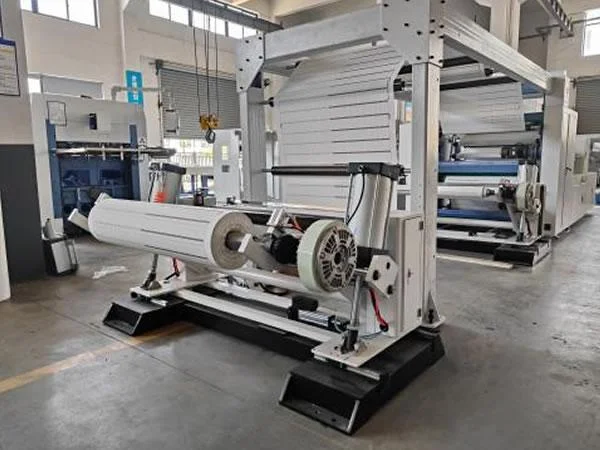
Air shafts are widely used in machinery with material feeding, rewinding or roll material processing stages.
Bag-making machines, PE, PP, PET film winders and laminated packaging film winders.
Paper slitters, paper cutters, industrial paper winders and unwinders.
Gravure printers, flexographic printers and roll-fed label printers.
Fabric winders, fabric unwinders, slitters and nonwoven bag production lines.
Adhesive tape production machines, slitters and tape rewinders.
Film laminators, calendering machines, adhesive coating machines and roll material processing equipment.
Winding and unwinding systems for thin aluminium and copper foil with suitable shaft configurations.
Integration into automated machinery and custom production lines.
Machines for processing films, flexible sheets and other roll materials.
07 / DESIGN AND MANUFACTURE
Not all winding and unwinding machines use the same type of air shaft. Each machine may differ in working length, roll core diameter, load and installation method.
For machines with special configurations, machines requiring replacement shafts or new production lines under design, custom air shaft manufacturing is a suitable option.
VietSonic accepts requests for air shaft design and manufacture based on engineering drawings, sample shafts or actual machine information to determine a suitable solution.
| Item | Design options |
|---|---|
| Roll core diameter | Reference sizes include 2 inches, 3 inches, 6 inches or custom dimensions. |
| Shaft body length | According to material width and available installation space on the machine. |
| Overall shaft length | According to drawings or actual equipment dimensions. |
| Shaft body material | Steel, aluminium alloy or materials suitable for working conditions. |
| Air expanding mechanism | Lug type, strip type or a structure suited to the roll core. |
| Shaft ends | Designed to suit bearing housings, bearings, couplings or drive mechanisms. |
| Air inlet valve position | Arranged to suit the machine configuration and operator access. |
| Working load | Determined by roll weight, shaft length and shaft support arrangement. |
| Operating speed | Considered according to rotational speed and actual working conditions. |
| Magnetic powder brake connection | Shaft ends designed to be compatible with the braking torque transmission mechanism if required. |
08 / TECHNICAL INFORMATION
To select a suitable air shaft configuration, businesses can provide the following information:
When replacing an existing air shaft, providing photos, dimensions or a sample shaft helps simplify the process of determining a manufacturing solution.
09 / WORKFLOW
Collect information about the machine, dimensions, materials and operating conditions.
Determine a suitable shaft body structure, expanding mechanism, material and shaft ends.
Machine and assemble the shaft according to the agreed technical solution.
Check dimensions, airtightness, expansion and gripping performance, and other agreed criteria.
10 / FAQ
Manufacture based on existing shaft dimensions, drawings or a sample shaft can be considered. Load, speed and actual operating conditions must also be established.
Steel shafts are often considered when high stiffness and load capacity are required. Aluminium shafts offer the advantage of lighter weight, making handling easier. Selection should be based on the configuration and load of each machine.
For many air shafts with air-retaining valves, the air supply can be disconnected after sufficient air is supplied and the shaft will remain expanded. However, this depends on the shaft design, valve and system airtightness.
The main functions of an air shaft are to grip the roll core and transmit torque. To adjust tension, the system usually also requires a magnetic powder brake, magnetic powder clutch, motor or tension controller.
Yes. Air shafts can be used in both applications, but their structure, torque transmission capacity and operating specifications must be selected to suit each installation position.
INDUSTRIAL EQUIPMENT SOLUTIONS
Selecting the right air shaft not only helps secure the material roll but also supports winding, unwinding and material tension control during production.
If your business needs a new custom air shaft, a replacement for an existing shaft or integration with a magnetic powder brake system, please send machine information, drawings or equipment photos so that VietSonic can recommend a suitable solution.