



Custom fabrication of billet pusher chain systems for metallurgical and mechanical processing lines
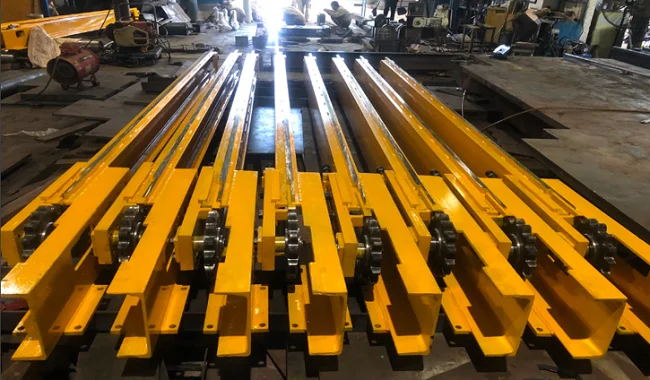
VietSonic designs, fabricates, and assembles billet pusher chain systems used in steel rolling lines, billet feeding, billet transfer, and heavy-duty material handling systems. Each product is manufactured according to drawings, actual dimensions, and the working conditions of each production line.
What is a billet pusher chain system?
A billet pusher chain system is a mechanical assembly used to push, pull, or transfer billets and workpieces from one position to another in a production line. This type of system often operates under heavy loads, repeated impacts, metal dust, high temperatures, or continuous working cycles.
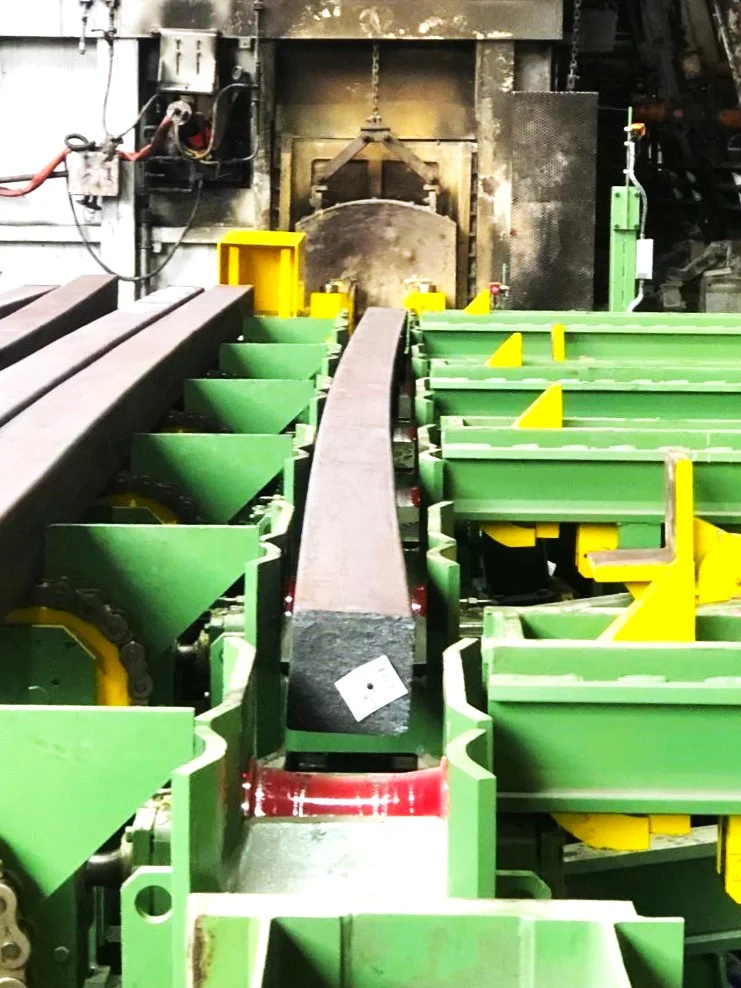
In practice, a billet pusher chain system can be used to feed billets into a reheating furnace, transfer billets across roller tables, or move them into rolling mills, presses, cutting machines, or the next processing stage. Therefore, the design must ensure structural rigidity, synchronized movement, and easy maintenance during long-term operation.
Suitable for the following production lines
- Steel rolling lines, metallurgical lines, and billet feeding into reheating furnaces.
- Heavy mechanical processing lines for transferring steel billets, bars, and plates.
- Roller table systems, chain conveyors, and billet turning or transfer assemblies.
- Structural steel, steel section, steel box, and steel pipe production lines.
- Systems requiring a billet pushing mechanism synchronized with the main machine.
Why does a billet pusher chain system need to be properly engineered?
Stable billet pushing
The chain assembly must transmit force evenly without jerking or travel deviation, ensuring the billet reaches the required feeding position.
Load and impact resistance
Steel billets and metal workpieces are often heavy. The frame, guide rails, sprockets, chains, and bearing housings must be sufficiently rigid.
Reduced downtime
A jammed, misaligned, or quickly worn billet pusher assembly can affect the entire downstream production line.
Easy maintenance
The design should provide enough space for inspection, chain tensioning, lubrication, bearing replacement, sprocket replacement, or guide bar replacement.
Production line synchronization
The billet pusher chain system must match the speed of the roller table, rolling mill, cutting machine, reheating furnace, or existing control system.
Operational safety
The structure should reduce pinch points, include suitable guarding positions, and allow convenient maintenance operations for technicians.
Basic structure of a billet pusher chain system
- Main frame: fabricated from steel profiles, steel plates, or welded load-bearing structures.
- Chain assembly: including chains, drive sprockets, driven sprockets, shafts, and chain tensioning mechanisms.
- Guide rails: help the billet move in the correct direction and reduce deviation under load.
- Bearing housings, bearings, and shafts: ensure stable rotary movement during operation.
- Drive assembly: can use a motor, gearbox, hydraulic drive, or other drive mechanism depending on the production line design.
- Surface finish: industrial painting, anti-rust treatment, or finishing according to the working environment.
Designed according to actual working conditions
Every factory has a different production line layout. Some lines need to push long billets, some require transverse billet transfer, while others need the chain assembly to operate near a reheating furnace or coordinate with roller tables. For this reason, VietSonic prioritizes surveying actual requirements before proposing a fabrication solution.
Depending on the application, the billet pusher chain system can be designed as a single-row system, multiple parallel rows, an independent assembly, or an integrated part of the customer’s existing billet feeding system.
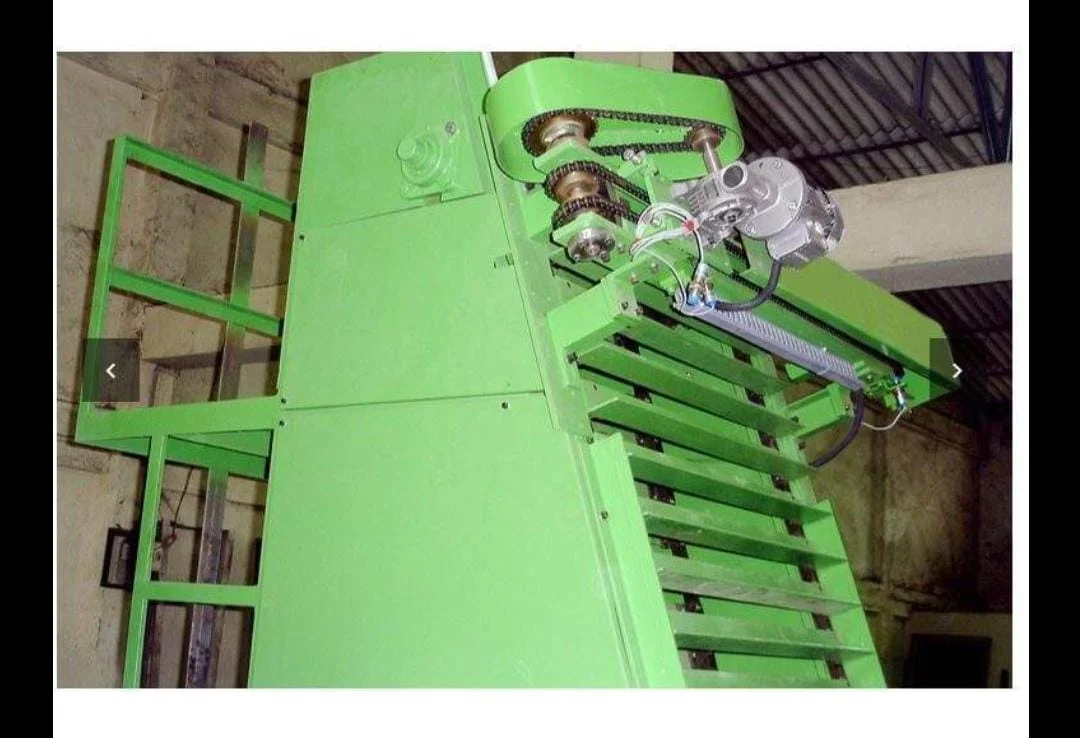
Billet pusher chain fabrication process at VietSonic
Requirement receiving
We collect drawings, billet dimensions, load capacity, pushing stroke, speed, and installation location.
Solution consultation
We propose suitable materials, frame structure, chain type, sprockets, shafts, bearing housings, and drive solutions.
Component fabrication
Cutting, welding, milling, turning, drilling, CNC machining, or mechanical fabrication according to technical requirements.
Assembly and inspection
Frame assembly, chain alignment, concentricity inspection, parallelism checking, and trial movement testing.
Handover and support
Painting, handover, guidance on periodic inspection, and maintenance support when required.
Information required before quotation
To provide an accurate quotation and avoid fabrication-related changes, customers should prepare several basic technical details in advance. If complete drawings are not available, VietSonic can discuss further to clarify the requirements.
Information customers should provide
- Billet dimensions: length, width, height, or diameter.
- Average billet weight and maximum billet weight.
- Pushing stroke or required transfer distance.
- Desired speed or working cycle per minute/hour.
- Working environment: heat, dust, oil, water, and impact conditions.
- Layout drawings, current site photos, or videos of the operating production line.
| Item | How VietSonic can support |
|---|---|
| Mechanical design | Developing structural solutions and selecting suitable chain types, sprockets, shafts, bearing housings, and load-bearing frames. |
| Fabrication and manufacturing | Mechanical component fabrication, structural welding, milling, turning, drilling, and fabrication according to drawings or actual samples. |
| Assembly | Chain assembly, guide rail alignment, movement inspection, and handling of areas prone to billet jamming or misalignment. |
| Replacement and improvement | Fabricating a new system to replace old assemblies with wear, deformation, broken chains, misaligned shafts, or unstable operation. |
| Technical maintenance | Supporting periodic inspection, replacing worn parts, and consulting on upgrade solutions when the production line changes capacity. |
Applications of billet pusher chain systems
Billet pusher chain systems are used in many industrial production lines that need to transfer heavy, long, or relatively precisely positioned materials. In addition to the metallurgical industry, this assembly can also be adapted for other material processing lines.
- Feeding billets into reheating furnaces, heating furnaces, rolling mills, or presses.
- Transferring steel bars, steel boxes, steel plates, square billets, and round billets.
- Integrating with roller tables, billet stopper mechanisms, and transverse pushing mechanisms.
- Replacing old billet pusher assemblies in operating production lines.
When should you fabricate a new billet pusher chain system or improve the existing one?
The chain is frequently misaligned
This may be caused by worn sprockets, shaft misalignment, frame deformation, or an unstable chain tensioning mechanism.
The billet does not move evenly
This can easily cause billet jamming, strong impacts, incorrect feeding positions, or slower production cycles.
The frame vibrates, bends, or cracks
The load-bearing structure, welds, base mounting positions, and actual working load should be inspected again.
The production line increases capacity
When speed or load increases, the old chain assembly may no longer meet the new operating conditions.
Spare parts are difficult to find
The system may need to be redesigned with chain, sprocket, bearing, or drive components that are easier to replace.
Automation synchronization is required
The chain system can be improved to work with sensors, motors, inverters, or the existing control system.
Need a billet pusher chain system for your production line?
Please send VietSonic your drawings, current site images, or production line videos. Our technical team will discuss your requirements, recommend a suitable fabrication solution, and provide a quotation based on actual working conditions.
VietSonic provides mechanical fabrication, machine assembly fabrication, replacement parts, and auxiliary equipment according to factory requirements.