



Wind Turbine Gearbox Bearing Premature Spalling – Warning Signs and Inspection Methods
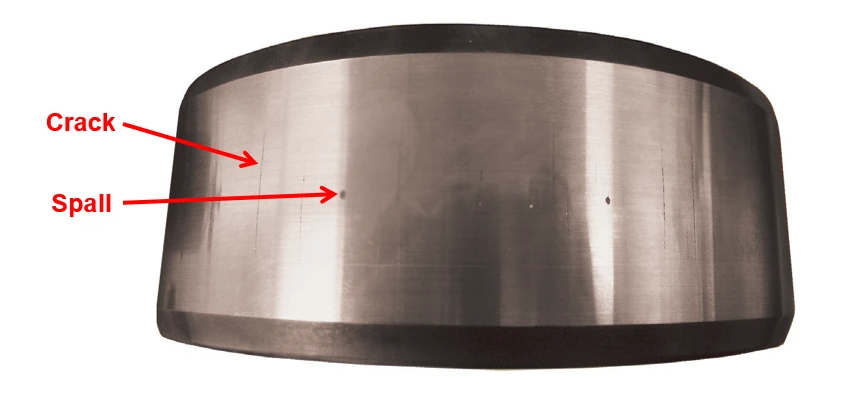
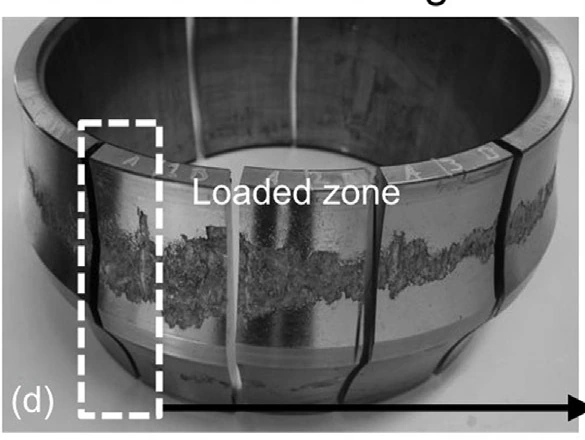
Wind turbine gearbox bearing premature spalling during short operating periods indicates severe component damage. Initially, the raceway may exhibit only a single pit point, a hairline crack, or localized material loss zones.
If operation continues, the damage can propagate rapidly, generating metal debris in the lubrication oil and impacting rollers, gears, shafts, and adjacent support bearings.
Premature Spalling is Distinct from Normal Wear
Normal abrasive wear typically develops gradually over extended service lifespans. Premature spalling, however, can manifest before the bearing reaches its expected design life.
This phenomenon is usually associated with White Etching Crack (WEC) networks forming within the bearing steel. The cracks propagate beneath the surface, then interconnect and extend up to the raceway. When the overlying material layer loses its load-bearing capacity, the surface begins flaking into distinct points or patches.
A small spalling mark does not imply minor damage. The visible external spot might only be the location where the crack network has breached the surface, while the underlying cracked zone has propagated much wider.
Crucial Warning Signs on the Raceway
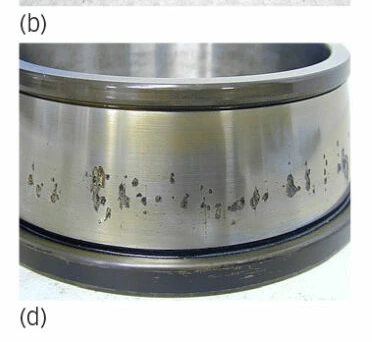
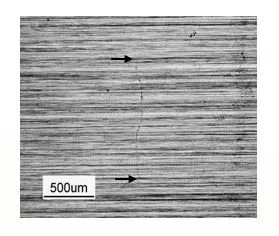
When inspecting bearings, pay close attention to clustered pitting inside the loaded zone, longitudinal or oblique cracks, sharp spalling boundaries, or scratched and discolored surfaces.
If spalling recurs shortly after replacing a bearing, do not simply continue substituting it based on empirical routine updates.
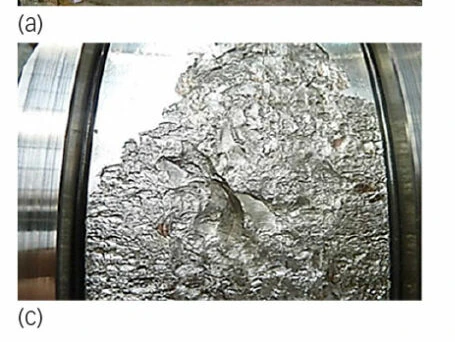
When small flaking points merge into a large patch, contact load distribution falls out of balance. Operating vibration, noise, and metal debris concentration in the oil can escalate rapidly.
Why Are Wind Turbine Bearings Prone to Premature Spalling?
Wind turbine gearboxes operate under continuously changing dynamic loads. Rotational speed and torque fluctuate heavily according to wind conditions, start-ups, emergency stops, or power changes.
This escalates the risk of slippage between the rollers and raceways, especially under low speeds or rapid transient shifts.
Lubrication also exerts a direct impact. Water contamination, additive depletion, hard abrasive particles, or insufficient oil supply weaken the oil film. As direct metal-to-metal contact increases, localized stress spikes and cracks propagate easily.
Assembly misalignment, poor concentricity, incorrect clearance settings, or shaft and gearbox housing deflections can also concentrate structural loads onto a narrow zone.
Do Not Simply Replace with a New Bearing
Replacing the bearing is necessary when the surface has flaked, but it is insufficient to eliminate the underlying root cause. If the fault stems from misalignment, lubrication failures, torsional vibration, or structural assembly errors, the new bearing will fail prematurely again.
A comprehensive evaluation must inspect the loaded zones, rollers, cages, filter metal particles, oil cleanliness, and water concentration. Concurrently, data must be cross-checked against vibration logs, temperature trends, load logs, and alarm history.
For cases of extremely premature or recurrent spalling, it is critical to determine whether the crack initiated from the surface or below the surface.
These results guide the correct engineering remedy: adjusting lubrication properties, checking alignment concentricity, evaluating loading criteria, or running deep metallurgical analysis on the bearing material.
Bearing Failure Investigation & Inspection
Our company delivers comprehensive inspection and failure analysis services for bearings, gearboxes, and industrial rotating equipment—ranging from on-site condition monitoring and live operation data analysis to lubrication audits and recommended engineering solutions.
When wind turbine gearbox bearings exhibit spalling, rising vibrations, abnormal temperature profiles, or recurrent failures post-replacement, businesses should inspect early before the damage propagates into other drivetrain assemblies.