How does ultrasound in cosmetic manufacturing differ from ultrasound at a spa?
When people hear “cosmetics made using ultrasonic technology,” many immediately picture a device moving across the skin at a spa. Ultrasound is also used when mixing ingredients, before a cream is filled into jars. These two applications differ in what they treat, what they aim to achieve, and how their results are assessed.
An easy distinction to remember: in manufacturing, ultrasound acts on ingredients or semi-finished products; at spas and aesthetic clinics, equipment delivers energy to the skin or tissues according to the purpose of each device.
EmulsificationDispersionSkin careUnderstanding the technology
In cosmetic manufacturing, treatment takes place within the ingredients or semi-finished product.
1. What does ultrasound do in cosmetic manufacturing?
A cosmetic formulation needs to be mixed so that its ingredients are distributed within the intended structure. For creams containing oil and water, manufacturers need to create and maintain a dispersed-droplet system. For particulate ingredients, the challenge may be to limit agglomeration and distribute the material throughout the base.
Ultrasound can assist these steps through liquid-processing equipment, such as a probe immersed in the sample or a flow-through treatment chamber.
Emulsification and dispersion are two common objectives
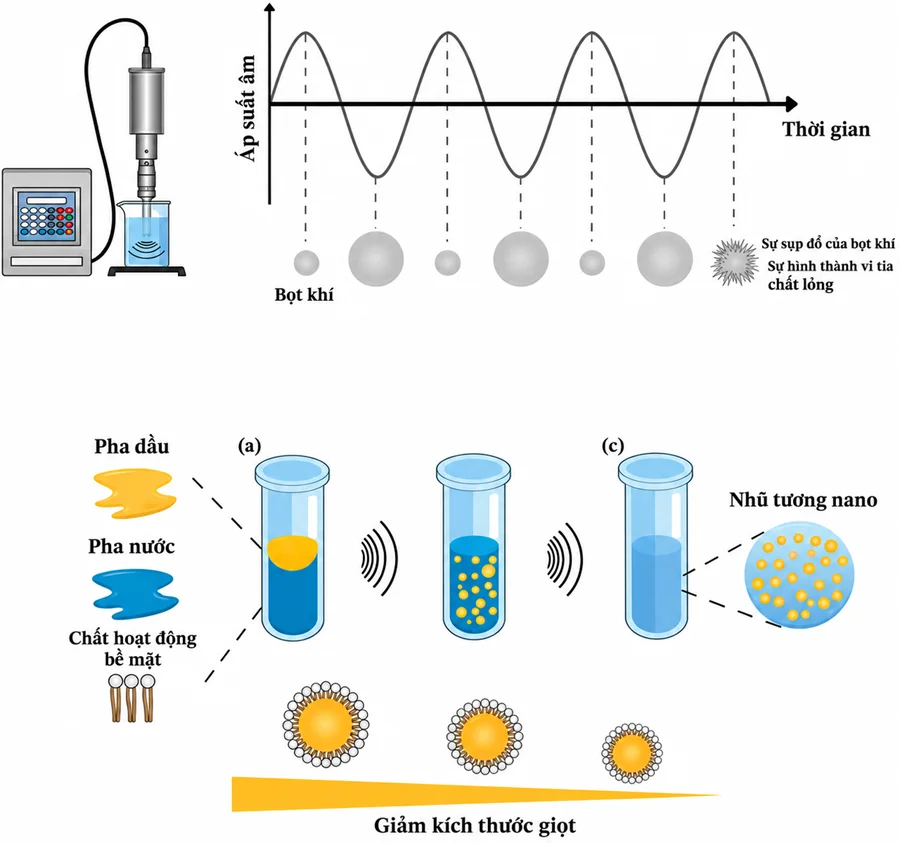
Emulsification: helps break up droplets of one liquid phase and distribute them throughout another, such as oil droplets in an aqueous phase.
Dispersion: helps distribute solid particles or break up agglomerates in a suitable liquid medium.
Mixing support: works alongside stirring or circulation to move ingredients through the treatment zone and distribute them throughout the batch.
How does ultrasonic energy act on liquids?
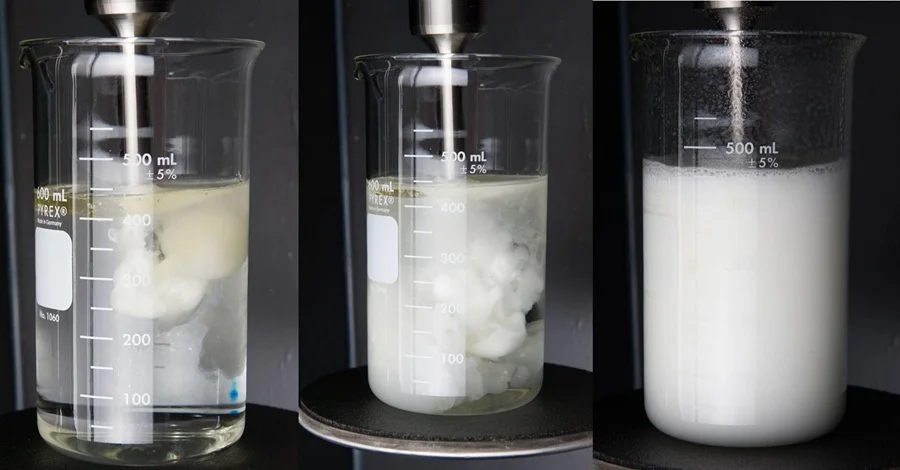
The probe vibrates and transfers energy into the liquid. Under suitable conditions, cavitation bubbles form, oscillate, and collapse, producing localized mechanical effects. This phenomenon can help break up large droplets or particle agglomerates.
The outcome depends on the formulation, viscosity, volume, vibration amplitude, processing time, temperature, and how the material moves through the ultrasonic zone. Equipment selection therefore needs to be supported by trials with the actual material system.
Ultrasonic cavitation can assist emulsification; droplet size after processing must be measured in actual samples.
2. Does “ultrasound at a spa” refer to just one technology?
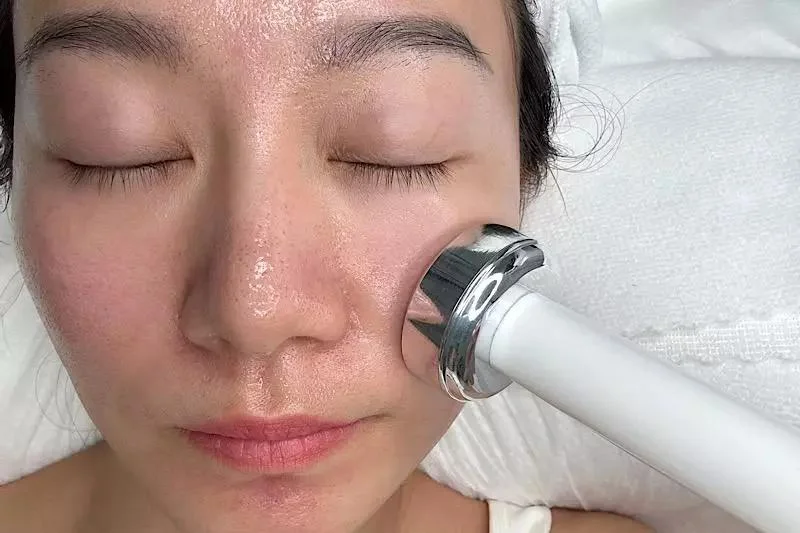
The term “ultrasound at a spa” covers various devices and purposes. Some applications support cleansing or the transport of substances through the skin under specific conditions; focused-ultrasound devices are designed to produce thermal effects in selected tissue regions. The same mechanism and effects cannot be attributed to every device described as ultrasonic.
For example, microfocused ultrasound can produce thermal effects in targeted tissue regions. This is a different application from breaking up oil droplets in a beaker of emulsion. HIFU or MFU procedures require appropriately qualified and trained practitioners.
When considering a service, identify the exact device type, intended use, and supporting evidence. The word “ultrasound” alone is not enough to describe a procedure.
For applications on the skin, the objective and mode of action depend on the device type.
3. Comparing the two application groups
Criterion
Cosmetic manufacturing
Spas / aesthetic clinics
What is treated
Ingredients, liquid phases, emulsions, or semi-finished products.
Skin or tissues in the area where the device is applied.
When it is used
During a processing step, before the product is finished.
During a skin-care session or procedure on the user.
Objective
To assist emulsification, dispersion, and control of the system’s structure.
Depending on the device: surface care or effects on targeted tissues.
Equipment configuration
A probe, treatment vessel, or flow cell for processing materials.
A contact applicator and ultrasound-generating system designed for use on the body.
Parameters to control
Formulation, temperature, energy level, time, volume, and flow.
Device type, treatment area, operating mode, and the condition of the person receiving the procedure.
Assessment method
Measure sample properties and monitor formulation quality and stability.
Assess effectiveness and safety in relation to the device, objective, and procedure.
The same technology name, but different design requirements. A material-processing homogenizer must not be used as a substitute for skin-care equipment. Settings for the two equipment groups cannot be directly converted based solely on frequency or wattage.
4. Does ultrasonically manufactured cream work like a spa treatment?
Using ultrasound during manufacturing does not establish that a cream has the same effects as an ultrasound procedure on the skin. Once processing and packaging are complete, the cream does not continue to emit ultrasound when applied to the skin.
The value of this processing step should be assessed through the properties of the resulting formulation. Moisturizing or brightening effects and the user experience must be evaluated on the finished product itself.
Three assumptions to avoid
“Ultrasound means nano”: the name of the technology does not establish droplet or particle size. Appropriate measurements are required to describe size.
“Smaller droplets mean deeper penetration”: droplet size is one property of the system; it is insufficient to establish the ability to deliver active ingredients through the skin.
“Ultrasound eliminates emulsifiers and preservatives”: system stability and microbial control still need to be addressed through the formulation and process.
5. What information is needed to assess the manufacturing technology?
For cosmetic developers, a useful question is: what problem does the ultrasonic step solve, and how are its results checked? Depending on the objective, the following assessments can be developed:
Emulsification: measure droplet-size distribution and monitor changes in the system during storage testing.
Dispersion: check for agglomerates and assess uniformity at different sampling locations.
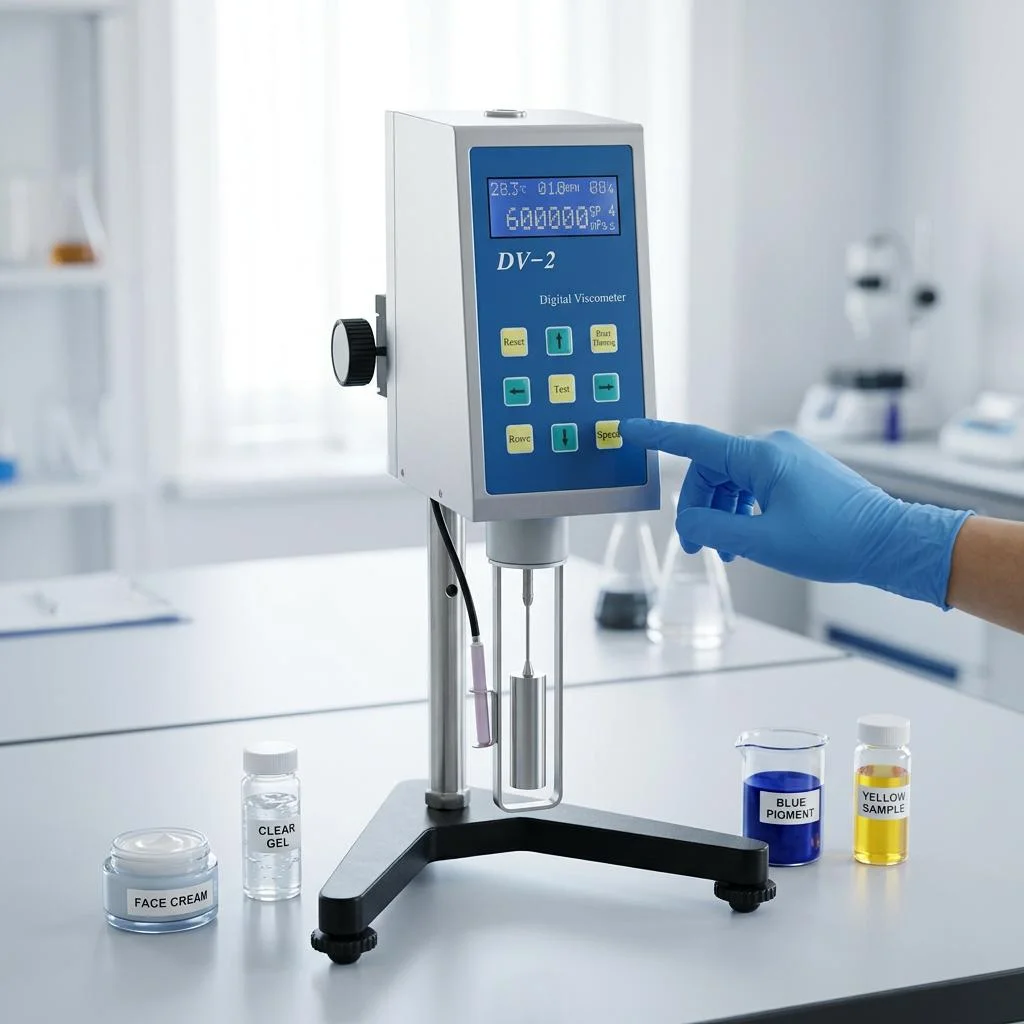
Texture: monitor viscosity, flow behavior, pH, and sensory properties using consistent methods.
Finished-product quality: check relevant parameters, including stability, microbiological quality, and components requiring monitoring.
Samples made with and without the ultrasonic step should be compared under controlled conditions. This helps identify the step’s contribution, rather than inferring quality from the equipment name alone.
Formulation quality needs to be assessed through measurements and sample monitoring, in addition to visual inspection of smoothness.
How this relates to MAI cosmetics
According to the product documentation provided, MAI cream production uses ultrasonic homogenization to support dispersion and emulsification. This information describes the technology’s role during manufacturing. Conclusions about droplet size, stability, or effects on the skin require corresponding product-specific data.
For serums, the formulation structure needs to be established before selecting a processing step. Solution, gel, and emulsion serums have different requirements; the same cream-processing approach cannot be applied unchanged to every serum.
6. Frequently asked questions
Do I need to buy a home ultrasound device to use an ultrasonically homogenized cream?
The manufacturing technology does not create a requirement for an additional device. Users should follow the product instructions; combining it with skin-care equipment should be based on the instructions for both.
Can spa ultrasound equipment be used to mix cosmetics?
It should not be used as a substitute. Material-processing equipment requires an energy-delivery configuration, contact materials, and operating conditions suited to the manufacturing step.
Does every serum need ultrasonic emulsification?
No. Emulsification is relevant when the formulation contains phases that need to form a dispersed-droplet system. For solution-based serums, the mixing objectives and methods may differ.
Discuss ultrasound applications in cosmetic manufacturing
Understanding where ultrasound acts helps businesses select equipment suited to their objectives and helps users interpret product information more clearly.
If your business is exploring emulsification or dispersion, prepare details about the material system, viscosity, batch size, and the issue to be addressed for a discussion with VietSonic.
Technology consultation contact: Mr. Hải — VietSonic.