



>How Do Emulsifiers and Ultrasound Work Together?<
>In manufacturing skin creams, oil and water must be combined to form a mixture with the desired structure. However, these two phases tend to separate if the emulsion is not properly formed and stabilized.<
>Emulsifiers help dispersed oil or water droplets remain stable, while ultrasonic technology can help break droplets into smaller ones during production. How do these two elements work together, and what needs to be controlled to produce a consistently high-quality cream batch?<
>1. Why are emulsifiers needed in cream manufacturing?<
>Try adding some oil to a glass of water and stirring vigorously. While stirring, the oil may break into numerous small droplets, making the mixture look evenly blended. Once left to stand, however, the droplets tend to merge, rise to the surface, or form a separate layer.<
>A similar phenomenon can occur in cream formulations if the emulsion system is not properly designed. This is why formulators commonly use <>emulsifiers<>.<
>Many emulsifiers have both water-loving and oil-loving portions. When positioned at the interface between the two phases, they help reduce interfacial tension and form a stabilizing layer around dispersed droplets. This makes it harder for droplets to merge into larger ones.<
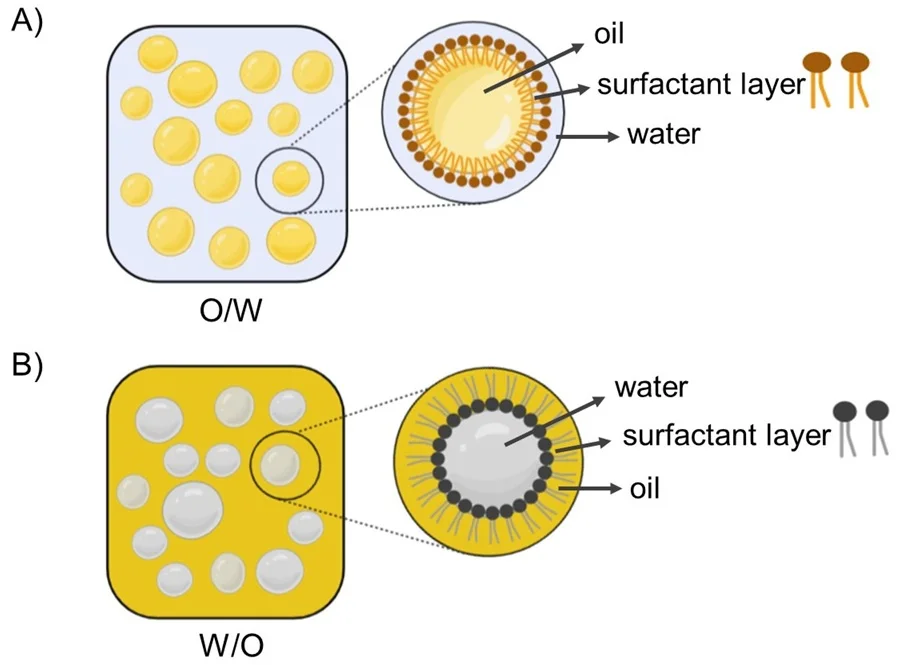
>Two common types of emulsions are:<
- >Oil-in-water (O/W):<> oil droplets are dispersed throughout a continuous water phase.<
- >Water-in-oil (W/O):<> water droplets are dispersed throughout a continuous oil phase.<
>The type and concentration of emulsifier, as well as its compatibility with the oil and water phases, all affect the final structure. Simply increasing the emulsifier concentration does not necessarily make a formula more stable, because the outcome also depends on the complete ingredient system.<
>2. What role does ultrasound play in emulsification?<
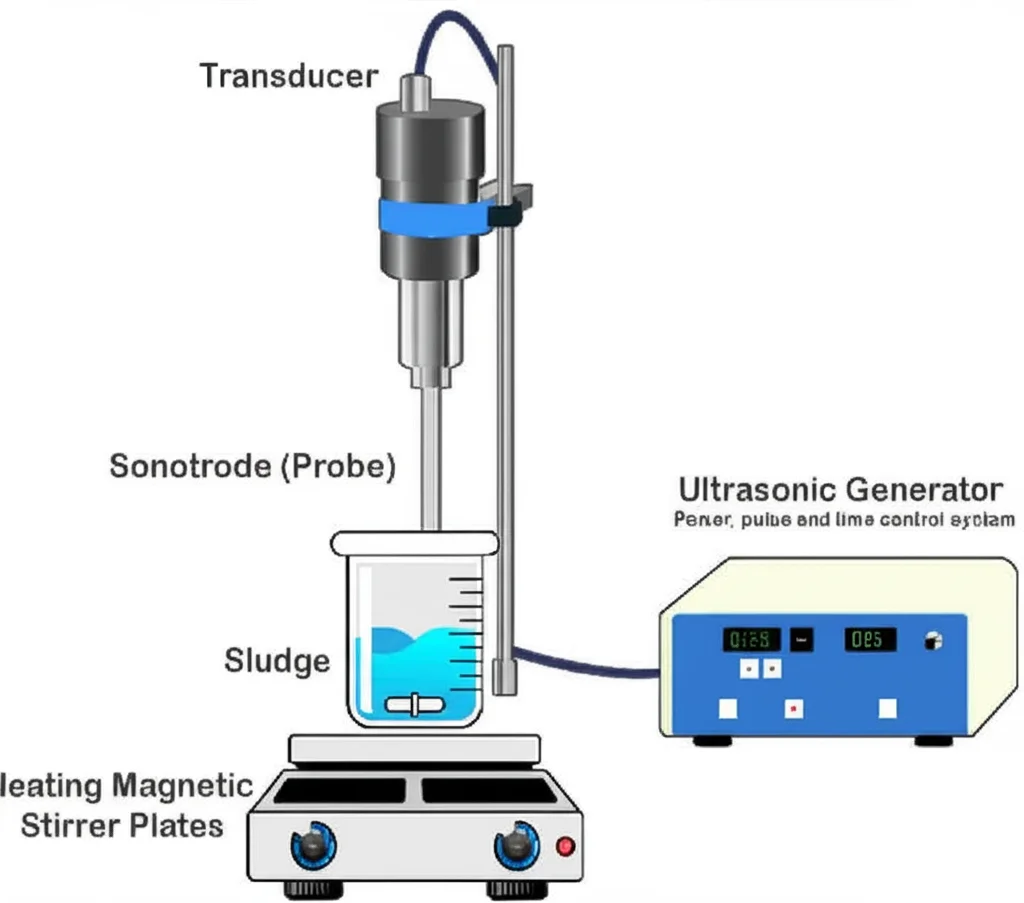
>While emulsifiers act mainly at the interface between phases, ultrasonic homogenization supplies mechanical energy that helps form and break down dispersed droplets.<
>When an ultrasonic probe transmits vibrations into a liquid, suitable conditions can produce a phenomenon known as <>acoustic cavitation<>. Microscopic bubbles form, oscillate, and collapse, generating localized mechanical effects within the liquid.<
>These effects can help break larger oil droplets into smaller ones. As new droplets form, the emulsifier in the formulation needs to spread quickly over their surfaces to help prevent them from merging again.<
<
>A study by Cucheval and Chow (2008) investigated how ultrasonic power, treatment time, and operating mode affect droplet size in a system containing soybean oil, water, and the emulsifier Tween 80. <>Read the study on PubMed<>.<
>The findings help explain ultrasonic emulsification, but the operating settings and droplet sizes obtained cannot be applied directly to every cosmetic formulation.<
>3. How do emulsifiers and ultrasound support each other?<
>Helping create smaller droplets<
>Emulsifiers reduce interfacial tension, making droplet formation easier. Ultrasound generates mechanical effects that help break down droplets under suitable processing conditions.<
>Reducing droplet coalescence<
>When new droplets form, the total interfacial area increases. Enough emulsifier must be available to cover and stabilize these surfaces, helping prevent droplets from merging.<
>Adjusting droplet-size distribution<
>Combining formulation design with ultrasonic energy may help control droplet-size distribution. Any change must be confirmed through measurements rather than the appearance or color of the cream.<
>Supporting texture development<
>Droplet size, oil-phase ratio, and thickening systems all influence viscosity and how the cream feels when spread on the skin. Therefore, the finished product’s structure must be evaluated after treatment rather than judged solely by its smooth appearance.<
>In a study by Li and Xiang (2019), coconut oil-in-water emulsions stabilized with propylene glycol alginate and xanthan gum were processed using ultrasound or high-pressure homogenization. The researchers evaluated droplet size, viscosity, and emulsion stability. <>Read the study in PLOS ONE<>.<
>This shows why both the emulsion-stabilizing system and the homogenization method must be considered: changing equipment can affect several properties of the formulation.<
>4. How can these methods be combined when making creams?<
>One approach in formulation development is to first create a coarse emulsion by stirring, then use ultrasound to investigate whether droplet size can be refined further.<
- >Prepare the phases:<> identify the oil and water phases, as well as ingredients to be dissolved or dispersed, according to their individual properties.<
- >Select and add the emulsifier:<> choose the emulsifier and addition method based on the formulation, raw-material guidance, and intended emulsion type.<
- >Create a preliminary emulsion:<> mix the phases using an appropriate method to form the initial dispersed-droplet system.<
- >Evaluate ultrasonic homogenization:<> treat the emulsion under controlled conditions while monitoring temperature, batch volume, and treatment time.<
- >Finish and evaluate:<> carry out cooling, addition of remaining ingredients, or structure-building steps required by the formulation, then assess sample quality.<
>This sequence is a technical investigation approach. For some creams, ultrasound may be more suitable before a gel network forms; in others, treating an already thickened cream may alter its structure. The actual sequence therefore needs to be determined experimentally.<
>5. How can you tell whether the combination works?<
>A cream batch that looks uniform immediately after production is not necessarily a stable emulsion. Two visually similar samples may still differ in droplet size, viscosity, or resistance to temperature changes during storage.<
| >Criterion< | >Evaluation method< | >Purpose< |
|---|---|---|
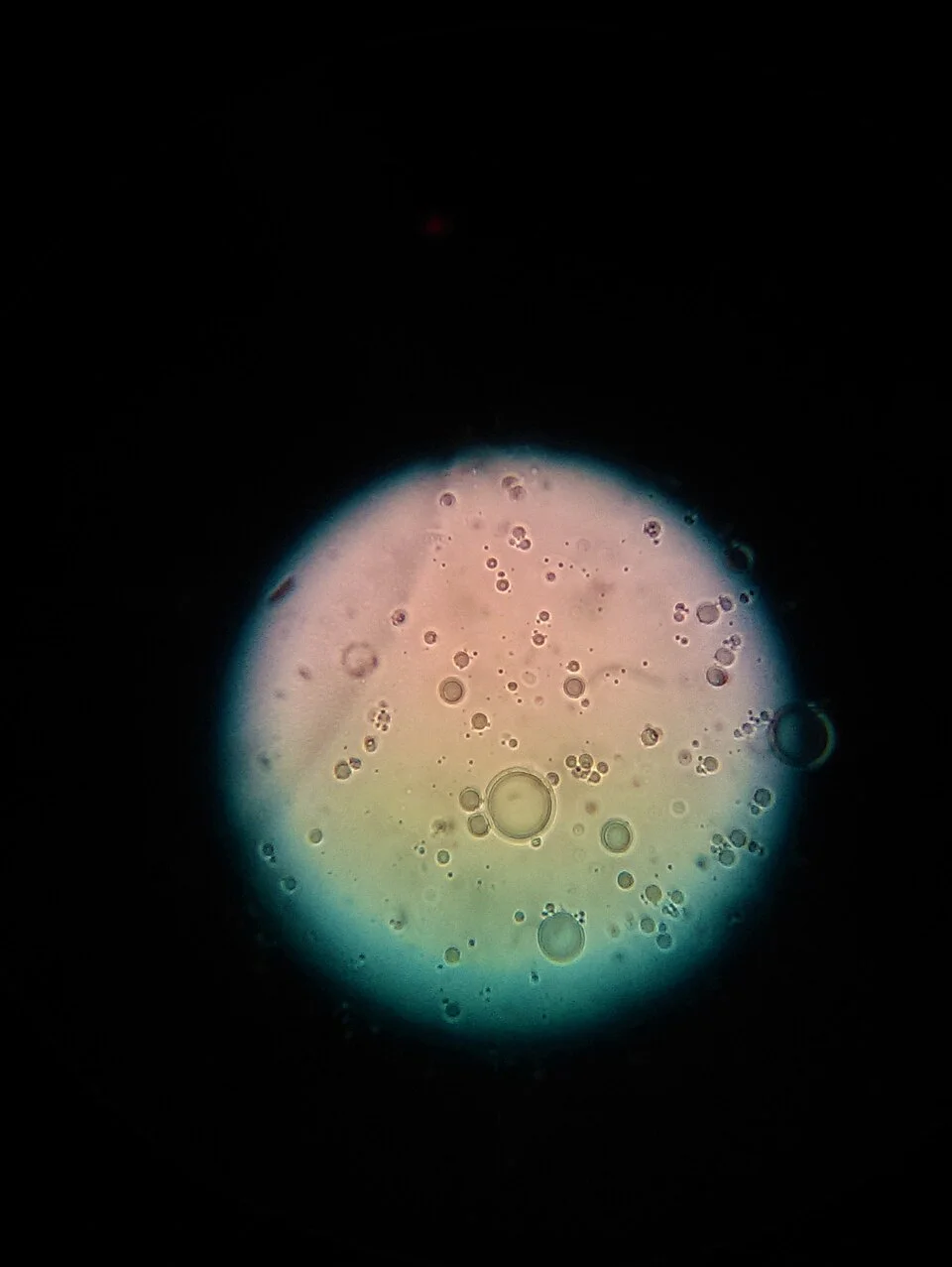
| >Droplet size< | >Microscopy or a suitable particle/droplet-size distribution analyzer< | >Determine how droplets change after processing< |
| >Stability< | >Monitor phase separation, use centrifugation, and conduct appropriate storage tests< | >Assess the emulsion’s tendency to become unstable< |
| >Viscosity< | >Measure with a viscometer under defined conditions< | >Check texture differences between samples< |
| >Formulation quality< | >Monitor pH, temperature, appearance, and relevant ingredient-specific parameters< | >Detect undesirable changes after treatment< |
>The evaluation is more meaningful when samples have the same formula, mass, and storage conditions. For example, a conventionally stirred sample can be compared with a sample receiving an additional ultrasonic homogenization step to identify any measurable differences.<
>6. Application to MAI skin cream<
>In the development direction for MAI cosmetics, ultrasound is presented as a processing step that supports ingredient mixing and homogenization in cream manufacturing.<
>According to the basic ingredient list provided, MAI cream contains a water phase, Caprylic/Capric Triglyceride, and skincare ingredients such as Tranexamic Acid, Alpha Arbutin, Niacinamide, and Panthenol.<
>For a formulation containing both oil and water phases, emulsifier selection and homogenization conditions require careful investigation. Ultrasound may be evaluated as a way to help control oil-droplet distribution, while emulsifiers and structure-building ingredients help maintain the cream’s intended characteristics.<
>To determine actual performance, the roles of the ingredients, process settings, and experimental data must be established for the specific MAI cream formulation. Findings from studies on other emulsions serve only as references for the underlying principles.<
>7. Key considerations when combining emulsifiers with ultrasound<
- >Ultrasound does not automatically replace emulsifiers:<> in conventional emulsion-based creams, interfacial stabilizers still play an important role.<
- >Longer treatment is not necessarily better:<> once droplet size approaches the system’s limit, extending treatment may offer little additional benefit.<
- >Temperature must be controlled:<> ultrasonic treatment can raise the mixture’s temperature, potentially affecting heat-sensitive ingredients or the formulation’s structure.<
- >A smooth appearance does not prove nanoscale size:<> confirming a nanoemulsion requires appropriate measurements and a clearly defined droplet-size distribution.<
>8. Frequently asked questions<
>Is ultrasound still needed if an emulsifier is already present?<
>It depends on the formulation’s objectives. If conventional stirring already produces an emulsion that meets the requirements, controlled comparison tests are needed to determine whether ultrasound adds measurable value.<
>Can ultrasound reduce the amount of emulsifier needed?<
>This can be investigated, but no single reduction ratio applies to every formulation. Different emulsifier levels must be tested, and stability must be assessed after processing.<
>Can ultrasound keep a cream stable for longer?<
>Ultrasound may affect droplet size and distribution, which in turn can influence physical stability. However, actual stability over time also depends on formulation, storage conditions, and suitable testing.<
>Conclusion<
>Emulsifiers and ultrasonic technology can work together through two closely related functions: <>ultrasound helps break down dispersed droplets, while emulsifiers help form and maintain a stabilizing layer around them.<
>In cream manufacturing, this combination offers a potential route for investigating droplet-size control, uniformity, and product structure. To establish each step’s benefits, formulators still need to conduct trials and evaluate their own ingredient systems.<