REPAIR – MAINTENANCE

Repair and maintenance of vacuum metallizing machines on plastic packaging film

In plastic packaging film production, the vacuum metallizer directly affects the quality of the aluminum coating on the film. When the machine operates stably, the coating achieves uniform silver density, minimal surface defects, and the finished roll meets strict requirements for subsequent lamination, printing, or packaging stages.

Coating Defect AuditVacuum Chamber MaintenanceSubsystem Component Repair
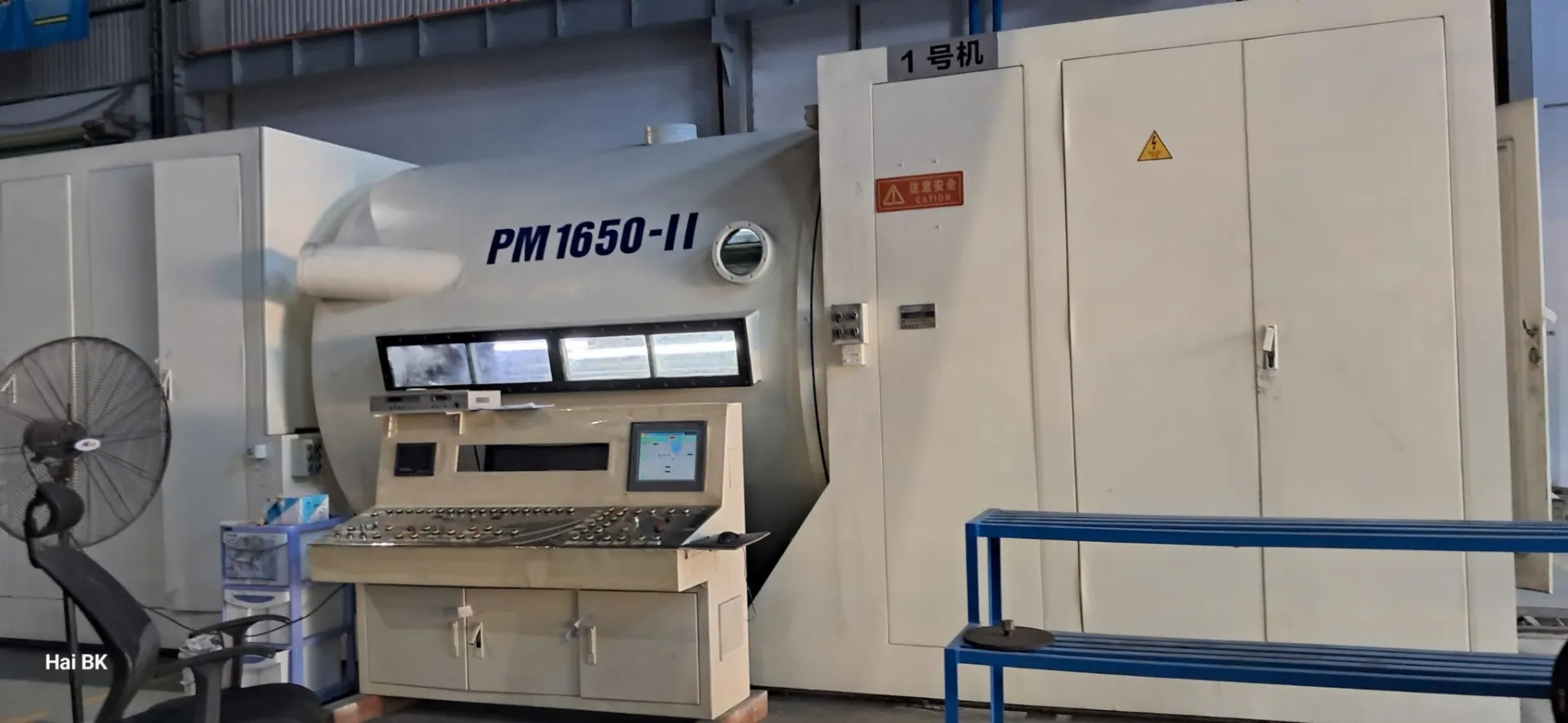
HMI control cabinet and main body of PM1650 vacuum metallizer

When a Metallizer Degrades, Faults Don’t Always Appear as Sudden Breakdowns

In actual manufacturing, vacuum metallizers do not always fail abruptly. In many cases, the machine continues to run and the film keeps winding, but the coating layer consistency begins to fluctuate heavily.

Businesses may encounter warning signs such as continuous streaks, mottled colors, dark/light bands, uneven coating thickness, web wrinkling, roll slag accumulation, longer vacuum pump-down times, or erratic operational parameters.

With vacuum metallizers, a single finished product defect can be simultaneously linked to the vacuum chamber, aluminum evaporation source, chill roll, web handling system, mechanical drives, and control cabinets.

Avoid Patching Errors in Isolation

When a coating defect occurs, simply swapping one component or blindly tweaking process parameters will only cause the error to repeat after a short production run.

The correct engineering path is tracing backward from the film defect to the hardware: analyze the defect pattern on the web, map its repetition rule, and comprehensively evaluate each interconnected subsystem.

Vacuum ChamberChill RollEvaporation Zone
Evaporation boats and wire feed assembly in vacuum metallizer

Process drum and aluminum evaporation assembly must be checked periodically to detect micro-leaks, slag build-up, or mechanical misalignment.

Defect Concept

What Is a Pinhole or Metal Void on Metallized Film?

Pinholes and metal voids are simply missing spots or micro-gaps within the deposited metal coating layer. At these specific micro-locations, the aluminum vapor fails to fully seal the plastic substrate surface.

When examined under backlight sources or proper inspection systems, pinholes reveal themselves as micro-dots, abnormal bright points, or light penetration spots.

The issue with pinholes is that while individual sizes are tiny, high counts compromise the overall shelf-life barrier properties. For packaging demanding high gas, vapor, or light protection, pinholes must be strictly controlled.

Missing Coating Area

Metal Voids – Areas Lacking Metal Deposition

Unlike localized micro-pinholes, metal voids refer to larger bare zones lacking metal layers or areas where aluminum deposition is completely interrupted on the web surface.

This fault can be triggered by dust contamination on the base film, slag in the chamber, unstable aluminum wire feeding, or uneven web contact across the condensation zone.

When metal voids occur, the film surface might remain silver in many sections, but specific patches fail to hit target optical density. Scattered voids are notoriously difficult to spot with the naked eye.

During subsequent lamination, printing, or pouch-making processes, unaddressed metal voids can degrade final packaging stability.

Slag build-up and discoloration on the coating drum

Slag residue, discoloration bands, or accumulated scaling on the process drum cause uneven film contact and trigger chronic coating flaws.

Subsystems Required for Engineering Inspection During Maintenance Audits

An uneven coating layer defect often stems from multiple overlapping subsystems. Therefore, the diagnostic framework requires a holistic audit rather than focusing on an isolated broken part.

01

Vacuum Chamber

Verify chamber sealing integrity, door gaskets, sight glasses, flanges, piping layouts, and the ability to maintain stable ultimate vacuum pressures.

02

Process Drum / Chill Roll

Evaluate drum surface hygiene, check for scratches/stains, audit cooling fluid thermal efficiency, and map web wrapping contact consistency.

03

Aluminum Evaporation Source

Inspect evaporation boats, wire feed alignment, high-current busbars, clamping contacts, hot zone shield degradation, and slag buildup.

04

Web Handling System

Audit idler rolls, spreader rolls, rewind/unwind shafts, mechanical parallelism alignment, roll surface hygiene, and bearing wear.

05

Mechanical Drive System

Evaluate drive motors, transmission belts, gear coupling alignments, velocity oscillations, slippage parameters, or operational vibrations.

06

Control Cabinet & Settings

Check HMI software, control terminal signals, process parameters, fault logs, and diagnostic test run functionalities after maintenance.

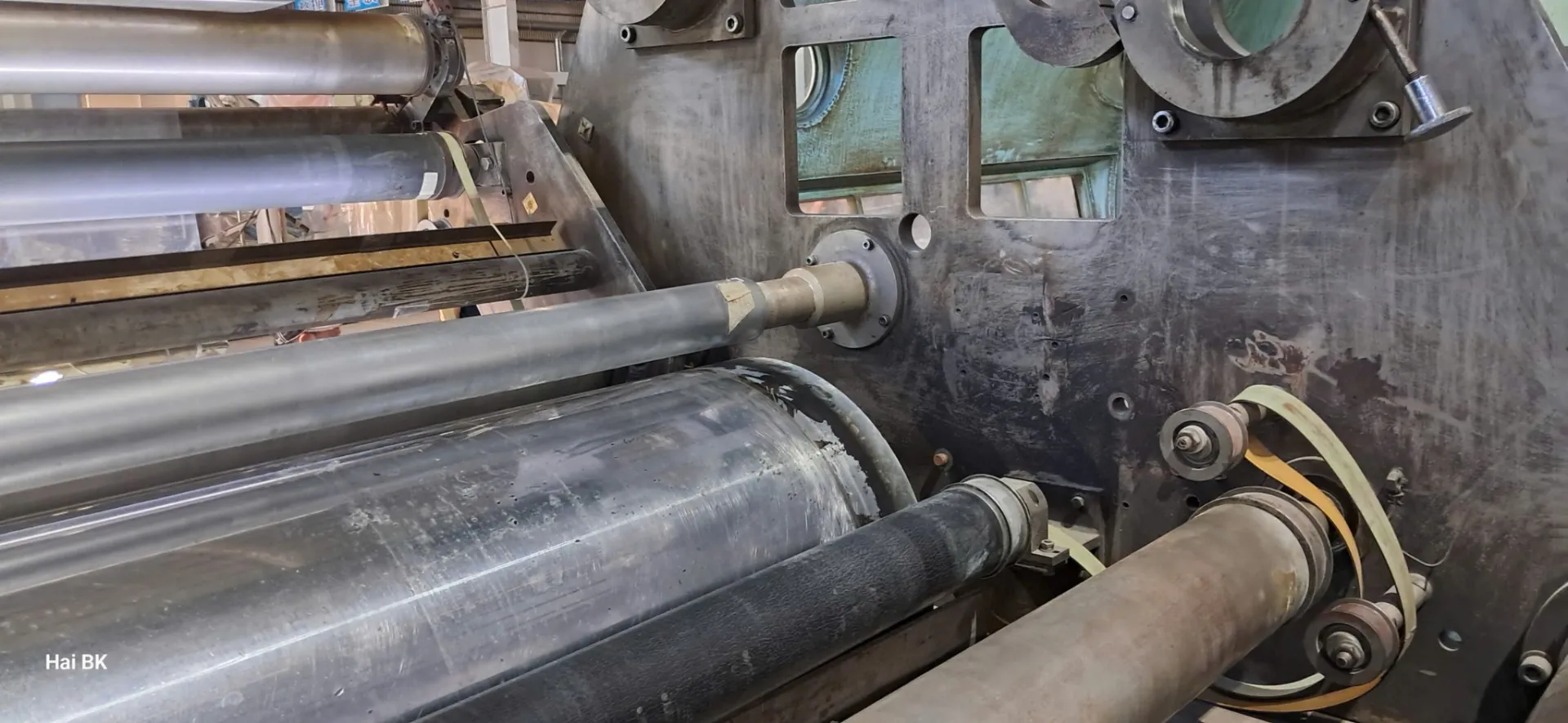
Winding roll system and mechanical drive array of a vacuum metallizer

The web winding array and drive transmission subsystems directly dictate film path tracking and tension stability through the coating zone.

Web Handling Line

Winding Rolls and Drive Components Govern Essential Web Path Flatness

A vacuum metallizer comprises far more than a vacuum chamber and heating boats; it is a high-speed, continuous web handling system. The film must travel across multiple idlers, tension sensors, and winding rollers at precise, uniform velocities.

If roll axes shift out of parallel alignment, bearings wear out, drives fluctuate, belts slip, or web tension control wavers, the film substrate will suffer vibrations, micro-wrinkles, or tracking errors.

These minute physical variations lead directly to uneven metal coatings along the roll length. Typically, the machine runs continuously, but finished roll quality remains completely erratic.

Web Path Alignment

The Substrate Path Traveling Across Idlers Demands Precise Geometric Calibration

Plastic packaging film substrates are ultra-thin and highly sensitive to tension imbalances. If the web path across the roll array loses geometric stability, the film will wrinkle, track off-center, slack locally, or fail to envelope the chill roll uniformly.

These handling faults create irregular coating tracks that operators frequently misdiagnose as thermal source errors or base material defects.

During a field audit, engineering teams must observe web travel lines, test roll-to-roll parallelism, check surface cleanliness, assess bearing wear, verify dancer roll dampening, and calibrate the unwind/rewind brakes.

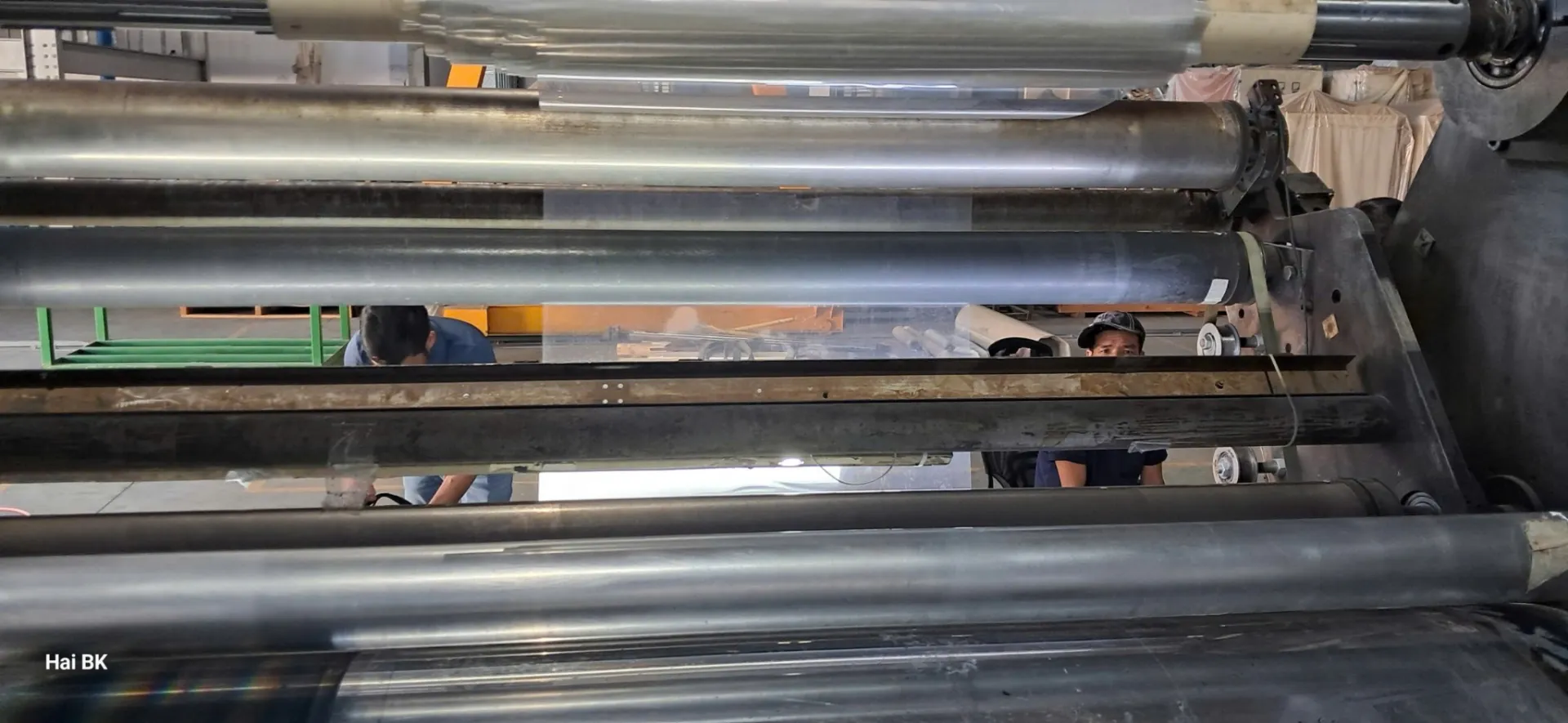
Web path traveling through the idler roll array inside the vacuum metallizer

Maintaining a perfectly flat web path across idler rolls eliminates micro-wrinkling, tracking errors, and non-uniform aluminum deposition.

Internal Chamber Audits Stand as a Critical Pillar of Preventive Maintenance

Opening the vacuum metallizer chamber allows engineering teams to map the condition of core systems: roll arrays, web paths, evaporation zones, door mechanisms, and sealing joints.

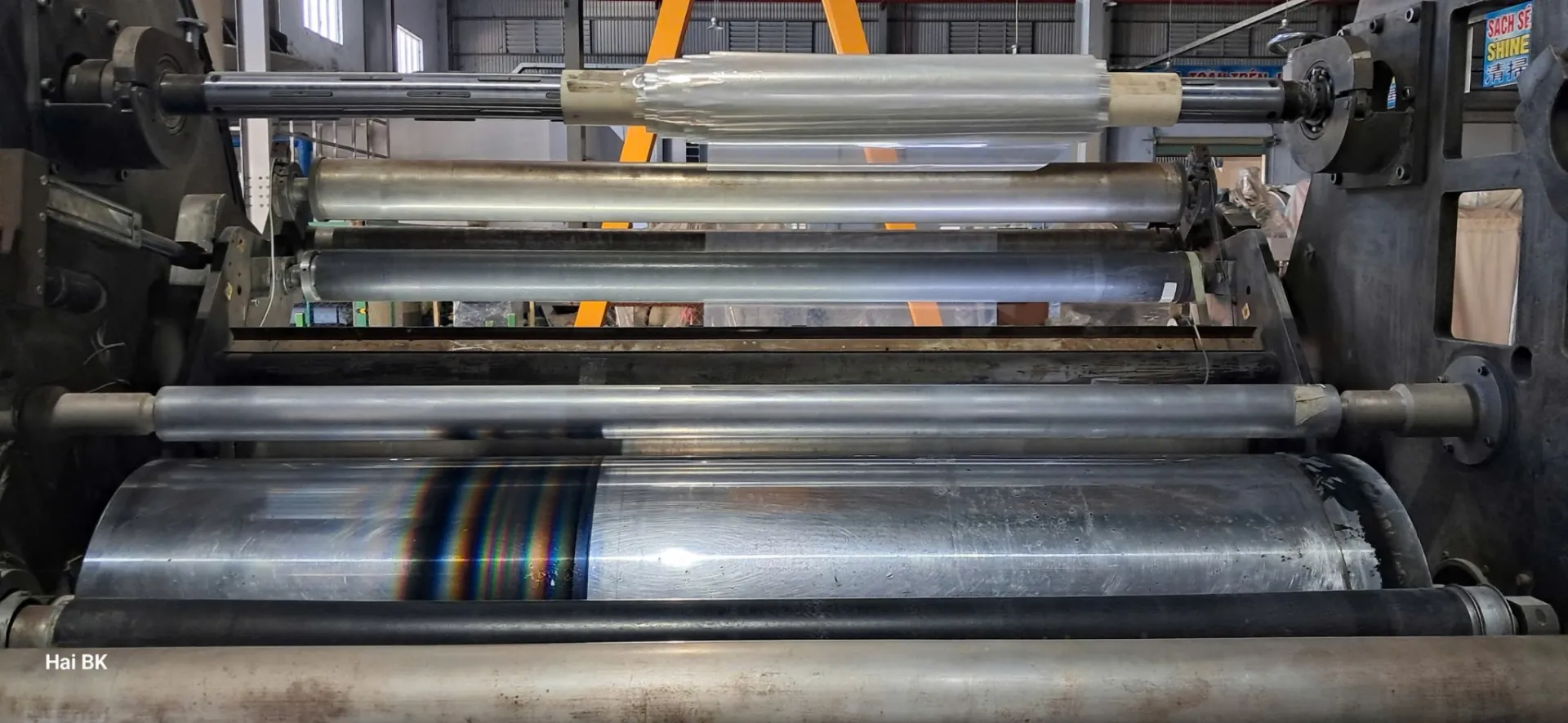
Panoromic view of the roll array when the vacuum metallizer chamber is opened

Chamber open status enables full evaluation of mechanical fatigue, slag accumulation rates, roll wear, door alignment, and potential vacuum leak sources.

Chamber Contamination
Evaluate aluminum powder accumulation, burnt shield scales, wall fouling, and fields risking slag drop back onto the active web.

Roll Fatigue & Wear
Examine roll faces for scoring lines, discoloration bands, debris build-up, or signs of uneven film wrap contact.

Seals & Flange Joints
Inspect elastomer door gaskets, O-rings, sight glass seals, structural flanges, pipeline couplings, and vacuum feedthrough lines.

Mechanical Misalignment
Monitor idler axis alignments, wire feed guide setups, shielding locations, and check for any abnormal hardware contact or interference marks.

Preventive maintenance of the hot zone and evaporation source inside the vacuum chamber

The hot zone and thermal evaporation source require close technical audits since they operate under high-temperature loads and dictate layer consistency.

Hot Zone & Evaporation Source

Preventive Maintenance of Hot Zones and Aluminum Evaporation Sources

The aluminum vaporization unit is the core component working under punishing thermal cycles. Evaporation boats, aluminum wire feed mechanisms, high-current terminals, and hot zone shielding layouts must be rigorously inspected.

Slag-ridden boats, poor electrical contact resistance, erratic wire feed speed, or misaligned boat racks destabilize the vapor cloud mass. This instability causes silver density fluctuations, missing coating tracks, or severe pinholes.

Servicing this zone must follow an engineered sequence: deep cleaning, thermal crack mapping, testing terminal torque resistance, verifying wire feed geometry, realigning components, and conducting verification test runs.

Pre-Repair Diagnosis

Engineering Services Demand Thorough Diagnostics, Not Just Swapping Parts

In high-barrier vacuum metallizing systems, blindly replacing a spare part rarely fixes chronic defects if the underlying systemic root cause is skipped. A longitudinal streak on the finished film could point to boat failure, but it could equally arise from chill roll defects, tension imbalances, vacuum drops, or chamber scales.

Therefore, professional repair and maintenance protocols must initiate with on-site diagnostics: trace finished roll defects, log live process parameters, inspect chamber hygiene, audit sub-assemblies, and prioritize critical corrective maintenance actions.

Defect TrackingSubsystem AuditVerification Test Run
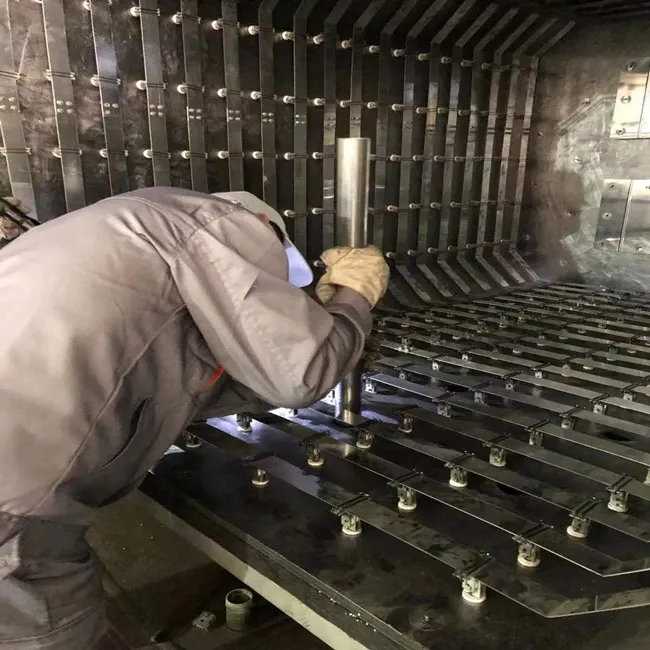
Field service engineer auditing internal subsystems of an industrial vacuum metallizer

Field diagnostics isolate the true mechanical or electrical root cause of coating defects prior to executing corrective maintenance actions.

Recommended Inspection & Maintenance Framework

For industrial packaging film vacuum metallizers, the maintenance workflow must map backwards from finished product defects directly to the machine’s core sub-assemblies.

1

Map Film Defects

Classify whether the web error presents as sharp streaks, wide mottle, wrinkling, pale coating thickness, pinholes, or total coating discontinuity.

2

Evaluate Process Values

Monitor ultimate vacuum levels, pump down times, line speeds, web tension curves, boat heat profiles, and check active warning logs.

3

Chamber Field Audit

Examine roll parallelism, vapor source areas, slag buildup, door gaskets, O-rings, flanges, and test for structural vacuum leaks.

4

Component Cluster Audit

Run targeted engineering evaluations on the process drum, evaporation boats, hot-zone shields, web paths, drives, and PLC controls.

5

Targeted Maintenance Actions

Execute deep cleaning, geometric realignment, swap fatigued parts, eliminate vacuum leaks, rebuild terminals, and service drive components.

6

Verification Test Run

Validate ultimate pressure retention, web path flat tracking, tension control response, and verify coating layer barrier consistency under full production loads.

VietSonic: Engineering Repair & Maintenance for Film Packaging Vacuum Metallizers

VietSonic delivers comprehensive field diagnostic, repair, and preventive maintenance services for industrial plastic packaging vacuum metallizers based on a total system framework. Instead of merely patching isolated component failures, VietSonic’s engineering team audits every interconnected assembly dictating coating quality.

Our standard field service scopes cover: vacuum chamber vacuum integrity, high-vacuum seal replacement, roll alignment calibration, process drum refurbishment, evaporation boat and hot zone maintenance, mechanical drive rebuilding, control panel diagnostics, and full post-maintenance validation runs.

Our engineering goal extends beyond returning the machine to operation; we empower manufacturers to eliminate the root causes of film scrap, minimize raw material loss, shorten asset downtime, and secure total process stability across your packaging lines.

Vacuum Metallizer Processing Erratically? Secure Complete Field Diagnostics Before Repairing

VietSonic provides engineering audits, component evaluations, and technical advisory services for vacuum metallizing lines: resolve web directional streaks, mottled colors, uneven coating thickness, drum slag accumulation, vacuum loss, drive errors, and wire feed issues.

Consultation Hotline: 0938 49 33 66 Email Engineering Department
VietSonic

Field services, diagnostics, corrective maintenance, and technical consultation for industrial vacuum metallizing machinery on packaging films.

Hotline: 0938 49 33 66

Email: info.vietsonic@gmail.com