



Ultrasonic Welding Machine for PE-Coated Paper Packaging – A Solution for Inconsistent Sealing
When adhesive dries slowly, heat-sealed joints deform easily, or bond quality varies between production shifts, a business needs more than just a welding machine. What is required is a system properly tested on the actual packaging structure, with a suitable horn, fixture, and process parameters.
Horn design based on the sealing line
Custom positioning fixture manufacturing
Operating parameter optimization
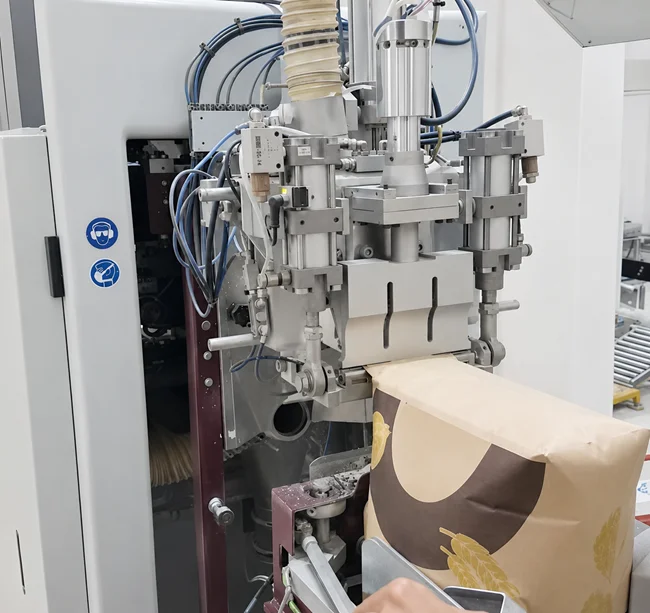
Why is the PE-coated paper packaging sealing process often difficult to stabilize?
Paper mainly provides shape and rigidity to the packaging. The actual bond in the sealing area depends heavily on the plastic coating, the folded-edge structure, and the ability to deliver energy to the correct bonding surface.
Inconsistent adhesive application
Too little adhesive can cause the packaging edge to separate easily. Too much adhesive can stain the surface, extend waiting time, and make cleaning more complicated.
Heat sealing can damage the material
Inappropriate temperature, hold time, or pressure can cause wrinkling, discoloration, localized scorching, or shrinkage of the PE coating at the contact area.
Bond quality varies by sample
Even a change in paper basis weight, PE thickness, number of folded layers, or sealing width can make the previous parameter set unable to produce consistent results.
Inaccurate manual positioning
If the packaging is misaligned when inserted into the machine, the seal may be formed in the wrong position, the joined edges may become uneven, or dimensional differences may occur between products.
Difficult to control between shifts
When quality depends heavily on individual handling, loading speed, and the way the material is held, the pass rate can vary from one operator to another.
Machine integration without proper compatibility
The machine may generate ultrasonic energy normally, but an unsuitable horn or fixture can still cause uneven energy distribution, incomplete sealing, or damage to the packaging surface.
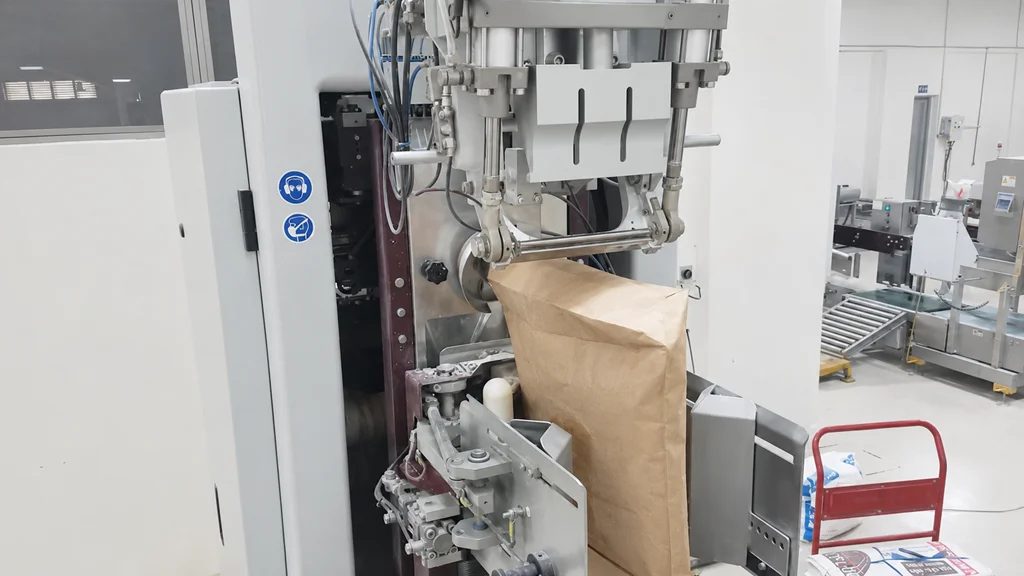
The product must be positioned correctly and supported securely before the horn is activated.
Ultrasonic welding is more than simply replacing adhesive with a vibrating horn
During welding, the ultrasonic generator produces an electrical signal at the system’s operating frequency. The transducer converts this signal into mechanical vibration, after which the booster and horn transmit the vibration to the packaging joint.
Through the combined effects of vibration, pressure, and time, energy is concentrated at the contact interface. The PE layer in the joint area softens and forms a bond when the cycle is completed.
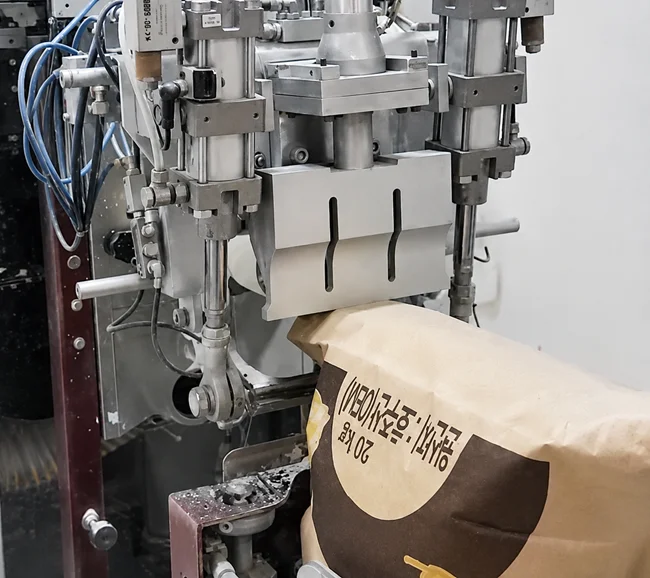
The horn must be engineered according to the joint dimensions, contact area, and product geometry.
Watch the PE-coated paper packaging welding test at VietSonic
The video allows businesses to directly observe sample positioning, horn placement, the pressing cycle, and the condition of the joint after testing.
VietSonic develops machines based on each product and production requirement
Rather than selecting a machine based only on its rated power, the implementation process should begin with the packaging sample, quality targets, and the production method.
Receive samples and production requirements
Evaluate packaging dimensions, the number of material layers, the required welding position, joint length, appearance requirements, and expected output.
Evaluate material weldability
Testing determines whether the coating responds properly to ultrasonic energy and identifies the risk of tearing, wrinkling, or incomplete welding.
Design the horn and fixture
The horn is developed according to the area where energy must be transmitted. The fixture supports the product, prevents movement, and maintains repeatable positioning in every cycle.
Configure the machine system
Select the machine configuration, pressing mechanism, working stroke, activation method, and control system to match actual shop-floor operations.
Conduct trial runs and establish a process window
Adjust amplitude, pressure, ultrasonic time, and hold time to identify a stable operating window instead of relying on a single trial setting.
Commissioning and operator training
Provide guidance on product positioning, program selection, weld inspection, horn cleaning, and recognizing abnormal signs during operation.
After testing, the sample should be evaluated for bond strength, surface condition, and the ability to maintain consistent results across multiple cycles.
Components that can be customized for the actual production line
Each product has different positioning requirements, sealing paths, and output targets. Therefore, the final configuration should be determined after sample testing.
Ultrasonic horn
Design the shape and active area to match the width, length, and geometry of the joint.
Positioning fixture
Support the product at the correct height, minimize movement, and help the operator load samples more quickly.
Pressing mechanism
Configure the stroke and pressing force according to packaging stiffness and production-cycle requirements.
Activation method
Depending on the operating method, the machine can use a foot pedal, two-hand push buttons, or a control signal from an external system.
Parameter control
Store and adjust the required parameters for each sample type or product specification.
Production-line integration
Evaluate integration with feeding systems, conveyors, or automation stations when the business needs to increase output.
Common defects and initial inspection guidelines
| Symptom | Factors to inspect | Technical corrective action |
|---|---|---|
| Packaging edge still separates easily | Insufficient energy, unsuitable pressure, an excessively thin PE layer, or an uneven contact area. | Recheck the process window, horn surface, fixture, and weldability of the material structure. |
| Surface becomes wrinkled or punctured | Excessive energy concentration, an overly long ultrasonic time, or unsuitable horn-edge contact. | Reduce the energy input, adjust the horn geometry, and inspect the flatness of the support area. |
| Inconsistent seal quality | Misaligned samples, variations in thickness, an unstable pressing mechanism, or an uneven fixture surface. | Improve positioning, verify machine repeatability, and classify variations in incoming materials. |
| Only part of the sealing line bonds | Uneven horn contact, product deformation, or unsuitable amplitude distribution. | Inspect the contact pattern, parallelism, horn design, and fixture support. |
| Seal is strong but appearance is poor | The horn pattern, pressing force, or surface structure does not meet the appearance requirements. | Adjust the active surface and balance bond strength with visual quality. |
What should a business provide for an accurate evaluation?
- Completed packaging samples and unprocessed material samples.
- Paper basis weight and coating type, if available.
- The location, length, and width of the required sealing line.
- Acceptance criteria for the welded joint.
- Target output per hour or per shift.
- A video of the current operation and the planned machine installation area.
Do not order a machine based solely on a demonstration video
A video demonstrates the principle and results for one specific sample. However, two visually similar products may still use different paper basis weights, PE ratios, additives, coating methods, or folded-edge structures.
Sample testing allows VietSonic to evaluate bonding capability, identify a suitable process window, and determine the horn and fixture that must be manufactured before finalizing the machine configuration.
- Reduce the risk of investing in a machine that is unsuitable for the product.
- Identify the risk of tearing, wrinkling, or incomplete sealing at an early stage.
- Establish a basis for selecting a manual, semi-automatic, or line-integrated solution.
- Evaluate the ability to maintain consistent results across multiple consecutive cycles.
Need to test-weld PE-coated paper packaging using actual samples?
VietSonic receives samples, evaluates the feasibility of ultrasonic welding, and recommends a machine configuration suited to the sealing line, operating method, and production target.