



Ultrasonic welding of aluminum-coated laminated film on a multifunctional vertical welding machine
A solution for welding multilayer laminated film, aluminum-coated film, and packaging materials that require high sealing performance, helping create fast, clean, stable weld seams while reducing leakage during the packaging process.
Why does aluminum-coated laminated film require a more stable welding method?
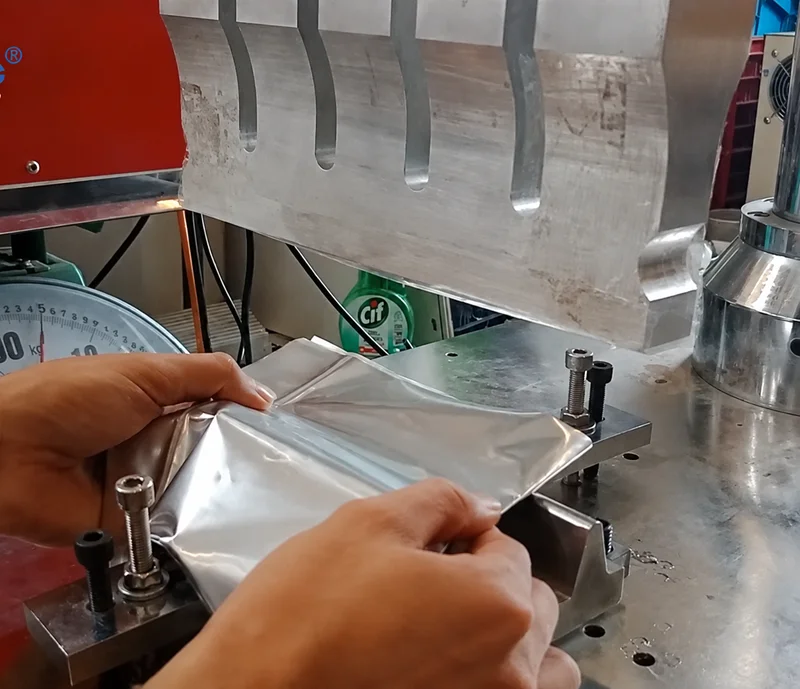
Aluminum-coated laminated film is commonly used for products that require moisture resistance, waterproofing, and protection for food, pharmaceuticals, or technical components. With a multilayer structure such as PE, PA, aluminum layer, or metallic coating, this material requires a weld seam that is even, strong, and does not damage the film surface.
Airtight and watertight requirements
Packaging used in humid environments or for sensitive products must prevent leakage at the sealed edge. Even a small weak point can affect preservation quality.
Reduced thermal deformation
With traditional heat-sealing methods, thin materials can easily wrinkle, shrink, or burn at the edges if temperature and pressing time are not properly controlled.
Stable production speed
In mass production, the weld seam needs to be consistent and less dependent on operator skill, while also being suitable for semi-automatic or automatic production lines.
Principle of ultrasonic welding on aluminum-coated laminated film
Ultrasonic welding uses high-frequency mechanical vibration transmitted through the welding horn to the material contact area. The vibration energy is concentrated at the weld edge, generating internal friction and softening the thermoplastic layer inside the laminated film.
As a result, the two material layers are bonded together without adhesive, without additional materials, and without the need to heat the entire mold for a long period of time.
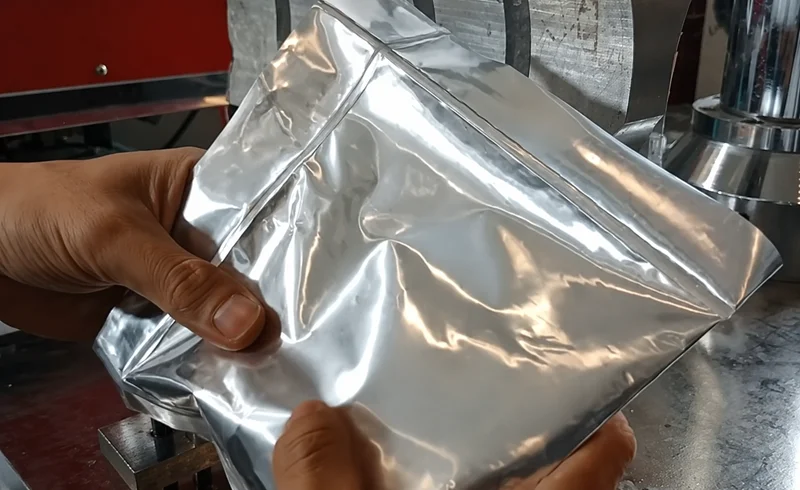
Actual ultrasonic welding video for aluminum-coated laminated film
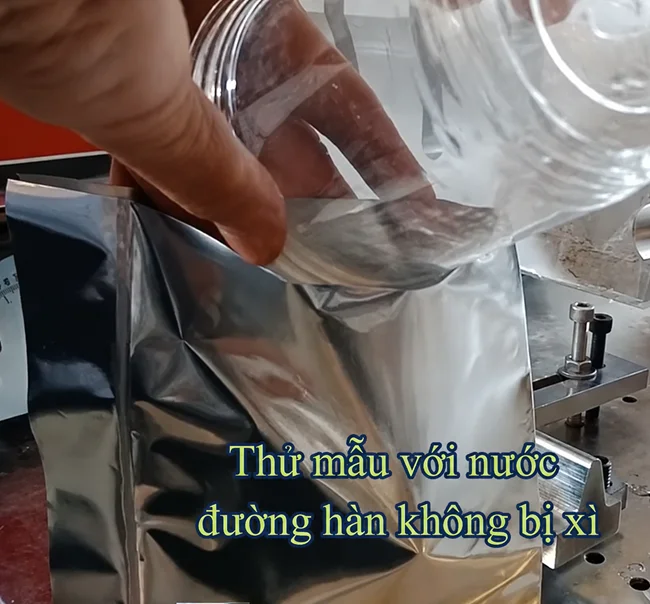
The video below demonstrates the ultrasonic welding process for aluminum-coated laminated film on a multifunctional vertical welding machine. This application is suitable for visually evaluating the weld seam, seam continuity, and equipment operation.
Suitable applications in packaging production
Ultrasonic welding technology for aluminum-coated laminated film is suitable for product groups that require sealing performance, stability, and weld seam aesthetics.
- Moisture-absorbing bags, moisture-proof bags, and packaging for electronic component storage.
- Dry food packaging and products that need to prevent moisture intrusion.
- Pharmaceutical packaging, medical supplies, or products that require cleaner process control.
- Multilayer technical films and laminated films with PE, PA, PET, or aluminum-coated layers.
- Long weld seams, continuous welding, or welding based on custom-designed mold profiles.
Aluminum-coated laminated film
Airtight welding
Vertical welding machine
Trial welding and parameter optimization process
To achieve a stable weld seam, VietSonic typically evaluates the actual material sample, then adjusts the mold, pressure, welding time, and power according to the product requirements.
Material inspection
Identify the film structure, thickness, weldable plastic layer, and sealing requirements of the product.
Welding mold selection
Design an aluminum or titanium mold based on the desired weld length, width, and weld seam profile.
Sample trial welding
Run tests on actual samples to check bonding strength, sealing performance, appearance, and repeatability.
Production optimization
Adjust parameters to suit operating speed, stability, and required output capacity.
Reference technical specifications
| Item | Reference information | Application notes |
|---|---|---|
| Operating frequency | 20 kHz | Suitable for many plastic welding applications, laminated films, and materials that require strong welding energy. |
| Power | Approx. 1,500 – 2,000 W | Depends on weld seam length, material thickness, and mold design. |
| Welding mold | Aluminum or titanium | Selected based on durability, weld seam profile, and long-term operating requirements. |
| Weld seam type | Long seam welding, continuous welding, edge sealing | Can be designed according to the product sample and packaging requirements. |
| Suitable materials | Laminated film, aluminum-coated film, multilayer plastic film | Sample testing is required to determine the actual weldability of each film structure. |
Benefits of using ultrasonic welding for aluminum-coated laminated film
Faster welding speed
The welding process is fast, suitable for repetitive production, and can be integrated into semi-automatic or automatic machine modules.
Neat and consistent weld seams
The weld seam is formed according to the mold profile, helping create a more uniform sealed edge and reducing open seams or discontinuous welding defects.
No auxiliary adhesive required
Reduces the use of additional materials, simplifies processing steps, and is suitable for products that require a cleaner production process.
Energy saving
Energy is concentrated at the welding area, so there is no need to heat the entire mold assembly for a long time as with some heat-sealing methods.
Suitable for technical packaging
Meets the needs of packaging groups that require moisture resistance, protection for sensitive products, or high sealing performance.
Customizable mold design
The welding mold can be designed according to the required width, length, weld pattern depth, and weld seam shape of each product.
What should be considered before choosing a machine?
Not all aluminum-coated films produce the same welding results. Weld seam quality depends on the film structure, the weldable plastic layer, total thickness, material flatness, and post-weld inspection requirements.
- Film samples or actual product samples should be sent for trial welding.
- The length, width, and shape of the weld seam should be clearly defined.
- Requirements should be clarified: airtightness, watertightness, tensile strength, appearance, or production output speed.
- Testing should be performed using suitable methods such as peel testing, tensile testing, water pressure testing, or leak testing depending on the product.
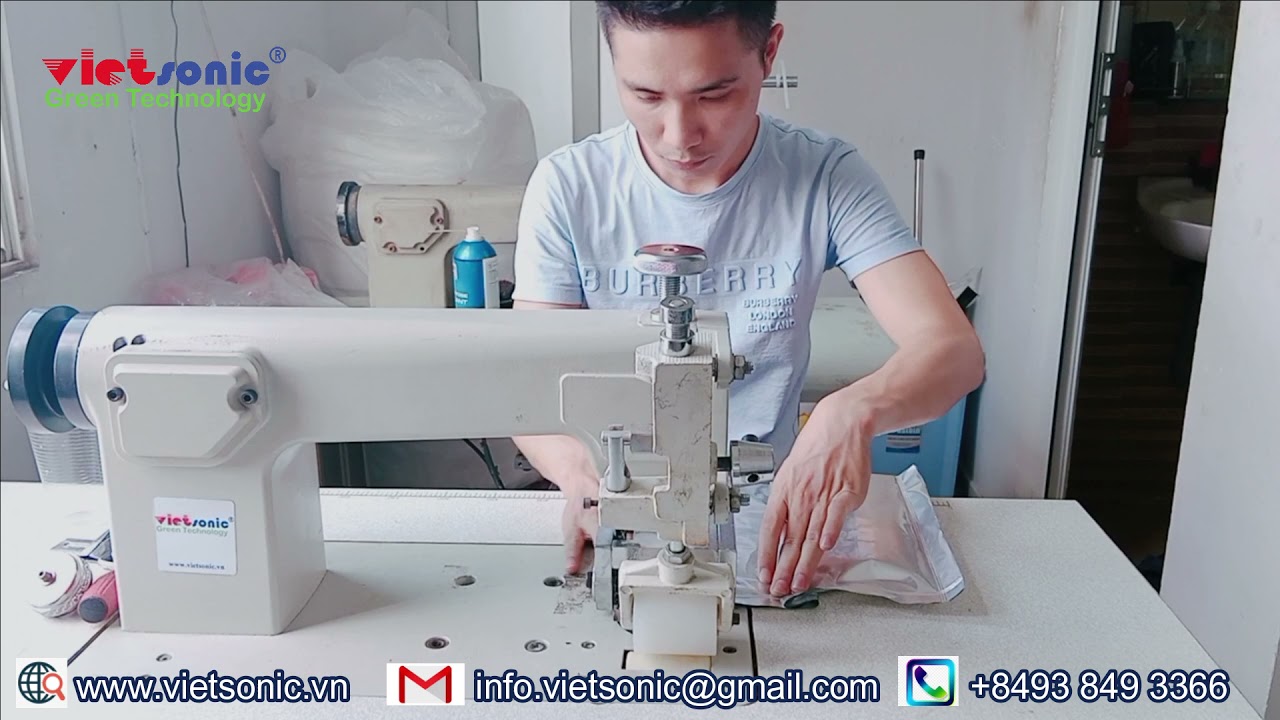
Need trial welding for aluminum-coated laminated film for your product?
VietSonic can provide machine selection consulting, welding mold design, and actual sample trial welding to evaluate sealing performance, weld strength, and production applicability.
Contact VietSonic for consultation
Hotline: 0938 49 33 66 | Email: info.vietsonic@gmail.com