



Ultrasonic Plastic Dinosaur Egg Shell Welding Machine – A Custom-Built Solution from VietSonic
As production volumes increase, joining two plastic shell halves with adhesive, manual heating or skill-dependent processes can easily result in inconsistent joints.
VietSonic designs and manufactures ultrasonic welding machines based on actual product samples, helping manufacturers standardize the welding process, reduce defects and prepare for production expansion.
Evaluate the material, product geometry and weld requirements.
Design the welding horn and fixture specifically for the plastic component.
Test product samples and establish parameters before machine fabrication.
Develop semi-automatic machines or solutions integrated into production lines.
The product can be welded, but will the quality remain consistent in mass production?
A factory’s main concern is not whether a few trial samples meet the requirements. The real challenge is maintaining consistent weld quality as production volumes increase, operators change and the machine runs continuously across multiple shifts.
Inconsistent joints
Some products are fully sealed while others remain open. Joining pressure varies between operators, making it difficult to identify the cause when the defect rate rises.
Adhesive slows down production
Applying adhesive, waiting for it to cure and cleaning away excess material create additional operations, increase consumable costs and raise the risk of contaminating the product surface.
Difficulty increasing output
As order volumes grow, a manual welding process can become a production bottleneck, delay deliveries and increase inspection workloads.
Weld stability also depends on the joint design, plastic material, welding horn, fixture, applied pressure and a set of parameters configured specifically for the product.
Joining two plastic dinosaur egg shell halves using ultrasonic energy
The dinosaur egg product has a curved shell, relatively thin plastic walls and requires a clean, fully sealed joint. If the product is not positioned concentrically or the transmitted energy is unsuitable, the shell may become misaligned, develop open gaps or show unwanted pressure marks.
In the solution developed by VietSonic, the product is placed in a custom fixture to maintain the correct position. The welding horn transmits vibration to the contact area, while suitable pressure and hold time join the two shell halves.
- No additional adhesive is required at the joint.
- Energy is concentrated in the area that needs to be welded.
- Operating procedures can be standardized.
- Parameters can be easily controlled and adjusted according to the product sample.
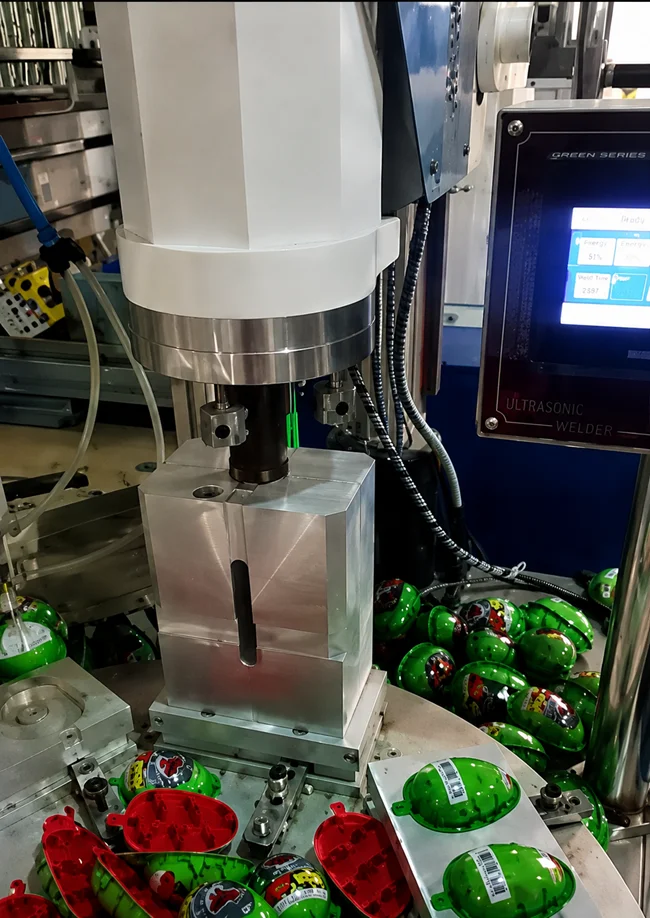
VietSonic develops complete solutions from welding technology to machine structure
Every plastic component has different dimensions, geometry, materials and quality requirements. The machine configuration must therefore be developed around the actual product being manufactured.
Welding horn design based on the energy transmission area
The welding horn is calculated and machined to match the required contact area of the product. Its geometry must support stable vibration transmission while minimizing pressure marks outside the permitted area.
Custom fixture manufacturing based on the product
The fixture keeps both shell halves concentrically aligned, prevents slipping and distributes pressure appropriately throughout the welding cycle. This is particularly important for curved products or components with thin walls.
Mechanical, pneumatic and control system integration
Depending on production requirements, the machine can incorporate a pneumatic pressing mechanism, cycle control system, sensors and functions that support safe operation.
Evaluate the plastic material, dimensions, welding area and acceptance criteria.
Test the joining performance before finalizing the machine solution.
Develop the machine frame, pressing mechanism and operating position.
Design the horn according to the product geometry and contact area.
Configure the welding cycle, holding stage and operating functions.
Provide guidance on operation, adjustment and weld inspection.
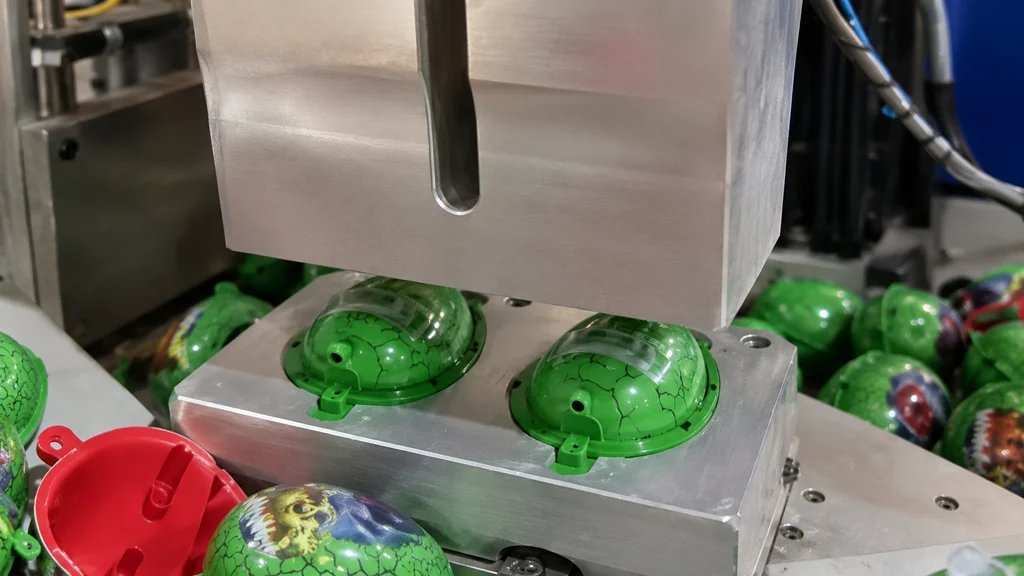
From the customer’s plastic sample to a completed machine at the factory
A clearly defined technical process reduces subjective machine selection and lowers the risk of investing in a configuration that does not match the product.
Requirement collection
Collect plastic samples, drawings, material information, expected output and weld quality requirements.
Product evaluation
Inspect the joint geometry, wall thickness, energy transmission position and positioning requirements.
Sample welding trials
Conduct tests to evaluate the surface finish, joint strength and level of component deformation.
Solution design
Select the ultrasonic configuration, pressing mechanism, welding horn, fixture and operating method.
Fabrication and adjustment
Manufacture the machine assemblies, complete installation, configure parameters and perform trial runs using actual samples.
Acceptance and handover
Inspect the welding results, provide operating instructions and hand over the relevant technical documentation.
Watch the plastic dinosaur egg shell welding process
The video shows how the product is placed in the fixture, how the welding horn moves downward and how the machine performs the ultrasonic welding cycle.
A practical application video produced by VietSonic.
What manufacturers gain by standardizing the welding process
Consistent operation
The welding cycle is configured and repeated according to established parameters.
Shorter processing time
Reduce adhesive application, curing time and excess adhesive removal steps.
Cleaner product surfaces
Minimize adhesive stains and additional materials around the joint.
Ready for expansion
Create a foundation for machine upgrades or integration into an automated process.
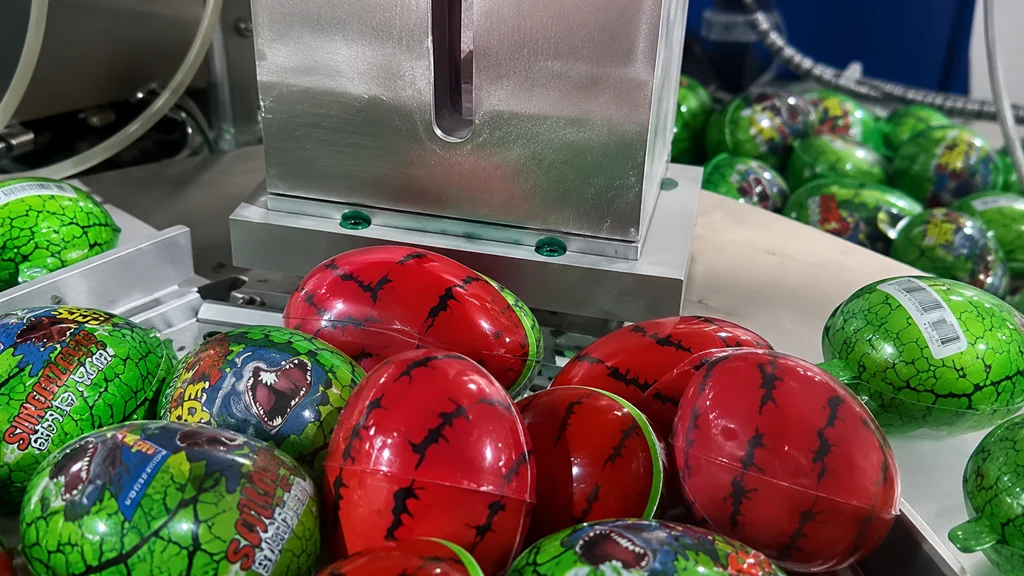
A machine should not be selected based only on power or frequency
A suitable configuration must be determined by considering the material, product geometry, required output and post-welding inspection requirements together.
| Plastic material | The materials of both components must be accurately identified and checked for welding compatibility. |
|---|---|
| Joint geometry | The joint design directly affects energy concentration and the stability of the weld. |
| Product dimensions | These provide the basis for designing the welding horn, fixture, pressing stroke and operating space. |
| Quality requirements | Criteria for strength, sealing performance, appearance, deformation and inspection methods must be clearly defined. |
| Expected production output | This determines whether a manually loaded machine, semi-automatic machine or integrated production-line solution should be selected. |
| Factory conditions | The machine location, electrical supply, compressed air, operating height and current production process should be evaluated. |
Electrical and electronic housings
Engineering plastic components
Household products
Plastic packaging
Automotive and motorcycle components
Custom plastic components
Is your business experiencing any of these warning signs?
When one or more of the following issues occur regularly, the current plastic joining process may no longer be able to meet production requirements.
The positioning method, applied pressure and stability of the joining process should be reviewed.
A dedicated machine helps manufacturers standardize the cycle and reduce secondary operations.
Suitable machine parameters and fixtures help reduce variation between operators.
The welding horn, fixture and pressing mechanism must be custom-designed for the product sample.
What manufacturers need to know before investing
Can the dinosaur egg shell welding machine be used for other plastic products?
The ultrasonic system can be applied to many products, but the welding horn, fixture, pressure and parameters must be reassessed for each specific component. Products should not be changed without a technical evaluation.
Do we need to submit a plastic sample before receiving a machine configuration proposal?
A completed sample or technical drawing should be provided. Sample testing helps evaluate weldability and avoids selecting a machine configuration based only on assumptions.
Does VietSonic design welding horns and fixtures?
Yes. The welding horn and fixture are designed based on the product dimensions, joint geometry, material and weld requirements.
Can the machine be integrated into an automated production line?
Depending on the factory’s production output and process, the solution can be developed as a semi-automatic system or integrated with feeding mechanisms, sensors and related control systems.
Send us your product sample for a welding solution evaluation before investing in a machine
Provide the plastic sample, material information, expected output and weld requirements. The technical team at
VietSonic
will evaluate the product, conduct welding trials and recommend a suitable welding horn, fixture and machine configuration.