



Ultrasonic welding machine for cutting PP plastic – Clean cuts, reduced burrs, optimized production process
In many production workshops, cutting PP plastic sheets with mechanical blades, thermal cutting methods, or manual operations often leads to uneven cutting edges, burr formation, and the need for post-cut finishing. Ultrasonic technology helps make the cutting process faster, cleaner, and more suitable for PP plastic processing applications that require consistent finishing quality.

Common problems when cutting PP plastic in production
PP plastic is widely used in advertising, packaging, technical plastic parts, industrial plastic sheets, and many other processed products. However, when cut using conventional methods, the cutting-edge quality may become unstable, especially when the material is thin, flexible, or needs to be cut repeatedly in large quantities.
Burrs on cutting edges
After cutting, the plastic edge may become scratched, rough, or sharp, reducing product aesthetics and requiring an additional edge-finishing process.
Easy deformation caused by heat
Some thermal cutting methods may cause the plastic edge to burn, shrink, or discolor, especially with thin PP sheets or small components.
Time-consuming post-processing
When the cut is not clean, workshops need additional labor to grind, trim, clean, or inspect each product again.
How does an ultrasonic welding machine cut PP plastic?
An ultrasonic welding machine uses high-frequency mechanical vibration transmitted through the ultrasonic generator, booster, and horn. When the horn contacts the cutting area, ultrasonic energy is concentrated at the material edge, reducing the required cutting force and helping separate the material faster.
Unlike traditional thermal cutting, the ultrasonic process does not need to heat the entire cutting area. As a result, the cutting edge is usually cleaner, less prone to burning, and less likely to deform when the machine parameters, horn, and fixture are properly designed.
Real operation video: Cutting PP plastic sheets with VietSonic ultrasonic welding machine
The video helps viewers clearly understand how the ultrasonic horn acts on PP plastic sheets, creating clean cuts and making the process suitable for applications that require speed, repeatability, and stable cutting-edge quality.
Benefits of using ultrasonic technology to cut PP plastic
- Cleaner cuts: reduces burrs, burnt edges, or frayed cutting edges compared with many manual methods.
- Reduced post-cut finishing: helps save time, labor, and product finishing costs.
- Good repeatability: suitable for cutting large quantities of identical parts in mass production.
- Easy integration with fixtures: can be designed as a semi-automatic machine or integrated into a production line depending on the product.
- Reduced dust and cutting chips: the cutting process is cleaner and produces less material debris than some mechanical cutting methods.
Suitable for businesses facing these issues:
- PP sheet cutting creates burrs and requires repeated edge cleaning.
- Finished products are inconsistent between production batches.
- The workshop wants to reduce manual operations in the cutting process.
- The business needs to test a faster cutting solution for technical plastic materials.
Practical applications of ultrasonic welding machines in PP plastic cutting
Ultrasonic welding machines are not only used for plastic welding, but can also be applied to cutting, stamping, spot pressing, or processing plastic parts depending on the horn and fixture design.
Packaging and PP plastic sheets
Cutting PP plastic sheets, formed plastic sheets, and materials used in packaging, boxes, trays, or production support parts.
Industrial plastic components
Applicable to plastic components that require clean cutting, fast operation, and stable cutting-edge quality.
Products with custom fixtures
Horn and fixture design can be customized according to the product sample to improve accuracy and reduce dependence on operator skill.
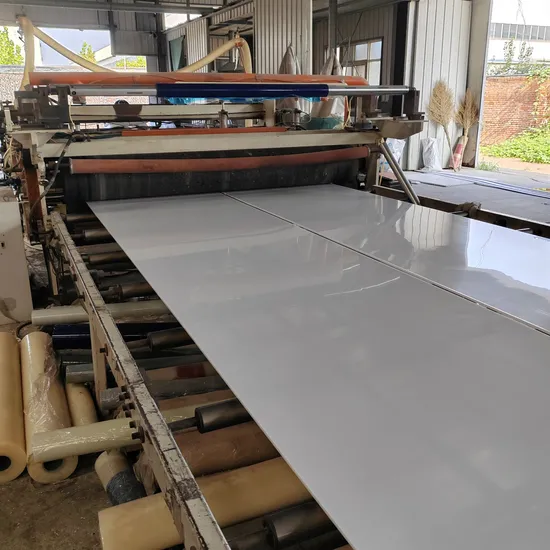
Quick comparison: Ultrasonic PP cutting vs. traditional methods
| Criteria | Mechanical cutting / conventional thermal cutting | Cutting with ultrasonic technology |
|---|---|---|
| Cutting-edge quality | Burrs, scratched edges, or burnt edges may occur if the process is not well controlled. | Cleaner cutting edges with less need for rework when the material and parameters are suitable. |
| Stability in repeated production | Highly dependent on the cutting blade, temperature, operator skill, or tool wear. | Can be more stable when the horn, fixture, and machine parameters are properly combined. |
| Post-cut cost | May require additional edge cleaning, grinding, or re-inspection processes. | Reduces secondary processes and is suitable for productivity optimization. |
| Automation capability | Requires additional clamping, blade, heating, or drive mechanisms. | Can be easily built into a semi-automatic machine module or integrated into a production line. |
When should you choose an ultrasonic welding machine for cutting PP plastic?
You should consider it when:
- The product requires clean cutting edges with reduced burrs.
- Large quantities need to be cut repeatedly and operation speed must be improved.
- Post-cut finishing costs are currently high.
- A machine needs to be designed according to a specific product sample.
- You want to test a cleaner solution compared with thermal cutting.
Sample testing is needed before making a decision if:
- The PP sheet is too thick or has a special material structure.
- The cutting line has a complex shape.
- The product requires tight dimensional tolerance.
- The material contains additives, colors, coatings, or multilayer structures.
- The machine needs to be integrated into an existing operating production line.
VietSonic consultation process for PP plastic cutting applications
To select the right machine, it is not enough to look only at power or frequency. The key is to evaluate the material sample, cutting target, and actual operation method in the workshop.
Receive samples and production requirements
Record the PP plastic type, thickness, dimensions, cutting line, desired speed, and cutting-edge finishing requirements.
Evaluate ultrasonic application feasibility
Assess whether the material is suitable for ultrasonic cutting or whether additional fixtures, guide blades, or pressing mechanisms are required.
Sample testing and parameter adjustment
Test pressing force, time, amplitude, horn design, and fixture method to evaluate actual cutting quality.
Recommend the suitable machine configuration
Provide consultation on standard machines, semi-automatic machines, or custom-designed solutions based on the customer’s production process.
Information to provide when sending samples for consultation
1. Material
PP plastic type, thickness, solid sheet or hollow sheet form, and whether the material contains additives or surface coating.
2. Cutting style
Straight cutting, short-section cutting, contour cutting, complete part separation, or only creating grooves/perforation lines.
3. Productivity
Number of products to be cut per hour/day, material feeding method, and desired automation level.
Frequently asked questions
Can an ultrasonic welding machine cut all types of PP plastic?
It should not be stated as an absolute. The result depends on thickness, sheet structure, additive composition, cutting-edge requirements, and horn design. The best approach is to test with actual samples.
Does ultrasonic PP cutting burn the edge?
With suitable parameters, ultrasonic technology can help reduce edge burning compared with thermal cutting. However, machine parameters and horn design still need to be properly adjusted.
Can the machine be customized according to a specific product?
Yes. Consultation can be provided based on product samples, including the horn, fixture, machine table, pressing mechanism, or semi-automatic solution depending on production requirements.
Is this machine only used for cutting, or can it also weld PP plastic?
An ultrasonic welding machine can be used for welding, cutting, spot pressing, plastic staking, or stamping depending on the horn and product structure. Each application should be tested separately.
Need to test PP plastic cutting with ultrasonic technology?
Send your material sample, product images, or a video of the current process so VietSonic can evaluate application feasibility and recommend a suitable machine configuration.