



Ultrasonic welding machine for curtains – Fast, clean, durable, and glue-free welding solution
Ultrasonic welding machines help bond layers of plastic materials, synthetic fabrics, technical curtains, PVC curtains, or coated films using high-frequency vibration energy. The welding process is fast, reduces the need for glue, requires no sewing thread, and creates a neater weld line for modern curtain production.

Why does the curtain industry need an ultrasonic welding solution?
In curtain production, several processes such as edge welding, fixing strips, bonding material layers, creating seams, or edge finishing require uniformity, cleanliness, and stability. If traditional glue or sewing methods are used, products may face issues such as glue smearing, long drying time, visible stitches, frayed edges, or inconsistent quality in mass production.
Fast processing speed
The weld is created in a short time, making it suitable for repetitive processes in curtain manufacturing workshops.
Clean weld line
No glue means less smearing, and no sewing thread helps create a cleaner and more aesthetic curtain surface.
Easy mold customization
The welding horn, welding mold, or fixture can be designed according to the weld size, curtain type, and actual material.
How does an ultrasonic curtain welding machine work?
The equipment uses an ultrasonic generator, welding horn, and fixture mold to create high-frequency mechanical vibration at the contact area of the material. Under suitable pressure, ultrasonic energy locally heats the surface to be bonded, allowing two material layers to adhere firmly without glue or sewing thread.
- Suitable for materials containing thermoplastic components or synthetic coatings.
- Can be used for spot welding, line welding, edge welding, or contour welding based on the mold design.
- Helps reduce scorching when welding time, pressure, amplitude, and mold design are properly set.
- Can be integrated into a worktable, semi-automatic machine, or dedicated production line.
Key parameters that usually need to be defined
- Curtain material type: PVC, EVA, plastic-coated fabric, nonwoven fabric, technical materials.
- Thickness of each layer and total thickness after bonding.
- Welding requirement: spot welding, seam welding, sealing, strip welding, or decorative welding.
- Expected output per shift/day.
- Need for a standalone machine or production line integration.
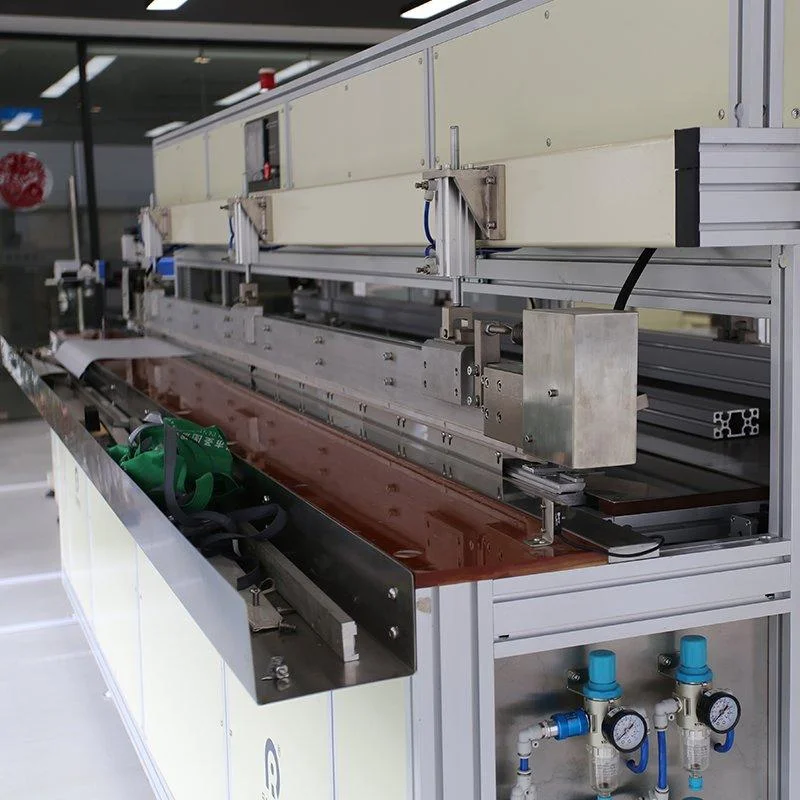
Practical applications in curtain production
Ultrasonic welding machines are not only used for a single welding point but can also be applied to many processes in the production of residential curtains, technical curtains, roller blinds, sunshade curtains, PVC curtains, and shielding products made from synthetic materials.
Curtain edge welding
Creates a neat and strong edge, reducing dependence on sewing thread or glue.
Strip welding and seam welding
Suitable for details that need to be fixed along straight lines, edges, or folded areas.
Material layer bonding
Supports the bonding of multiple coated material layers in technical curtains or sunshade curtains.
Fixed-point welding
Used for areas that need to hold material layers, cords, strips, or auxiliary components in place.
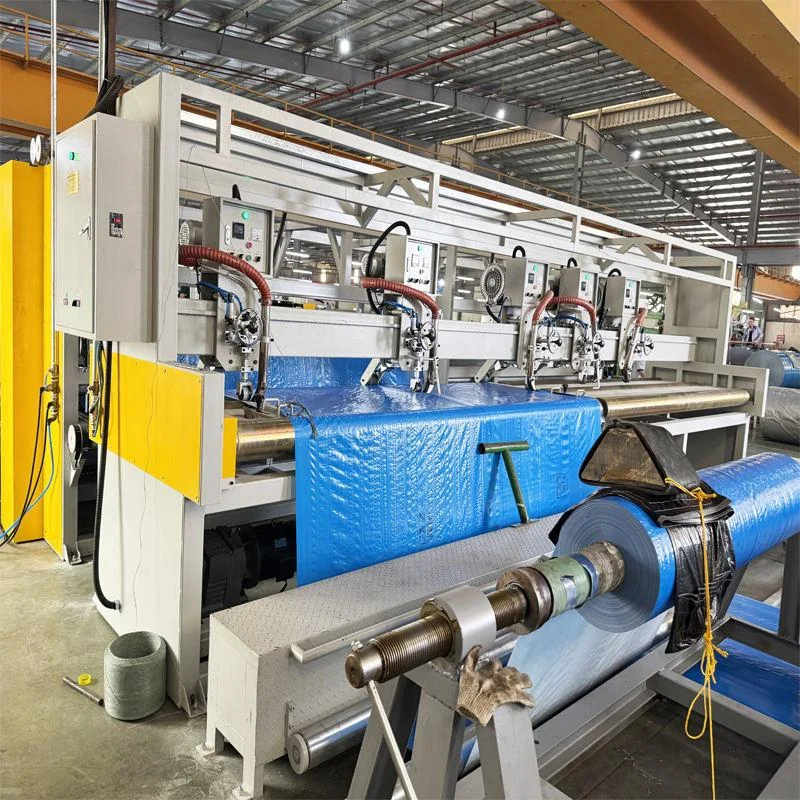
Benefits of using ultrasonic welding machines for curtains
The strength of ultrasonic welding technology lies in its ability to create fast, clean, and controllable bonds. For curtain manufacturing workshops, this helps reduce manual errors and improve finished product quality.
No glue required
Reduces odor, glue smearing, drying time, and the risk of surface contamination on curtains.
No sewing thread required
Suitable for material types that do not require visible stitching or need a more seamless surface.
Uniform weld line
When the mold and parameters are optimized, the weld can achieve good repeatability across products.
Supports sealing applications
With suitable materials, this technology can support sealed weld lines for PVC curtains, shower curtains, sunshade curtains, or technical materials.
Increases productivity
The short processing time for each weld helps increase output when the process is standardized.
Cleaner production process
Reduces auxiliary materials such as glue, thread, and solvents; the working area becomes cleaner and easier to control.
Which curtain materials can be ultrasonic welded?
Not all fabrics can be ultrasonic welded equally well. Weldability depends on plastic composition, coating layer, thickness, surface structure, and weld strength requirements. Therefore, VietSonic always recommends real sample testing before finalizing the machine configuration.
| Material group | Application capability | Technical notes |
|---|---|---|
| PVC curtains, PVC films | Edge welding, seam welding, sealing | The material thickness and softness should be checked. |
| Plastic-coated fabrics, technical fabrics | Layer bonding, strip welding, seam welding | Depends on the coating layer and surface structure. |
| Nonwoven fabrics | Spot welding, line welding, decorative welding | Usually suitable for ultrasonic welding if the material has thermoplastic properties. |
| Sunshade curtains, roller blinds | Edge welding, strip fixing, edge finishing | Sample testing is required to optimize welding parameters. |
Note: For natural cotton materials, woven fabrics without plastic components, or special heat-resistant materials, sample testing is required because weldability may be unstable.
Demo video of ultrasonic curtain welding machine
The video helps show more clearly how an ultrasonic welding machine creates welds on curtain materials. This is an important reference step before businesses send material samples to VietSonic for suitable machine configuration consultation.
VietSonic consultation process for ultrasonic curtain welding machines
Each curtain type has different materials, thicknesses, and weld line requirements. Therefore, the most effective solution is to provide consultation based on real samples, production goals, and the desired level of automation.
Sample receiving
Customers send material samples, drawings, or descriptions of the welding process needed.
Test welding
VietSonic checks weldability, weld strength, and weld appearance.
Configuration proposal
Consultation on power, frequency, welding horn, fixture mold, and operating method.
Handover & training
Guidance on setup, operation, maintenance, and parameter optimization for actual production.
Frequently asked questions
Can ultrasonic welding machines completely replace curtain sewing machines?
Not always. Ultrasonic welding machines are most suitable for materials with thermoplastic properties or plastic coatings. For natural fabric curtains or decorative details that require sewing, traditional sewing machines still play an important role.
Is the ultrasonic weld line durable?
Weld strength depends on the material, weld design, pressure, welding time, and welding mold. When the parameters are optimized, the weld can be strong, neat, and stable in mass production.
Can the machine be designed according to actual curtain dimensions?
Yes. VietSonic can provide consultation for standalone machines, worktables, specialized welding horns, or integration solutions based on the customer’s actual production process.
What should be prepared before consultation?
It is recommended to prepare material samples, desired weld size, weld strength requirements, images of the current process, and expected output so that sample testing can be more accurate.
Need to test curtain welding using ultrasonic technology?
Send your material samples and weld requirements to VietSonic for consultation on machine configuration, welding horns, and the optimal solution for real production.