Custom Air Shaft and Pneumatic Expanding Shaft Manufacturing to Drawings
Various sizes – Multiple types – Tailored to each machine system
Every production line has its own requirements for dimensions, load capacity and mounting configuration. Off-the-shelf air shafts are therefore not always suitable for the equipment a company uses.
VietSonic manufactures air shafts and pneumatic expanding shafts according to customer drawings and actual requirements for industrial winding and unwinding systems.
Manufactured to drawings Various sizes Multiple configurations Industrial equipment
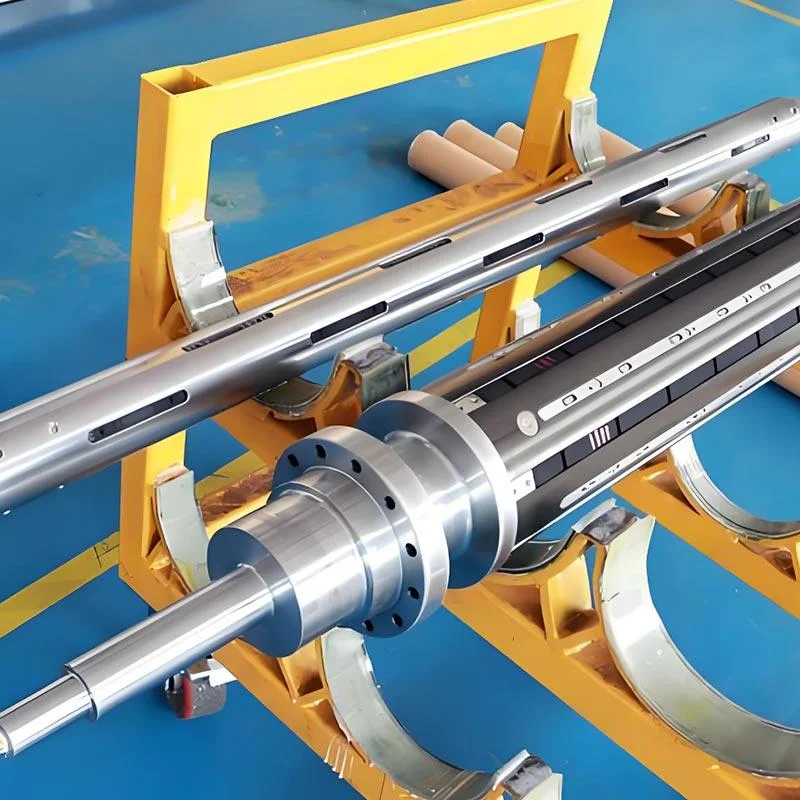
Industrial air shafts in different sizes and configurations.
1. What is an air shaft or pneumatic expanding shaft?
An air shaft, also known as a pneumatic expanding shaft or inflatable shaft, is a component commonly used in industrial material winding and unwinding machines.
It holds the roll core firmly so that the roll rotates together with the shaft during machine operation.
Unlike conventional shafts, air shafts use compressed air to expand the lugs or gripping strips on the shaft body. This makes securing, installing and removing material rolls easier for operators.
01
Install the material roll
Slide the core of the paper, plastic film or other material roll onto the air shaft.
02
Supply compressed air
Supply air to the shaft so that the expanding lugs or strips press against the inside of the roll core.
03
Operate the machine
The material roll is held firmly on the shaft during winding or unwinding.
04
Release air and remove the roll
After safely stopping the machine, release the air to retract the lugs and remove the material roll.
Simply put: An air shaft grips the material roll when inflated and releases it when deflated, making roll changes more convenient.
2. Custom air shaft manufacturing to drawings and actual requirements
In practice, each production machine has a different mounting configuration. Shaft length, body diameter, shaft end dimensions and load capacity also vary.
For imported machines, custom-built machines or production lines that have been in use for years, finding an off-the-shelf air shaft with suitable dimensions can be difficult.
Rather than modifying the machine to accommodate a standard shaft, companies can choose custom air shaft manufacturing based on the drawings and specifications of their existing equipment.
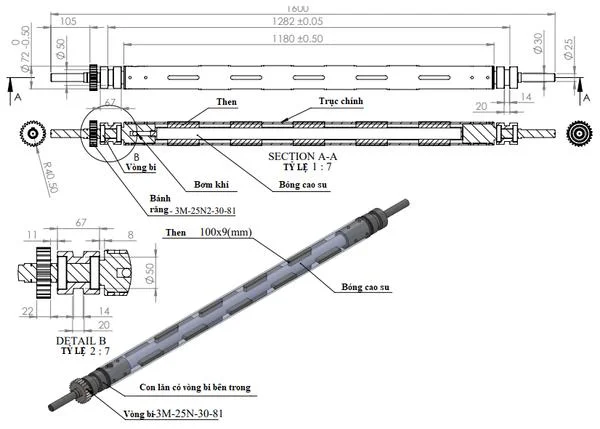
Drawings provide the basis for determining the dimensions and configuration of the air shaft to be manufactured.
Specifications that can be customized
01
Shaft body diameter
Select a diameter appropriate for the inside dimensions of the material roll core.
02
Shaft length
Adjust the overall length and working length according to material width and machine configuration.
03
Shaft end configuration
Machine round or square shaft ends, keyways, flanges or connection types according to drawings.
04
Shaft body material
Consider steel or aluminum alloy depending on load and operating requirements.
05
Pneumatic expansion type
Select lugs, strips or other expansion configurations suitable for the roll core.
06
Air valve location
Position the air inlet and outlet according to installation space and operator access.
3. Various types of pneumatic expanding shafts
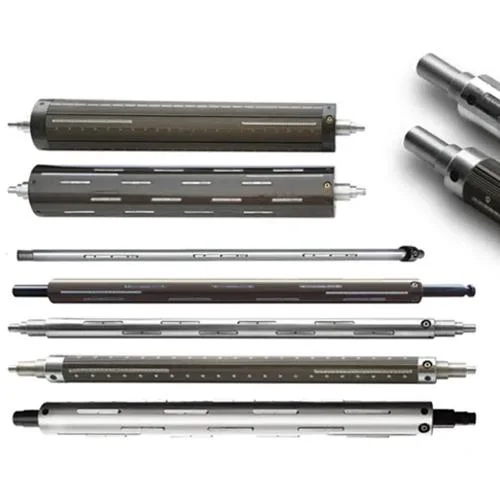
Depending on material type, roll size, load and intended use, air shafts can be designed in various configurations.
Some types of pneumatic expanding shafts commonly used in industrial production.
Lug-type air shaft
Lug Type Air Shaft
Individual expanding lugs are arranged on the shaft body. When compressed air is supplied, these lugs rise and press firmly against the inside of the roll core.
This type is commonly used on winding and unwinding machines for paper, plastic film, packaging and other materials.
Strip-type air shaft
Strip Type Air Shaft
Instead of individual lugs, this type uses expanding strips arranged along the length of the shaft body.
The strip design provides a longer contact area with the roll core, suitable for applications requiring gripping force to be distributed along the roll length.
Leaf-type air shaft
Leaf Type Air Shaft
This type uses expanding leaves with wide contact surfaces. When air is supplied, the leaves move outward to grip the material roll core.
It can be considered for applications requiring a large contact area between the shaft and roll core.
Custom-configured air shaft
Customized Air Expanding Shaft
For machine systems with specific requirements for length, diameter, shaft ends, flanges or installation space.
The configuration is assessed based on drawings, existing shaft samples and actual operating conditions.
4. Common air shaft sizes
Air shafts are typically classified by the nominal inner diameter of the material roll core. Different industries may use different shaft sizes.
Nominal size
Reference roll core inner diameter
Typical applications
1 inch
25,4 mm
Small material rolls, specialized equipment
1,5 inch
38,1 mm
Narrow material rolls
2 inch
50,8 mm
Plastic film, paper, adhesive tape
3 inch
76,2 mm
Packaging, plastic film, paper, fabric
4 inch
101,6 mm
Industrial material winding systems
6 inch
152,4 mm
Systems using large roll cores
Custom
According to drawings
Machines and production lines with custom configurations
Note: The sizes above are nominal roll core sizes, not the actual shaft body diameters before expansion. Manufacturing specifications must be determined from drawings, roll core tolerances and operating requirements.
In addition to core diameter, working length, load, rotational speed and shaft end connections must also be considered when selecting a suitable configuration.
5. Applications of air shafts in industrial production
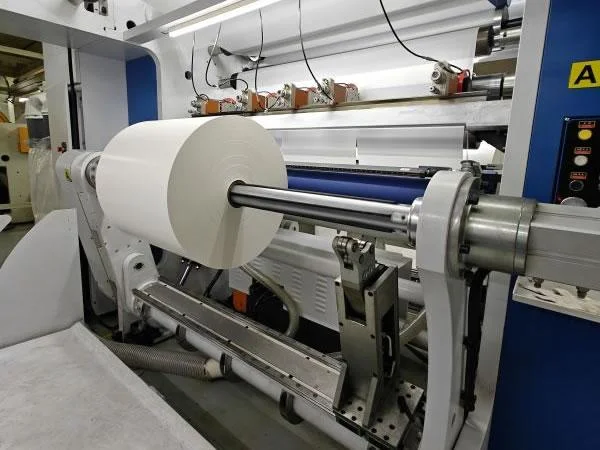
In production lines using roll-fed materials, air shafts are one option for securing and changing material rolls.
Application of pneumatic expanding shafts in material winding and unwinding systems.
Packaging industry
Used on packaging production machines, slitters, laminators and bag-making machines.
Printing industry
Holds paper and printing film rolls on gravure presses, flexographic presses and roll-fed printing systems.
Plastics industry
Used on blown film machines, PE, PP and PET film winders and plastic film processing lines.
Paper industry
Used in paper winding, paper slitting and paper converting systems.
Textile and nonwoven industry
Used on fabric winders, fabric slitters, nonwoven bag-making machines and related production lines.
Adhesive tape and film industry
Used on winders for adhesive tape, protective film, aluminum foil and other roll materials.
6. Relationship between air shafts and industrial magnetic powder brakes
In material unwinding systems, air shafts and magnetic powder brakes serve different functions but can often be used together.
01
Air shaft
Holds the roll core firmly so that the material roll rotates with the shaft.
02
Magnetic powder brake
Provides adjustable braking torque to help control material tension during unwinding.
When properly selected and combined with a tension control system, these two devices help stabilize material feeding and reduce slack, wrinkles or excessive tension.
LEARN MORE ABOUT RELATED EQUIPMENT Industrial magnetic brake – Magnetic powder brake
→
7. What information is needed when ordering a custom shaft?
To select a manufacturing solution suitable for the machine system, customers can provide VietSonic with the following information:
Technical drawing of the air shaft to be manufactured, if available.
Photos or a sample of the existing air shaft.
Inner diameter of the material roll core.
Overall length and working length of the shaft.
Dimensions and configuration of both shaft ends.
Type of material to be wound or unwound.
Maximum weight of the material roll.
Expected machine operating speed.
Compressed air pressure and mounting requirements, if available.
Quantity of air shafts required.
No technical drawing yet?
Customers can send photos, dimensions or information about their existing air shaft to VietSonic for review. Both parties can then discuss the necessary specifications before confirming the manufacturing solution.
8. Air shaft supply and custom manufacturing at VietSonic
In addition to magnetic brakes, magnetic powder brakes and equipment for material winding systems, VietSonic provides custom air shaft and pneumatic expanding shaft manufacturing solutions based on each customer’s drawings and requirements.
The solution is suitable for companies looking to:
Replace damaged air shafts on existing machines.
Manufacture air shafts for imported machines.
Manufacture air shafts for new machine designs.
Change shaft dimensions to fit new material roll cores.
Order custom-configured air shafts according to drawings.
Add spare air shafts for production lines.
Rather than being limited to fixed-size shaft models, VietSonic aims to select air shaft configurations that match the needs and actual operating conditions of each machine system.
9. Frequently asked questions
Can air shafts be manufactured in custom sizes?
Yes. Diameter, length, expansion type and shaft end configuration can be considered for custom manufacturing based on drawings and actual requirements.
Can I order a custom air shaft without a drawing?
Customers can provide an old shaft sample, photos, dimensions and information about the machine as a basis for discussing the manufacturing solution.
Should I choose a steel or aluminum alloy air shaft?
Steel shafts are often considered when rigidity and load capacity are required. Aluminum alloy shafts have the advantage of lower weight. The choice should be based on dimensions, load, rotational speed and specific shaft configuration.
Can an air shaft be used together with a magnetic powder brake?
Yes. In unwinding systems, the air shaft holds the roll core, while the magnetic powder brake provides braking torque to help control material tension.
How is the cost of custom air shaft manufacturing determined?
Manufacturing costs depend on dimensions, material, pneumatic expansion type, shaft end configuration, quantity and other technical requirements. Specific information is needed to determine the solution and quotation.
CUSTOM MANUFACTURING
Looking for an air shaft manufactured to your drawings?
Send VietSonic the drawings, photos or specifications of your existing air shaft so we can discuss and select a suitable solution.