



Oil and water don’t mix easily. So how can they share one jar of cream?
Have you ever poured a little cooking oil into a glass of water? No matter how vigorously you stir, the oil eventually rises to the top. Yet when you open a jar of skincare cream, you see a smooth, uniform texture. Many creams contain both water and oil-based ingredients. So what allows these two reluctant partners to coexist in a single jar?
The answer lies in a fascinating step in cosmetic manufacturing: emulsification.
1. Why don’t oil and water mix easily?
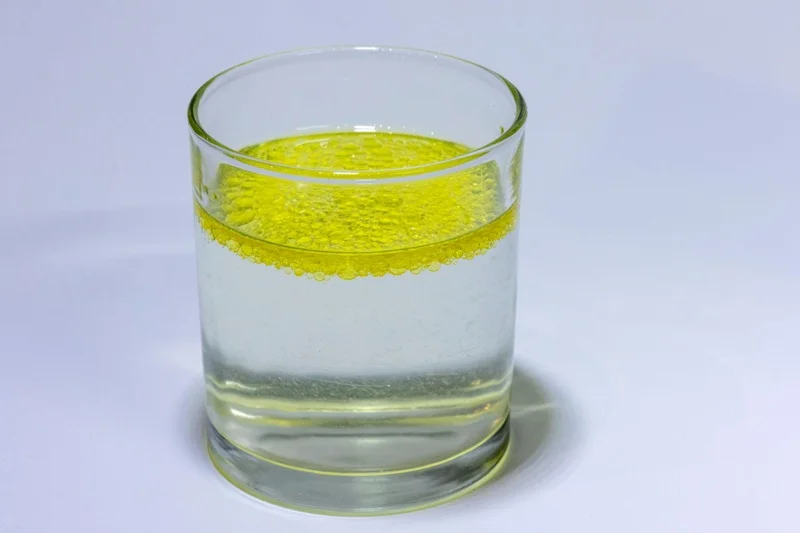
Imagine a glass of clean water. Now add a few drops of cooking oil.
At first, the oil floats as a layer on the surface. Stir vigorously with a spoon and the oil may break into many tiny droplets, making the water look cloudy. But when you leave it alone, those droplets tend to join together and separate into their own layer again.
This happens because oil and water have different properties, making them difficult to dissolve in each other.
Making skincare cream involves a similar challenge. Formulators need to combine water-friendly ingredients with oil-friendly ingredients to make a product that is pleasant to use.
Simply pouring everything into one tank and stirring does not necessarily create a cream that stays stable.
2. Emulsification: the secret to keeping oil and water together
Instead of allowing oil to float as one large layer, imagine breaking it into countless tiny droplets and spreading them throughout the water.
If the oil droplets are well dispersed and the formula contains suitable ingredients that help prevent them from merging again, the mixture can remain uniform for longer.
That, in simple terms, is emulsification.
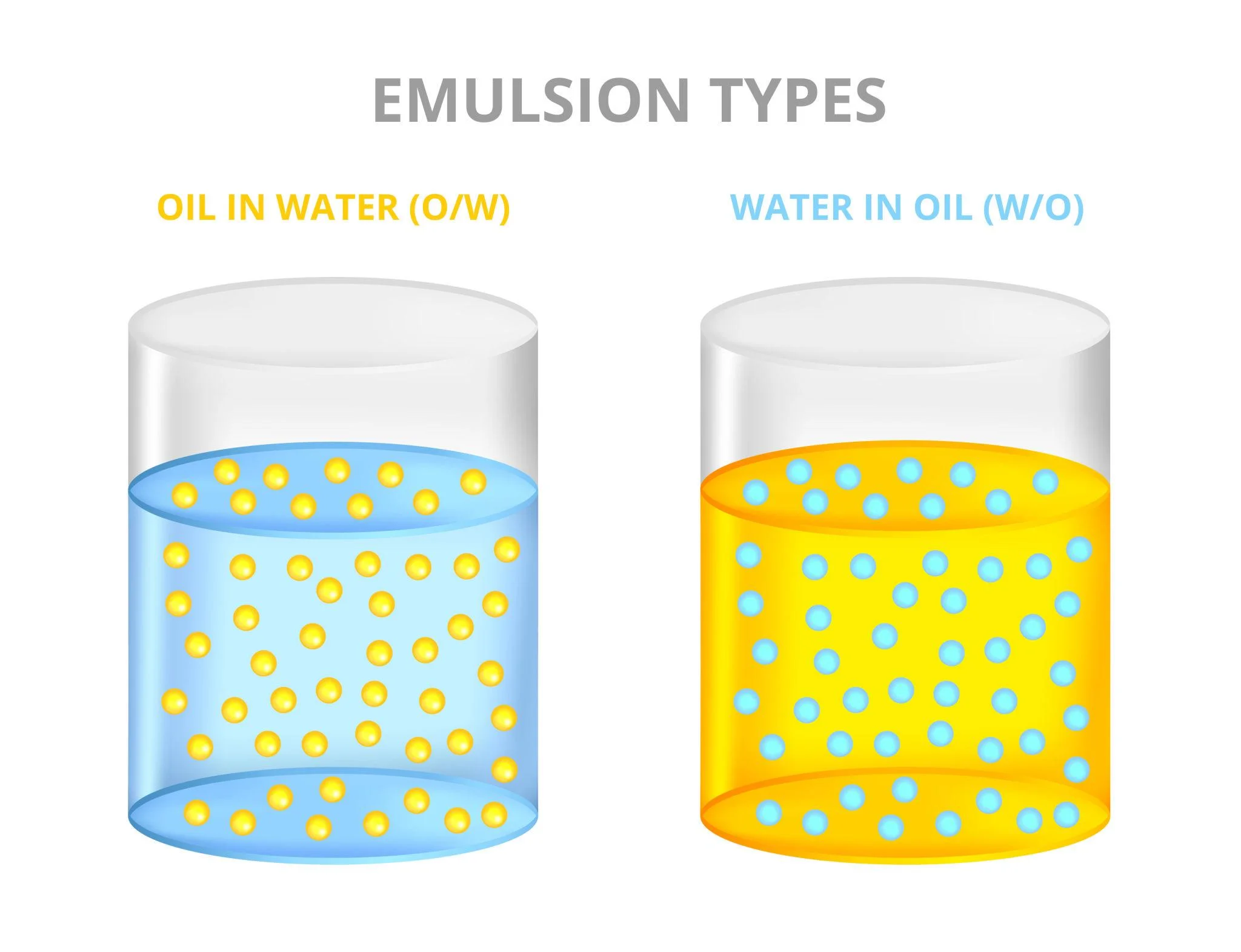
Two common arrangements are found in cosmetics:
- Oil-in-water: Small oil droplets are distributed throughout the water phase.
- Water-in-oil: Small water droplets are dispersed throughout the oil phase.
The choice depends on the type of cream and the feel that the product developer wants to achieve.
3. What helps a jar of cream stay uniform?
When developing an emulsion-based skincare cream, formulators generally focus on three important elements.
Water phase
The part containing water and ingredients suited to a water-based environment, depending on the specific formula.
Oil phase
The part containing oil-based ingredients, which contribute to the cream’s characteristics and feel.
Emulsifier
Like a connector, it helps oil droplets and water remain suitably dispersed and reduces the tendency of droplets to merge.
Product developers also choose suitable mixing methods, thickening ingredients, and processing conditions.
Here’s a simple way to picture it: the mixer helps break up and distribute oil droplets, while the emulsifier system and cream structure help the mixture maintain its intended form.
If any of these factors is not suitable, the cream may separate, change in thickness, or become less uniform during storage.
4. How can ultrasound help with emulsification?
Manufacturers commonly use mixing and homogenizing equipment to combine ingredients.
For some formulas, ultrasonic homogenization technology is being studied as a way to support this process.
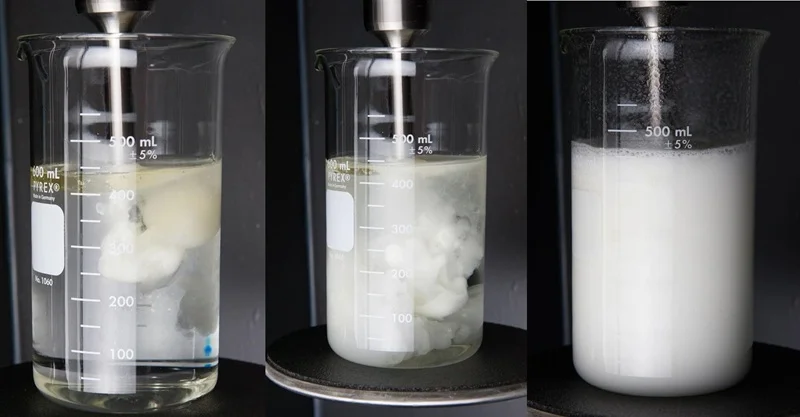
Put simply, an ultrasonic probe sends very rapid vibrations into a liquid. Under suitable conditions, these vibrations produce powerful effects on a very small scale within the mixture.
As a result, oil droplets may be broken into smaller droplets and redistributed throughout the water.
Prepare the initial mixture
The oil and water phases are prepared and combined according to the formula’s process.
Help break down oil droplets
Ultrasound acts on the mixture and can help form smaller dispersed droplets when processing conditions are suitable.
Check the results
The developer assesses the sample’s uniformity, droplet size, thickness, and stability.
That is why cosmetic developers need to select technology based on the actual formula, rather than relying only on a machine’s name or power rating.
5. How is a smooth cream evaluated?
When opening a jar of skincare cream, people first notice its appearance, smoothness, and how easily it spreads on the skin.
For the people who make the product, however, appearance is only the first step of evaluation.
Important questions to check include:
- Is the cream uniform? Observe its texture and assess oil-droplet distribution using suitable methods.
- Does the cream keep its intended consistency? Monitor thickness and changes in the mixture after production.
- Does the cream separate into layers? Observe samples during storage and under suitable test conditions.
- Is quality consistent from batch to batch? Compare key quality indicators across multiple production batches.
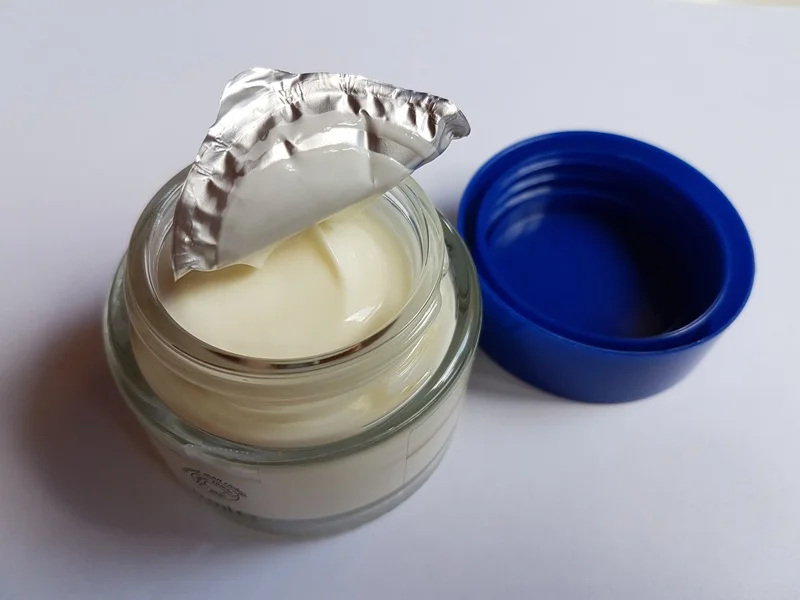
A cream that looks soft and smooth may feel pleasant from the first use. However, to confirm that it maintains its quality over time, the manufacturer still needs to carry out appropriate tests.
6. The story of oil and water in Mai skincare cream
According to Mai skincare cream’s introductory materials, ultrasonic homogenization technology is used to support mixing and emulsification.
The cream’s basic ingredient list includes water and Caprylic/Capric Triglyceride, an oil-based ingredient. This is a familiar example of why combining ingredients with different properties matters when developing a formula.
Ultrasonic technology offers a processing approach worth investigating, with the aim of supporting dispersion and the formation of a suitable emulsion.
Actual results still depend on ingredient ratios, the emulsifier system, operating conditions, and tests carried out on the finished formula.
7. Frequently asked questions
Can you make skincare cream simply by stirring oil and water vigorously?
Stirring can create an initial mixture, but maintaining a stable cream requires a suitable formula, emulsifier, and processing method.
Does ultrasound make oil dissolve completely in water?
No. During emulsification, oil remains as droplets dispersed in water, or vice versa. The two phases do not have to dissolve into each other.
Does using ultrasound guarantee a better skincare cream?
This must be evaluated for each formula. Ultrasound may support emulsification, but cream quality also depends on the ingredients, formula design, and stability of the finished product.
8. From two ingredients that resist mixing to a jar of cream
Looking at a jar of silky cream, few people imagine that it may contain ingredients as reluctant to mix as oil and water.
Creating that texture requires formulators to understand the ingredients, select an emulsifier, and control the mixing process.
Ultrasonic homogenization is one approach that may support this stage, particularly when investigating how to break up and distribute oil droplets.
The remarkable part is this: from a glass in which oil and water readily separate, people can develop skincare formulas with smooth textures and different properties in use.
Interested in ultrasonic technology for cosmetic manufacturing?
VietSonic provides information and solutions for ultrasonic technology applications. If you are exploring the use of ultrasound for liquid mixing, homogenization, or emulsification, contact us to discuss your technical requirements.
Phone: 0938 49 33 66
Email: info.vietsonic@gmail.com
Website: vietsonic.vn