


Abnormal Vibration Spikes in Last-Stage Steam Turbines – Evaluating Blade Fatigue Cracking and Tie-Wire Connections
A steam turbine appears to be operating normally, yet vibration levels suddenly spike at specific load thresholds, new frequency peaks emerge in the vibration spectrum, or vibration alarms trigger repeatedly whenever power output increases. This is not merely a sign of rotor unbalance or bearing failure.
For large-capacity steam turbines, particularly at the low-pressure (LP) last-stage blades, the root cause often stems from fatigue cracking on the blade body or at the connection joints between the blades and the tie-wires.
Initial cracks are typically microscopic and invisible during routine visual inspections. However, they alter the stiffness, damping capacity, and natural frequency of the blade.
Consequently, the turbine may only exhibit severe vibration within a specific load or speed band, while operating relatively smoothly under different modes. This explains why many blade cracks go undetected until vibration accelerates drastically or catastrophic blade failure occurs.
Signs Suspected of Steam Turbine Blade Fatigue Cracking
Plants should prioritize inspecting the last-stage blade assemblies if one or more of the following symptoms manifest:
- Vibration increases noticeably when the turbine reaches a specific load threshold.
- The turbine exhibits normal vibration at low loads but vibrates violently during power ramp-ups.
- The vibration spectrum reveals new frequency peaks, or existing peaks shift in amplitude.
- Vibration frequencies drift compared to historical baseline data.
- Vibration alarms trigger repeatedly during load ramping up or down.
- Unusual acoustic noise emits from the low-pressure turbine casing area.
- Vibration remains unresolved even after verifying rotor balance and bearing conditions.
- Vibration signatures tend to shift after every startup sequence.
These symptoms indicate that the dynamic behavior of the blade assembly may have shifted. A crack reduces or alters the blade’s structural stiffness, causing its natural frequency and vibration-damping capacity to deviate from their original states.
Why Are Last-Stage Blades Prone to Fatigue Cracking?
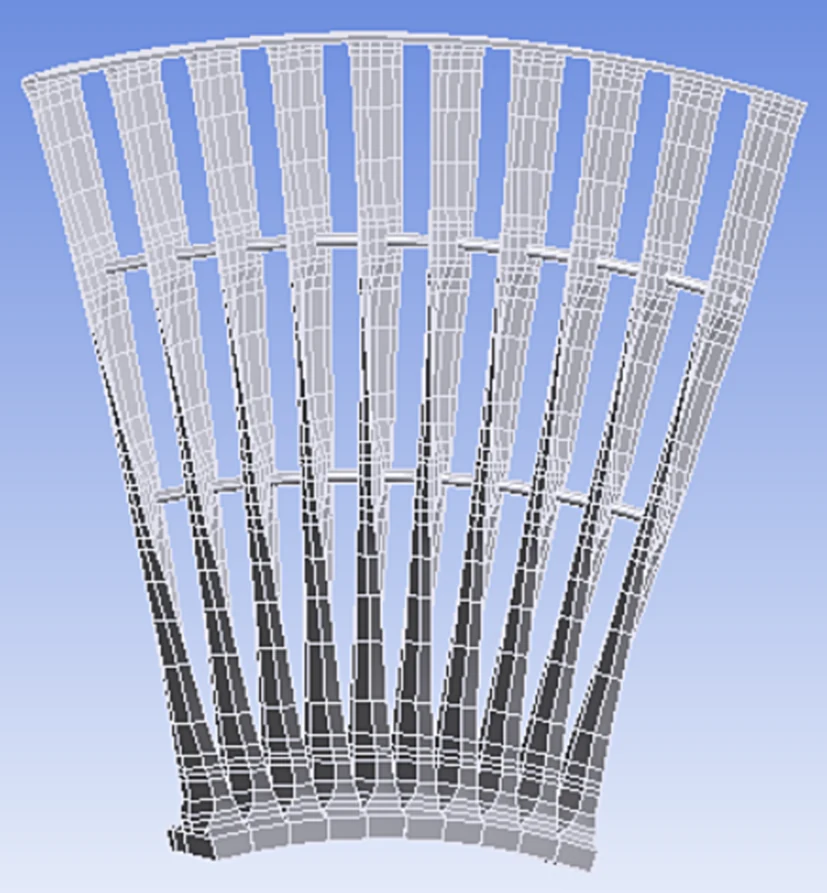
Last-stage blades are exceptionally long and operate under complex steam flow conditions. As the rotor spins, the blades endure continuous centrifugal forces. Simultaneously, steam impacting the blade surface generates aerodynamic forces, inducing repetitive bending and vibration.
If a power plant frequently executes startups, shutdowns, load ramping, or operates outside the stable load zone, the number of stress cycles applied to the blades multiplies rapidly.
Fatigue cracks can initiate even if the operational load never exceeds the instantaneous yield strength of the material.
Factors that amplify cracking risks include:
- Uneven steam flow distribution.
- Resonance occurring within a specific speed or load band.
- Erosion at the blade’s leading edges.
- Corrosion leading to surface pitting.
- Impacts from droplets or foreign particles in the steam flow.
- Loose tie-wires or unstable connection joints.
- Geometric deviations among blades within the same group.
- Stress concentration at the blade root or cross-sectional transition zones.
The initiation of a crack noticeably alters the stiffness, damping coefficient, and natural frequency of a steam turbine blade.
This serves as the critical basis for detecting faults via vibration and modal analysis, rather than waiting until macroscopic cracks become visible.
Blade-to-Tie-Wire Connections Require Rigorous Inspection
In last-stage blade assemblies, blades are typically grouped together using tie-wires (or lacing wires). This component controls dynamic oscillation and maintains the structural stability of the blade group.
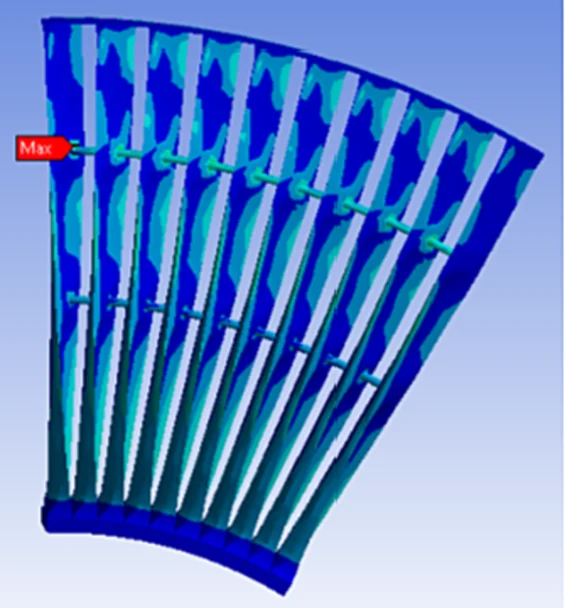
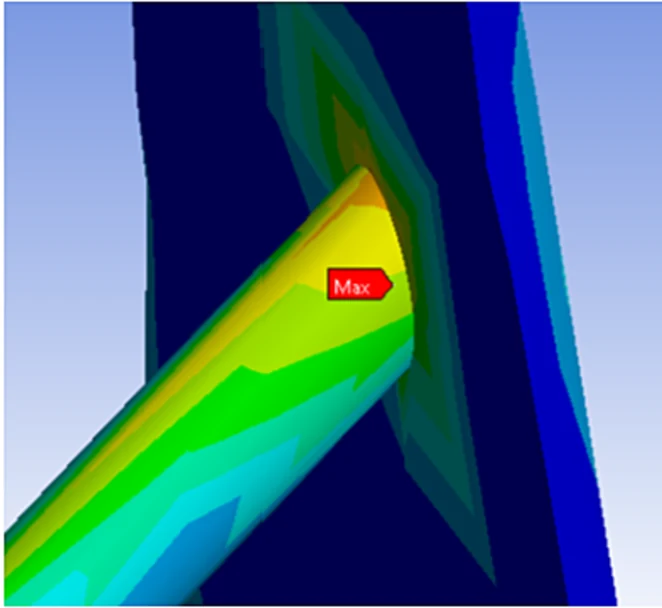
However, the contact interface between the blade and the tie-wire is also highly susceptible to stress concentration. As blades oscillate continuously under steam impact and random vibration, the connection zone endures cyclic loading.
If gaps, wear scars, or contact misalignments exist, localized stress can spike and create crack initiation points.
Cracks here may propagate gradually without immediately causing severe turbine vibration. Once the stiffness of a single blade alters sufficiently, the entire dynamic vibration profile of the blade group can be compromised.
Why Rotor Balancing Might Not Resolve the Vibration?
When turbine vibration escalates, the first countermeasure considered is usually checking for rotor unbalance, misalignment, or bearing issues. While these are necessary checks, if the vibration source originates from cracked blades, rotor balancing cannot resolve the root cause.
A defining characteristic of blade cracking is that vibration levels fluctuate depending on the load and excitation frequencies. As the turbine passes through a resonance band, vibration amplitude spikes distinctly. Upon exiting this band, vibration may subside, tricking operators into believing the issue has cleared.
Therefore, vibration data must be cross-referenced across multiple operating regimes, rather than relying on a single measurement at a specific time.
Evaluation Protocol When Turbine Vibration Indicates Blade Cracking
Initially, engineers must compile the history of vibration, load, speed, temperature, and alarm events. Subsequently, the vibration spectrum must be analyzed to identify abnormal frequency peaks and shifts against baseline data.
During a machine shutdown, visual inspections must cover the blade roots, leading edges, erosion zones, tie-wires, and connection points.
Suspect locations should be examined using appropriate Non-Destructive Testing (NDT) methods, such as Dye Penetrant (PT), Magnetic Particle (MT), or Ultrasonic Testing (UT).
Field results must be integrated with modal analysis and stress simulation to determine how severely the crack has compromised the stiffness and dynamic oscillation of the blade assembly.
A cracked blade should not be replaced without investigating the root cause. If resonance, unstable steam flow, or faulty tie-wire connections are left unaddressed, the replacement blade remains vulnerable to repeated failure.
Vibration Audits and Steam Turbine Blade Fatigue Assessment
VietSonic provides vibration audits, steam turbine blade fatigue cracking assessments, blade-to-tie-wire connection inspections, and root cause analysis for turbines exhibiting abnormal vibration spikes varying by load.
If your steam turbine demonstrates abnormal vibration escalations, violent shaking within specific load bands, new frequencies in the vibration spectrum, or you suspect fatigue cracking in the last-stage blades, the plant should initiate an inspection before the damage becomes catastrophic.
If your equipment is facing operational anomalies, running erratically, or requires specialized deep engineering evaluation, contact VietSonic today for an optimized solution tailored to your line.
VietSonic Ultrasonic Equipment Co., Ltd.
📞 Phone: 0938 49 33 66 – Mr. Hải
📧 Email: info.vietsonic@gmail.com
🌐 Website: vietsonic.vn